Poland's Constitutional Tribunal President Suspended Amid Protests
A sudden suspension of the Constitutional Tribunal's leadership has sparked protests and a political crisis in Poland.
Poland's Constitutional Tribunal president and vice president were suspended on October 30, 2026.
Protests erupted in response, with accusations of a coup against the current government.
The political turmoil highlights ongoing tensions between the ruling party and the judiciary.
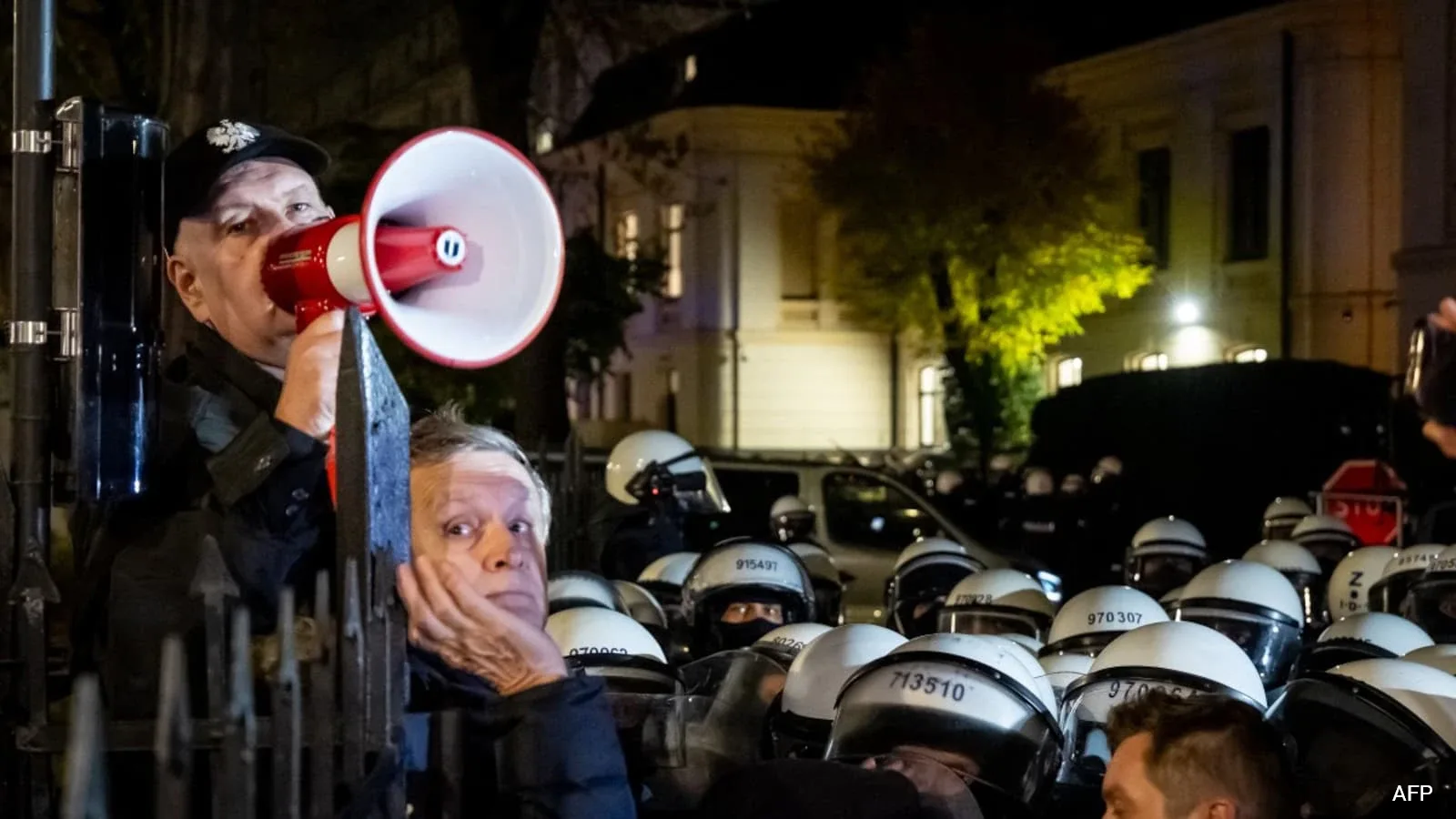
On October 30, 2026, a significant political upheaval occurred in Poland when the Constitutional Tribunal's president, Bogdan Swieczkowski, and vice president, Bartlomiej Sochanski, were suspended. The announcement was made shortly after 6 PM local time, leading to immediate public outcry and protests outside the court in Warsaw. Riot police were deployed as demonstrators expressed their outrage over what they perceived as an unlawful removal of the court's leadership by the pro-European government.
The suspension was initiated by Judge Anna Korwin-Piotrowska, who stated that the action was necessary to restore the rule of law. Following the announcement, Polish President Karol Nawrocki, who was en route to Senegal, abruptly turned his plane around to return to Poland, emphasizing the urgency of the situation on social media. This swift response underlined the gravity of the unfolding events, as tensions escalated in the capital.
As protests intensified, demonstrators gathered outside the Constitutional Tribunal, chanting slogans against the government and accusing it of orchestrating a coup d'état. The court's official social media account echoed these sentiments, claiming that the actions taken against its leadership were illegal. The political landscape in Poland has been fraught with conflict, particularly between the ruling party and the judiciary, with critics accusing the government of undermining judicial independence.
The current political crisis is rooted in the broader struggle for judicial autonomy in Poland, particularly since the election of Prime Minister Donald Tusk's government in 2023. Tusk's administration has sought to reverse the judicial reforms implemented by the previous ruling party, Law and Justice (PiS), which critics argue have compromised the independence of the judiciary. The recent suspension of the Tribunal's leadership is seen as a pivotal moment in this ongoing battle, with implications for the rule of law in the country.
Looking ahead, the situation remains fluid as the government attempts to navigate the fallout from this crisis. The political ramifications could extend beyond Poland, affecting its relations with the European Union, which has previously expressed concerns over judicial independence in the country. As protests continue and political tensions rise, the coming days will be critical in determining the future of Poland's judiciary and governance.