AI Shows 15.6% Higher Agreement in Prostate MRI Evaluations
A recent study reveals AI's diagnostic performance in prostate MRI assessments, showing significant agreement compared to radiologists.
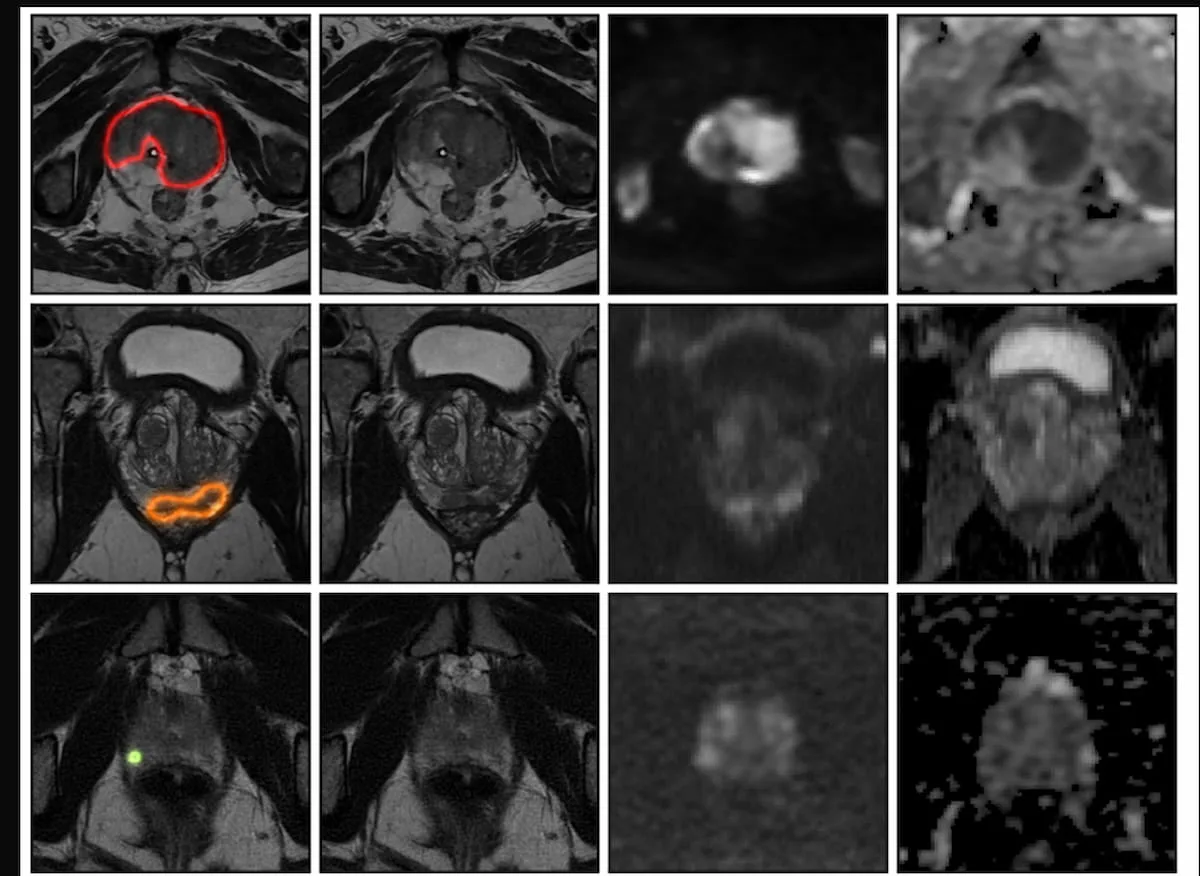
AI assessments showed 15.6% higher agreement than unassisted radiologists in prostate MRI evaluations.
Local validation and ongoing monitoring are crucial for safe AI adoption in diverse patient populations.
AI detected more high-grade cancers but also resulted in increased unnecessary biopsies in some cohorts.
A recent study has highlighted the effectiveness of artificial intelligence (AI) in interpreting prostate MRI scans, demonstrating a 15.6% higher agreement rate with standard diagnoses compared to evaluations made by unassisted radiologists. Conducted on the PRIME cohort, the research found that AI assessments achieved an agreement rate of 83% versus 67.4% for radiologists. Similarly, in the IP1-PROSTAGRAM group, AI evaluations showed an agreement of 87.7% compared to 72.8% for radiologist assessments.
The study, led by Anindo Saha, PhD, from Radboud University Medical Center, indicates that AI's diagnostic capabilities are comparable to traditional radiology readings for detecting Gleason grade group ≥2 prostate cancer across various populations and clinical settings. This suggests a promising role for AI in enhancing prostate MRI interpretations, especially in areas lacking specialized expertise.
Despite these encouraging findings, the study also revealed that the performance of AI can vary significantly based on the patient population and clinical environment. For instance, in the STHLM3-MRI cohort, while AI identified approximately 26% more high-grade cancers, it also resulted in more than double the unnecessary biopsies. Conversely, in the IP1-PROSTAGRAM cohort, the AI model reduced unnecessary biopsies by over 19% while maintaining similar detection rates of clinically significant cancers compared to radiologist interpretations.
The implications of this study are significant for the healthcare industry, particularly in the context of prostate cancer screening and diagnosis. As AI tools become more integrated into clinical practice, the necessity for local validation and continuous monitoring becomes paramount. The authors emphasize that performance can shift as patient demographics and case mixes change, underscoring the need for site-specific validation to ensure safe and effective use of AI in diverse healthcare settings.
Looking ahead, the study suggests that while AI shows promise in enhancing diagnostic accuracy, healthcare providers should remain cautious. They must not assume that published performance thresholds will yield the same results across different patient populations. Ongoing research and validation efforts will be essential to fully understand the capabilities and limitations of AI in prostate MRI assessments, ensuring that its integration into clinical practice is both safe and effective.