Raihan Vadra's Protest Photos Removed from Bikaner House Exhibition
Controversy arises as Raihan Vadra claims his protest-themed photographs were removed from his exhibition at Bikaner House.
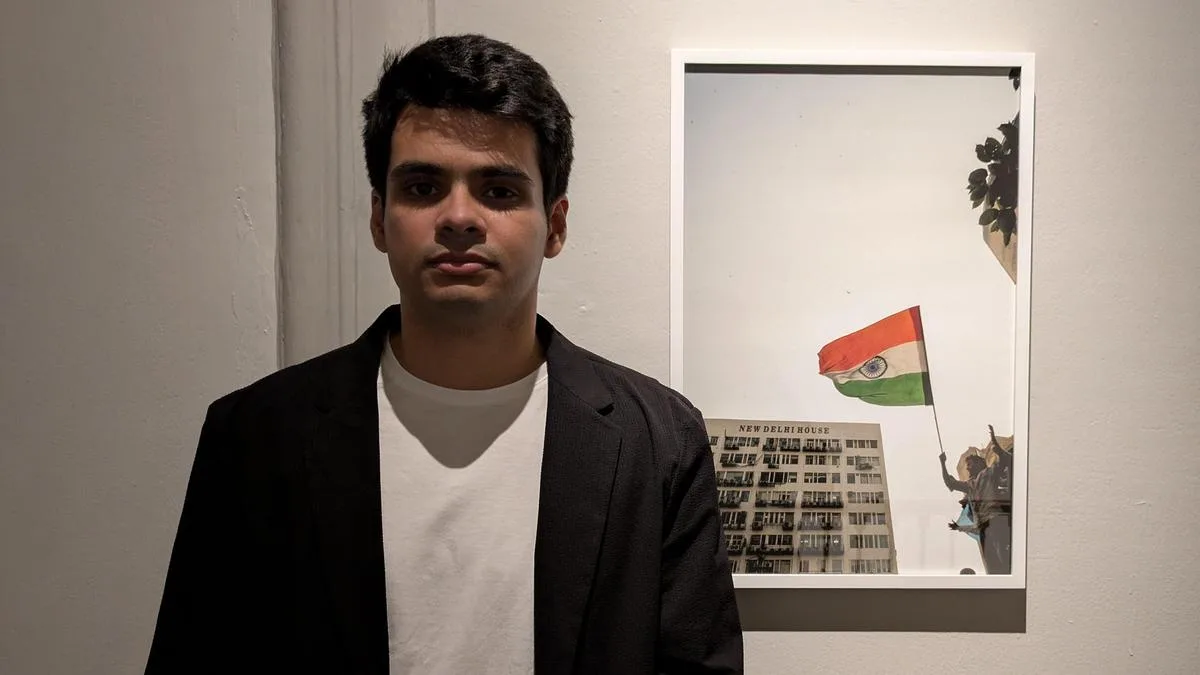
Raihan Vadra alleges removal of protest photos from his exhibition.
Congress MP Pawan Khera criticizes the censorship of artistic expression.
Vadra plans to find an alternative venue to showcase the complete collection.
A significant controversy has emerged following allegations by Raihan Vadra, the son of Congress leader Priyanka Gandhi Vadra, regarding the removal of his photographs from an exhibition at Bikaner House. On October 21, 2026, Vadra took to social media to express his discontent, stating that the management had forced him to take down several images that documented recent protests and youth movements in India, just hours before the exhibition titled 'No Idea Is Final' was set to open.
The exhibition, which features a mix of wildlife photography, abstract art, and images capturing youth protests, faced immediate scrutiny when Vadra claimed that the management deemed the content objectionable. In his Instagram post, he revealed that he was instructed to remove two photographs of the Indian flag, which he firmly refused to do, emphasizing the importance of the national symbol. Despite the setback, he confirmed that the exhibition would proceed partially, with plans to find another venue to display the full collection of protest images.
Reports indicate that the organizers communicated to Vadra that the timing was inappropriate for showcasing such images. Vadra countered this argument by noting that he had provided a comprehensive proposal outlining the exhibition well in advance, suggesting that the management's decision was not justified.
In response to the incident, Congress MP Pawan Khera expressed his outrage over the censorship of artistic expression. He questioned the rationale behind considering protest imagery as offensive, stating, "When even the Tricolour isn’t safe from the censor’s scissors, perhaps the problem isn’t the art. It’s the regime." Khera defended the photographs as mere documentation of protests, asserting that none were derogatory or inflammatory.
The implications of this incident extend beyond Vadra's exhibition, highlighting ongoing tensions surrounding freedom of expression in India. The reluctance to display protest imagery raises concerns about the current political climate and its impact on artistic endeavors. As Vadra seeks alternative venues, the discourse surrounding censorship and the role of art in society is likely to intensify, prompting further discussions on the boundaries of creative expression in contemporary India.