Pentagon Explores Cold War Law to Reinstate Nvidia's Huang
Senior Pentagon officials considered using a Cold War-era law to pressure Nvidia into reinstating CEO Jensen Huang, citing national security concerns.
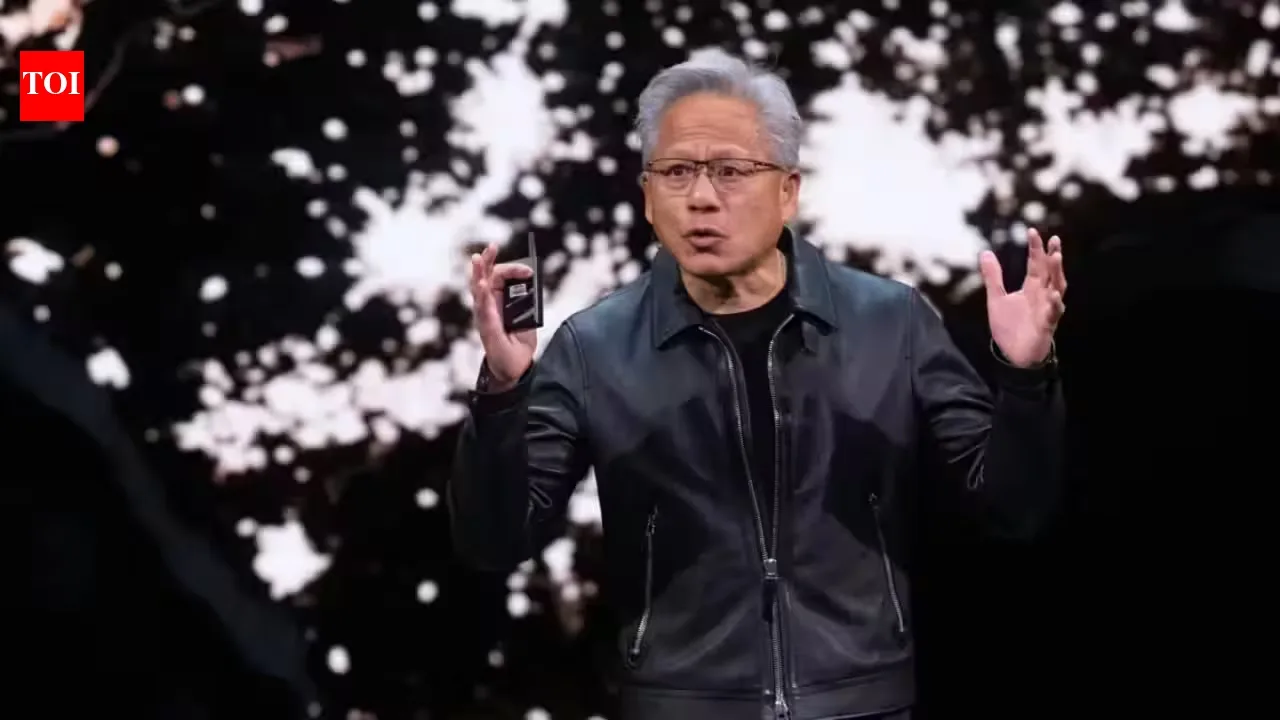
Pentagon officials discussed invoking the Defense Production Act to influence Nvidia's board.
The law, originally for military supply mobilization, was considered as leverage for Huang's return.
The discussions highlight the Pentagon's focus on AI development amid global competition.
In a surprising turn of events, senior officials at the Pentagon contemplated leveraging a Cold War-era law to persuade Nvidia's board to reinstate Jensen Huang as CEO. This discussion occurred over the weekend prior to Huang's official return announcement on Monday, as reported by The Washington Post, which cited sources familiar with the matter.
The Defense Production Act (DPA), enacted in 1950, was at the center of these discussions. This legislation grants the U.S. president extensive powers to intervene in the economy during national emergencies, allowing for prioritization of government contracts. Defense Secretary Pete Hegseth and Deputy Secretary Steve Feinberg reportedly considered this act as a potential means to influence Nvidia's decision-making, emphasizing Huang's leadership as vital to U.S. national security.
While the Pentagon has since denied any formal discussions regarding the DPA or proposals to utilize it against Nvidia, the implications of such a move were significant. Historically, the DPA has been employed to mobilize private companies for military needs, such as during the Covid-19 pandemic when it was used to compel General Motors to produce ventilators. Although there is no clear precedent for using the DPA to install a CEO, officials speculated that it could serve as a warning to Nvidia's board to prioritize military contracts over other production.
The discussions underscore the Pentagon's growing concern over the global artificial intelligence race, particularly in relation to China. The U.S. military views advancements in AI and data-processing capabilities as crucial for maintaining military superiority. Under Hegseth's leadership, the Pentagon has made AI development a cornerstone of its military strategy, advocating for the establishment of an "AI-first warfighting force" to adapt to future military challenges.
Looking ahead, the significance of Nvidia's role in the AI landscape is expected to grow, especially as the Pentagon strengthens its collaborations with tech companies. With ongoing investments in AI and related technologies, the military aims to enhance its operational capabilities. The recent discussions about Huang's reinstatement reflect a broader strategy to ensure that U.S. technological leadership remains unchallenged in the face of international competition.