Hurricane Isaias Claims 2 Lives, Leaves 800,000 Without Power
Hurricane Isaias, now a post-tropical cyclone, has caused significant disruption across three US states, resulting in two fatalities and widespread power outages.
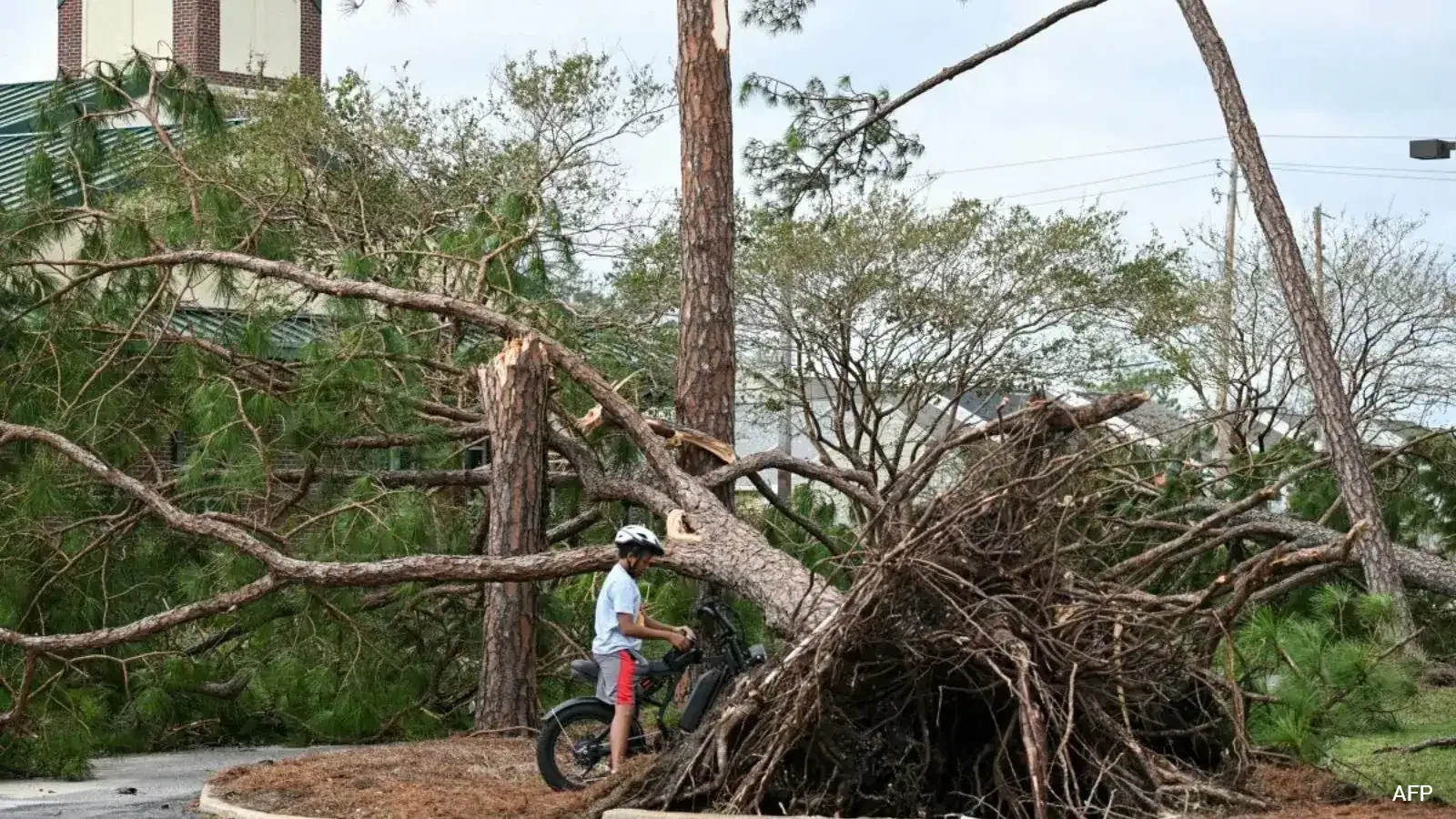
Hurricane Isaias made landfall as a Category 2 storm in Florida, causing two deaths from falling trees.
Over 800,000 customers in Florida, Alabama, and Georgia are without electricity due to the storm.
Flooding risks remain high as Isaias moves north, with potential rainfall exceeding 10 inches in some areas.
Hurricane Isaias, which has now weakened to a post-tropical cyclone, made landfall late Friday near Destin, Florida, packing winds of 105 mph. The storm has since moved northward, leaving a trail of destruction and prompting significant flooding concerns across the southeastern United States. As of Saturday morning, over 800,000 customers in Florida, Alabama, and Georgia were reported to be without power due to the storm's impact.
This hurricane marks the first of the Atlantic season influenced by a historic El Nino phenomenon, and it is the first hurricane to hit the US mainland since 2024. The National Hurricane Center (NHC) confirmed that the storm's intensity diminished overnight, but the threat of flooding persists. Officials have reported two fatalities linked to the hurricane, both caused by trees falling on homes—one incident occurred in Pensacola, Florida, and the other in Birmingham, Alabama.
In the aftermath of Isaias, reports from AFP indicated relatively minor damage in areas like Pensacola and Destin, where power restoration efforts were underway. Streets in coastal communities remained largely deserted following mandatory evacuations, as Florida Governor Ron DeSantis emphasized the ongoing risk of flooding despite the storm moving out of the state. He noted that the situation could have been worse had the storm maintained its strength upon landfall.
The NHC has warned of considerable flooding risks as Isaias continues its path northward, with some regions potentially receiving up to 10 inches of rain. Flash flooding and landslides are also a concern, particularly in the Southern Appalachians and North Carolina, where communities are still recovering from the impacts of Hurricane Helene in 2024.
The late arrival of Isaias this season is attributed to a strong El Nino, which creates conditions that typically inhibit storm formation in the Atlantic. Michael Fischer from the University of Miami explained that the strong vertical wind shear associated with El Nino has been a significant factor this year. Meanwhile, the Pacific has seen several hurricanes develop, some reaching Category 5 strength, showcasing the contrasting effects of El Nino across different ocean basins.