Maharashtra's Junnar Forest Division Vaccinates Two Female Leopards
In a groundbreaking pilot study, two female leopards in Junnar receive contraceptive vaccines to manage their population.
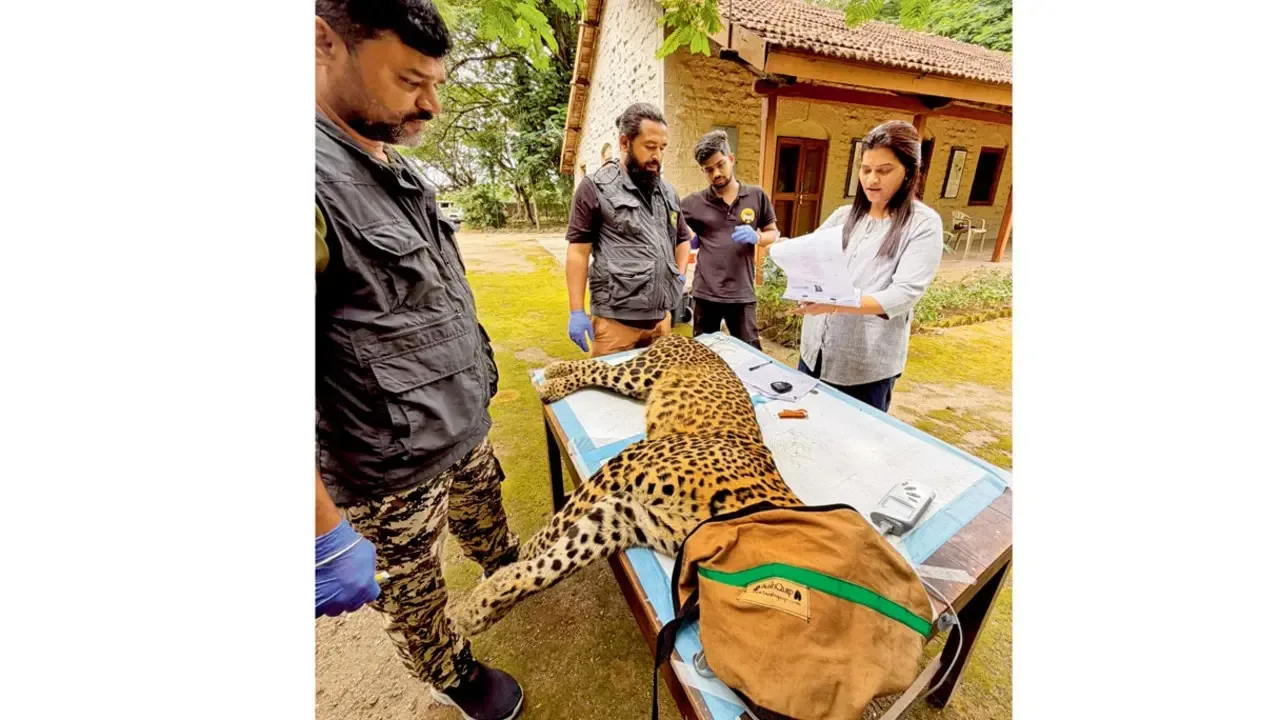
The contraceptive vaccine project is approved by the Union Environment Ministry.
ICMR-NIRRCH and Team RESQ are collaborating on the study.
The initiative aims to reduce human-wildlife conflict in leopard habitats.
In a significant move towards wildlife management, the Junnar Forest Division in Maharashtra has successfully administered an immune-contraceptive vaccine to two female leopards. This initiative, part of a pilot study sanctioned by the Union Ministry of Environment, aims to explore the viability of birth control methods in controlling leopard populations, particularly in regions where human-wildlife conflicts are prevalent.
The two leopards, after receiving the vaccine, were released back into their natural habitat. Ashish Thakare, the Conservator of Forests, confirmed that the project operates under the Wildlife (Protection) Act of 1972, emphasizing its legal and ecological importance. The study seeks to evaluate whether contraceptive measures can effectively manage leopard numbers in areas frequently affected by interactions with humans.
This project is a collaborative effort involving the Junnar Forest Division, the Indian Council of Medical Research’s National Institute for Research in Reproductive and Child Health (ICMR-NIRRCH), and veterinary specialists from Team RESQ. As part of the research, ICMR scientists will analyze blood samples from the leopards to monitor hormonal changes and assess the long-term effects of the vaccine on their health and reproductive capabilities.
The implications of this initiative extend beyond mere population control. By potentially reducing the number of leopards in conflict-prone areas, the project aims to enhance safety for local communities while ensuring the conservation of wildlife. This approach reflects a growing recognition of the need for innovative solutions to balance ecological health with human interests in wildlife-rich regions.
Looking ahead, the study will continue to monitor the vaccinated leopards and gather data on the effectiveness of the contraceptive vaccine. Future assessments will determine the feasibility of expanding this method to other regions facing similar challenges with leopard populations and human interactions.