Breakthrough in Neurorehabilitation: Simultaneous Speech and Gesture Control
A new brain-computer interface allows paralyzed individuals to communicate through speech and gestures simultaneously, marking a significant advancement in neurorehabilitation.
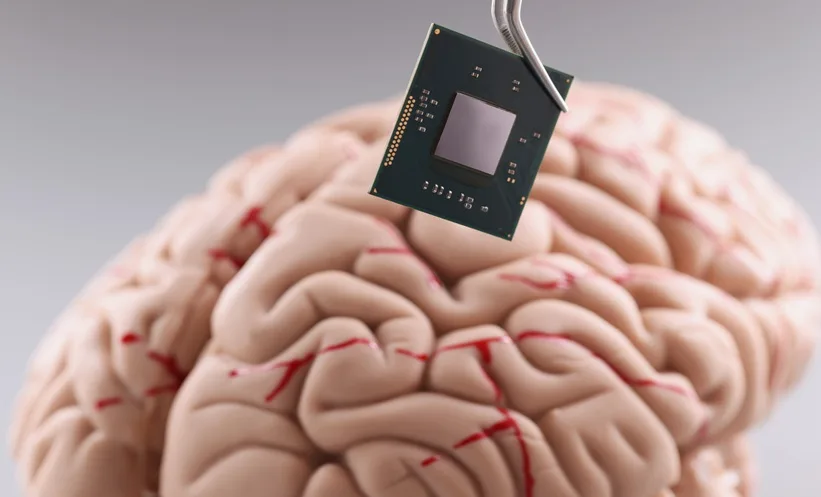
A single cortical implant enables coordinated speech and body gestures for paralyzed adults.
The system achieved 75% accuracy for speech and 85% for gestures in real-time tasks.
Innovative training methods resolved signal interference, enhancing communication capabilities.
A groundbreaking development in neurorehabilitation has emerged with advanced brain-computer interface systems that allow adults with paralysis to produce both speech and expressive body gestures simultaneously. This clinical milestone showcases the potential of a single cortical implant to coordinate multiple functional outputs at once, overcoming a significant barrier in the field. Traditional brain-computer interfaces typically decode isolated speech or single-limb movements, but effective human communication often relies on the integration of natural gestures to convey complete messages.
Researchers conducted evaluations on three individuals suffering from severe paralysis of the vocal tract and limbs due to conditions such as brainstem stroke or amyotrophic lateral sclerosis. Each participant was equipped with a high-density subdural electrocorticography grid featuring 253 electrodes strategically placed across the sensorimotor cortex. The study revealed that distinct yet partially overlapping neural populations within the precentral gyrus are involved in both speech articulation and upper-limb gestures, indicating a complex interplay in brain activity.
Initially, the spatial overlap of these neural activities posed challenges for accurate decoding. Neural decoders that were trained solely on isolated behaviors struggled during simultaneous actions, often misclassifying these attempts as inactivity or generating incorrect activations. However, the research team discovered that concurrent motor behaviors produce unique population-level patterns, rather than simply combining isolated signals, which led to the development of more sophisticated decoding strategies.
To tackle the issue of signal interference, the researchers introduced a context-inclusive model training approach that combined both isolated and simultaneous motor trials. They also employed cross-modality negative sampling, enabling the speech decoder to recognize gesture-only activity as rest and vice versa. This innovative training method effectively eliminated false positive activations across different modalities while ensuring high classification accuracy. When tested in real-time conversational scenarios, the system demonstrated impressive decoding accuracies of 75% for speech and 85% for gestures, with a speech false positive rate of 0%. Offline evaluations further confirmed the decoders' ability to generalize to new phrase and gesture combinations.
These promising results pave the way for a versatile brain-computer interface framework that could significantly enhance neuroprosthetics for individuals with severe paralysis. As researchers continue to refine these technologies, the potential for improved communication and quality of life for affected individuals looks increasingly optimistic.