Trump's Alaska Rally: Repeated False Claims on Iran and Economy
At a rally in Alaska, Donald Trump reiterated false assertions regarding Iran's nuclear capabilities and economic inflation.
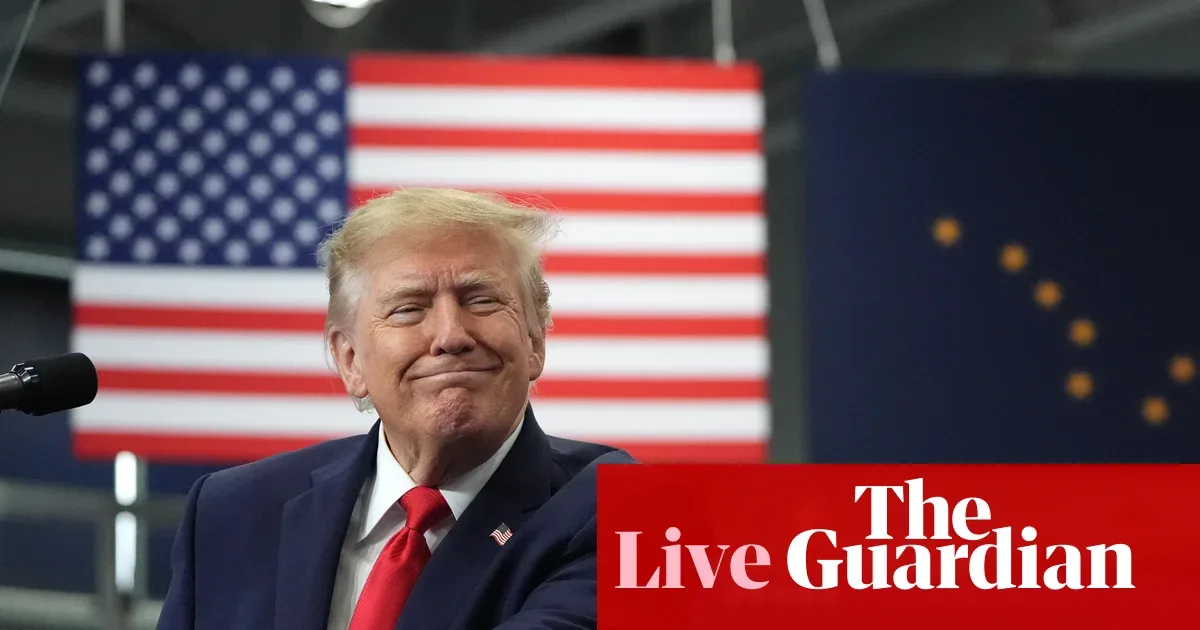
Trump falsely claimed Iran was 'two weeks away' from a nuclear weapon, contradicting US intelligence reports.
He inaccurately stated that he provided military bonuses, which were actually housing benefits.
Trump urged Alaska voters to repeal ranked-choice voting, labeling it a method of cheating without evidence.
During a campaign rally in Wasilla, Alaska, Donald Trump reiterated his controversial claim that he initiated military action against Iran because the country was 'two weeks away from having a nuclear weapon.' This assertion contradicts a 2025 report from US intelligence agencies, which indicated that Iran had suspended its nuclear weapons program as early as 2003. Despite this, Trump ordered bombings of Iran's nuclear facilities in the summer of 2025, later asserting that these actions had 'obliterated' Iran's nuclear ambitions. By February 2026, he justified a full-scale war on Iran based on the same unfounded claim.
In addition to his remarks on Iran, Trump addressed the issue of inflation, stating that he faced the 'worst inflation in history' shortly after taking office. He recounted an imaginary exchange from his first press conference, where he claimed reporters confronted him about high prices. However, transcripts from that event reveal that he was not questioned about inflation for several months after assuming the presidency. This pattern of misrepresentation has characterized much of Trump's rhetoric during the rally.
Trump also made headlines by promising financial incentives to voters if Republicans win in the upcoming elections. He suggested that a Republican-controlled Congress would lead to cash payments of $5,000 for constituents. Furthermore, he invited Brendan Carr, the Federal Communications Commission Chair, to the stage, pledging an additional $162 million investment to enhance high-speed internet in Alaska, a move that raises questions about adherence to the Hatch Act, which prohibits government officials from partisan campaigning.
In another controversial statement, Trump reiterated his claim that South Korea agreed to invest $50 billion in a liquefied natural gas pipeline in Alaska. This assertion came just days after South Korean officials clarified that no such agreement had been made, emphasizing that they were only considering the project based on its commercial viability. Trump's insistence on this figure highlights a pattern of exaggeration regarding foreign investments during his administration.
Looking ahead, Trump's rally in Alaska reflects his ongoing strategy to energize his base ahead of the November elections. His repeated false claims and promises could have significant implications for voter sentiment and the political landscape in Alaska and beyond. As the election approaches, it remains to be seen how these statements will influence public perception and voter turnout in the critical races ahead.