CJP's Tiranga March Faces Police Restrictions Amid Protests
The CJP's planned Tiranga march in Delhi is met with significant police deployment and public warnings as tensions rise over ongoing protests.
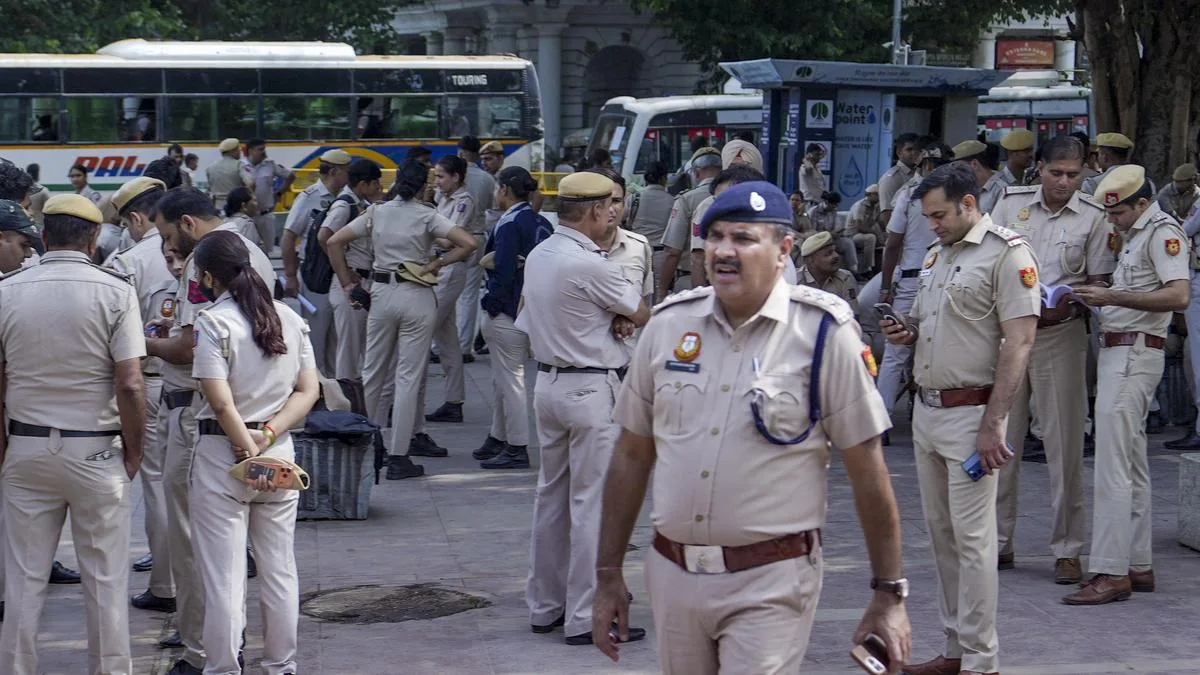
Over 6,000 police personnel deployed for CJP's march.
CJP founder Abhijeet Dipke defends protests as democratic rights.
Dilip Ghosh accuses CJP of disrupting religious festivities.
The Central Park in New Delhi is the focal point of a planned Tiranga march organized by the Citizens for Justice and Peace (CJP) today, October 16, 2026. The Delhi Police have mobilized over 6,000 personnel and 220 companies from the Central Armed Police Forces (CAPF) to manage the event, which has not been officially sanctioned. Authorities have issued prohibitory orders, urging the public to refrain from participating in the march, citing concerns over public order.
The backdrop to this event includes a series of protests against Chief Election Commissioner Gyanesh Kumar, which have seen significant police action in recent weeks. CJP founder Abhijeet Dipke has publicly defended the right to protest, stating that demanding accountability from the government and challenging public officials are fundamental democratic rights. He emphasized that peaceful protests should not be misconstrued as anarchy, recalling his own experiences of violence yet choosing to respond with non-violence.
In a contrasting view, West Bengal Minister Dilip Ghosh criticized the timing of the CJP's march, accusing the organization of disrupting Navratri and Durga Puja celebrations. He argued that political demonstrations during religious festivities create unnecessary tension and divert attention from cultural observances, asserting that the public will hold the CJP accountable for their actions.
The Press Council of India has also taken steps to ensure the safety of journalists covering the protests, issuing new guidelines that include carrying valid identification and first-aid kits. This comes in response to reports of journalists being detained and assaulted during previous protests, highlighting ongoing concerns about press freedom and public safety during demonstrations.
Looking ahead, the Supreme Court has declined to hear an urgent plea regarding the closure of Central Park, which has been a site of contention amid these protests. As the CJP prepares for its march, the situation remains tense, with potential implications for future protests and the broader political landscape in India.