Trump Authorizes Firing Squad Execution for Nidal Hasan
President Trump has approved a rare military execution method for Nidal Hasan, the Fort Hood shooter, marking a significant moment in military justice.
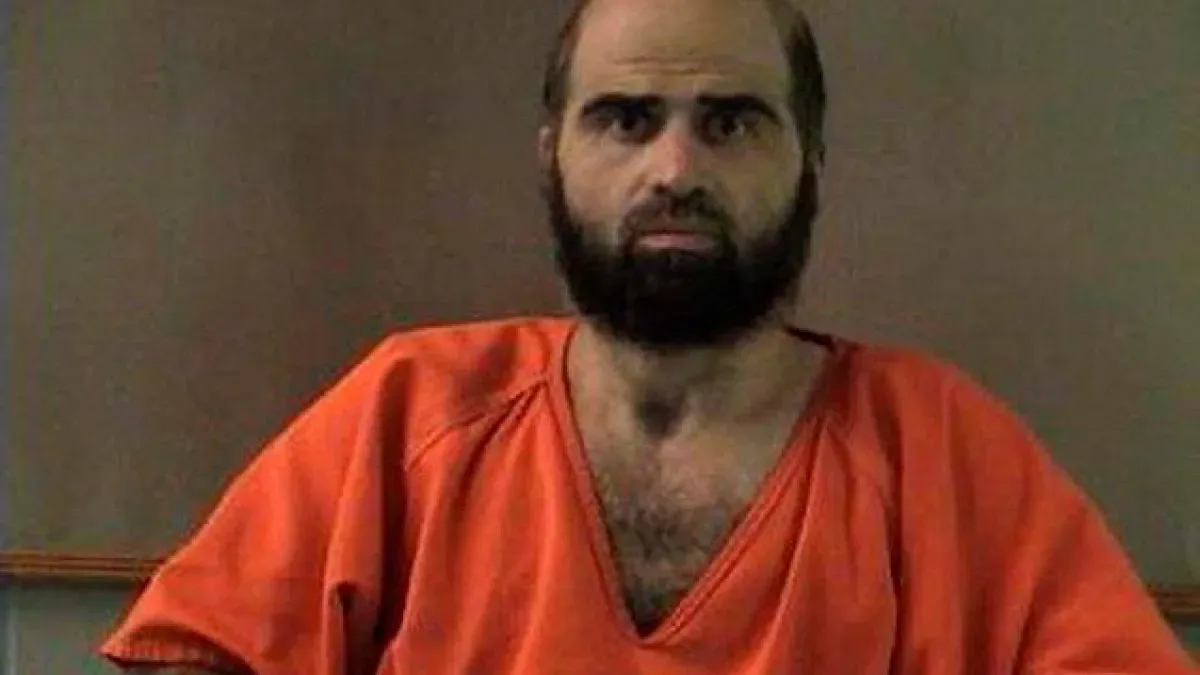
Nidal Hasan, convicted of killing 13 at Fort Hood, will face execution by firing squad.
This marks the first military execution in the US in over 60 years.
The execution order was approved by President Trump and recommended by Defense Secretary Pete Hegseth.
In a historic decision, President Donald Trump has authorized the execution of Nidal Hasan, the former army psychiatrist responsible for the 2009 Fort Hood shooting that claimed 13 lives. This execution will be carried out by firing squad, a method that has not been used in the US military for decades, according to a Pentagon spokesperson.
Nidal Hasan, a US citizen of Palestinian descent, was convicted in 2013 on multiple counts of premeditated murder and attempted murder. The military jury found him guilty after he opened fire at a medical facility on the Fort Hood base, killing 12 active-duty soldiers and one retired serviceman, while injuring 32 others. The attack occurred just weeks before Hasan was scheduled to be deployed to Afghanistan.
Pentagon spokesperson Sean Parnell confirmed that the execution will proceed under the recommendation of Defense Secretary Pete Hegseth, stating, "Judgment day for Hasan has finally come." The Army Secretary will determine the specific time and location for the execution, which is set to be the first military execution in the United States since 1961.
The use of firing squads has been reintroduced as a valid execution method by the Trump administration, alongside other methods such as gas asphyxiation and electrocution. Military executions are rare and can only be sanctioned by the President under the Uniform Code of Military Justice. If executed, Hasan will be the first member of the US military to face execution since the last hanging in 1961, with the last known firing squad execution occurring in 1945.
As the military prepares for this unprecedented execution, it raises questions about the implications for military justice and the broader context of capital punishment in the United States. The decision reflects a significant shift in how military justice is approached, particularly in cases involving mass violence. Observers will be watching closely for the execution date and any potential legal challenges that may arise.