Historic Trilateral Summit in Shenzhen on November 19, 2026
Leaders from the U.S., China, and Russia convened in Shenzhen, marking a significant diplomatic moment despite limited tangible outcomes.
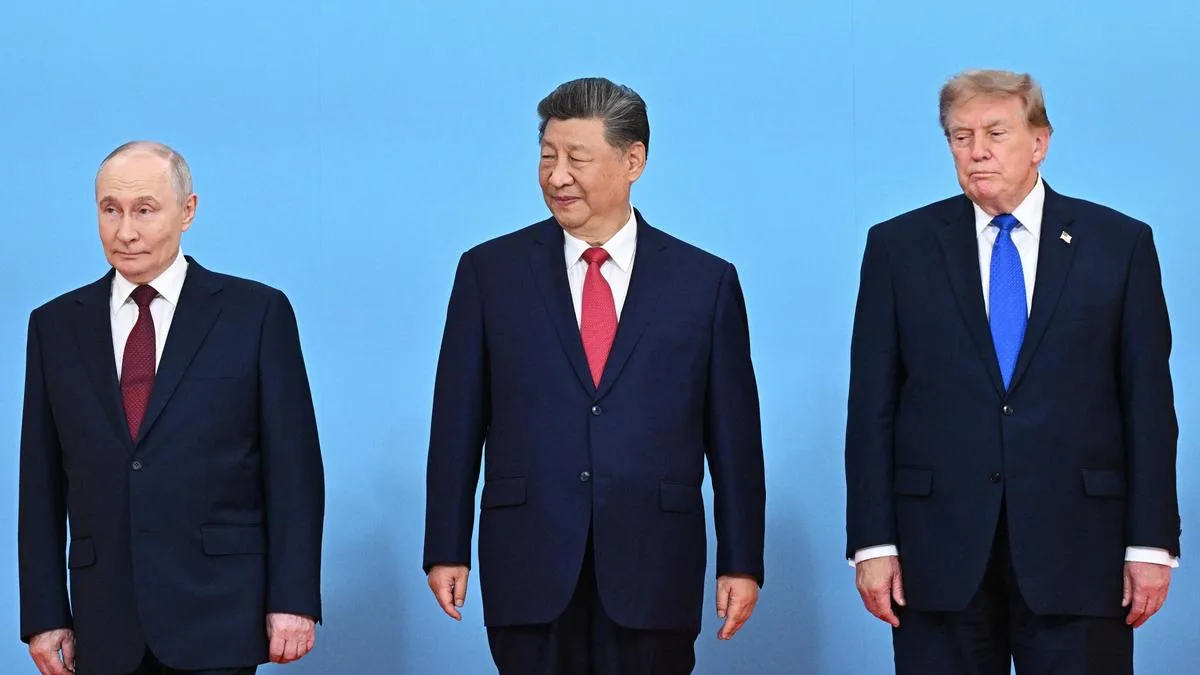
The summit focused on nuclear risk reduction and energy security.
Leaders emphasized the importance of peaceful coexistence and avoiding conflict.
Bilateral talks between Trump and Xi addressed Taiwan and trade issues.
On November 19, 2026, the leaders of the United States, China, and Russia gathered for a historic trilateral summit in Shenzhen, a city emblematic of China's economic growth. While the meeting generated significant media attention, it did not produce concrete resolutions regarding ongoing global challenges such as the war in Ukraine or tensions in Iran.
U.S. President Donald Trump hailed the summit as a pivotal moment, stating that the leaders were 'making history.' Chinese President Xi Jinping articulated a vision for international relations, emphasizing respect for sovereignty and territorial integrity among nations. Russian President Vladimir Putin highlighted the shared interests of the three nations in resolving regional conflicts, particularly the situation in Ukraine, and discussed food and energy security.
The summit produced a joint declaration that included broad agreements on reducing nuclear risks and reaffirmed the stance that nuclear warfare should never occur. The leaders acknowledged the need to enhance the production and supply of refined petroleum products, emphasizing the importance of state consent in international relations. Trump noted that as the world's largest nuclear powers, the three nations were uniquely positioned to discuss nuclear disarmament.
The implications of this summit extend beyond immediate diplomatic gestures. It represents a potential shift in global power dynamics, as the leaders sought to reinforce their nations' roles on the world stage amidst various geopolitical tensions. The summit also highlighted the necessity for dialogue in addressing trade disputes, especially following recent tensions over semiconductor exports between the U.S. and China.
Looking ahead, the summit's outcomes may pave the way for future discussions on critical global issues. The leaders are expected to continue dialogues on nuclear disarmament and economic cooperation, with a focus on maintaining stability in international relations. The next steps will involve further bilateral talks, particularly between the U.S. and China, as they navigate complex trade and security challenges.