Supreme Court Temporarily Approves Karthigai Lamp Lighting at Thiruparankundram on November 24
The Supreme Court has allowed a one-time ceremonial lighting of the Karthigai Deepam lamp at Thiruparankundram, while staying previous High Court findings.
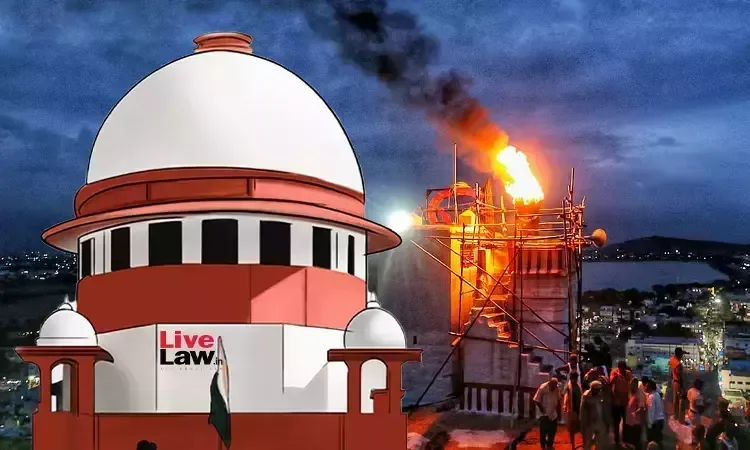
The Supreme Court has permitted the lighting of the Karthigai lamp on November 24 as a one-time measure.
The Court clarified that this permission does not establish any customary rights regarding the location.
Only authorized personnel will be allowed at the site during the ceremony, with strict security measures in place.
In a significant development, the Supreme Court has granted temporary permission for the lighting of the Karthigai Deepam lamp at the Deepathoon, a stone pillar near a Dargah on Thiruparankundram hill, scheduled for November 24. This decision comes after the Court stayed the earlier findings of the Madras High Court, which had permitted the ceremony based on claims of customary practices. The Supreme Court emphasized that this arrangement should not be interpreted as an endorsement of any established custom regarding the lighting of the lamp at this location.
The backdrop to this decision involves a complex legal history surrounding the rights to perform rituals at the site. The Madras High Court had previously allowed the lighting of the lamp, asserting that denying this would infringe on the rights of devotees. However, the Supreme Court's ruling indicates a cautious approach, noting that the current permission is a limited, one-time arrangement that does not validate any claims of customary religious observance at the Deepathoon.
The Supreme Court's ruling also delineates strict conditions for the ceremony. Only authorized representatives from the temple administration and government officials will be permitted to attend, with no public access allowed. The Court has mandated that the authorities ensure adequate security, potentially involving the Central Industrial Security Force (CISF) to maintain order during the event. This decision reflects the Court's intent to balance the interests of various stakeholders while addressing the sensitive nature of the occasion.
The implications of this ruling extend beyond the immediate ceremony. The Supreme Court's observations highlight ongoing questions regarding religious rights under Articles 25 and 26 of the Constitution, which will be addressed in future proceedings. The Court's decision to stay the High Court's findings indicates a need for further examination of the legal and customary claims surrounding the site, as well as the broader implications for religious practices in India.
Looking ahead, the District Collector has been tasked with coordinating the logistics of the ceremony, including the composition of the authorized team and the timing of the event. A compliance report is expected within three days post-ceremony, ensuring that the conditions set forth by the Supreme Court are met. This ruling sets a precedent for how similar cases may be handled in the future, particularly in balancing religious practices with legal frameworks.