Supreme Court Warns of Severe Pollution Post-Diwali in Delhi
Justice Vikram Nath highlights the unavoidable air quality crisis judges will face after Diwali, urging timely hearings.
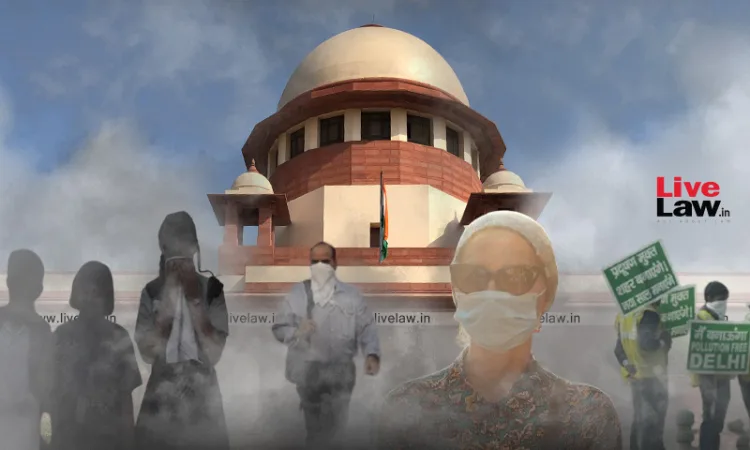
Justice Vikram Nath emphasizes worsening air quality in Delhi after Diwali.
Supreme Court has ruled out a complete ban on firecrackers this year.
Delhi's air quality is already in the 'poor' category ahead of Diwali.
The Supreme Court of India has raised alarms regarding the deteriorating air quality in Delhi following the upcoming Diwali festival, with Justice Vikram Nath stating that judges cannot avoid the pollution by staying home. This remark was made during a court session where the scheduling of hearings was discussed, highlighting the ongoing challenges posed by air pollution in the capital.
Justice Nath's comments came in response to a request from Senior Advocate Indira Jaising to postpone hearings until after Diwali. He noted that while the air quality might improve before the festival, it would significantly worsen afterward. This year's Diwali is set for November 8, and the court's observations reflect a growing concern over the environmental impact of the celebrations.
Recent data indicates that Delhi's air quality has already begun to decline, with the 24-hour average Air Quality Index (AQI) reaching 244 on October 21, 2026. The Commission for Air Quality Management (CAQM) has activated Stage I of the Graded Response Action Plan due to these alarming levels. The AQI is expected to worsen post-Diwali, with last year's figures showing a spike to 353 on October 22, indicating a trend that is likely to repeat this year.
The Supreme Court has been actively involved in addressing air pollution issues in Delhi-NCR, having previously issued directives aimed at curbing emissions from various sources, including vehicles and industrial activities. The court's stance on firecrackers has evolved, with earlier rulings imposing strict restrictions. However, this year, the court decided against a total ban, aiming instead for a balanced approach that considers public health and religious sentiments.
Looking ahead, the Supreme Court will continue to monitor air quality and the effectiveness of measures implemented to combat pollution. The court's next steps will involve assessing the situation after Diwali and determining if further action is necessary to protect public health amid the ongoing air quality crisis in Delhi.