Supreme Court to Hear Centre's Challenge Against Jharkhand DGP Appointment
The Centre has approached the Supreme Court contesting the appointment of Jharkhand's DGP, claiming procedural violations.
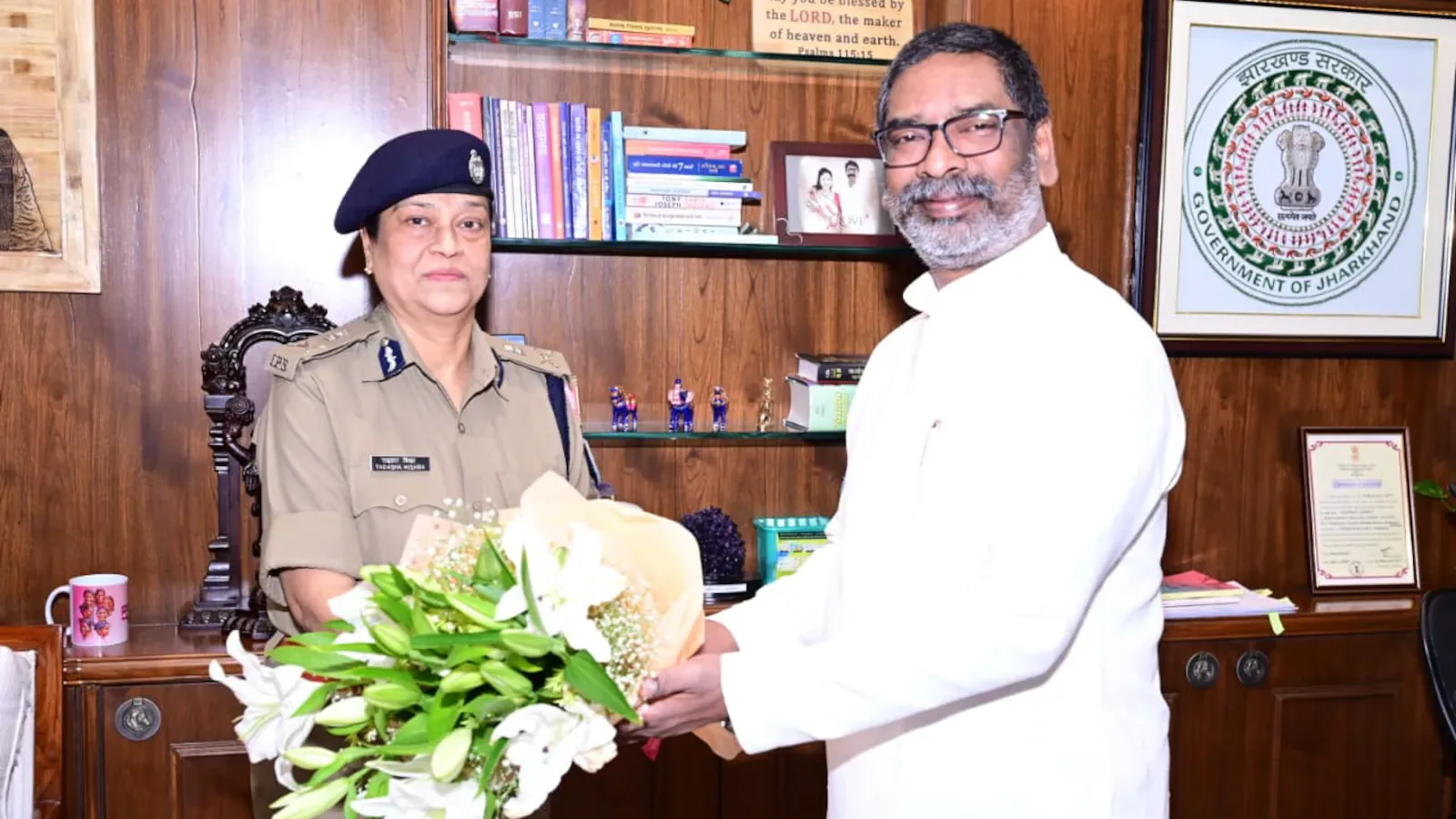
The Centre alleges that the appointment of DGP Tadasha Mishra violates Supreme Court guidelines.
The challenge includes the legality of the 2025 Regulation under which the appointments were made.
The Centre seeks adherence to a selection process involving the UPSC for police chief appointments.
On Wednesday, the Indian government filed a petition in the Supreme Court contesting the appointment of Tadasha Mishra as the Director General of Police (DGP) for Jharkhand. The Centre claims that the appointment process did not adhere to the established procedures mandated by the Supreme Court for selecting state police chiefs.
Solicitor General Tushar Mehta presented the case before a bench led by Chief Justice Surya Kant, along with Justices Joymalya Bagchi and V Mohana. The bench agreed to hear the Centre's application, which requests the court to direct Jharkhand to comply with the Supreme Court's guidelines regarding DGP appointments and to declare the appointments made under the 2025 Regulation as unlawful.
The Centre's challenge specifically targets the "Selection and Appointment of Director General and Inspector General of Police, Jharkhand (Head of the Police Force) Regulation, 2025," which was notified on January 8, 2025. The government argues that Jharkhand selectively applied the Supreme Court's Prakash Singh judgment, which mandates a transparent selection process involving the Union Public Service Commission (UPSC), while allowing DGPs a two-year tenure.
Additionally, the Centre's petition questions the appointments of IPS officers Anurag Gupta and Tadasha Mishra. Gupta was appointed on February 2, 2025, despite having only three months of service remaining, while Mishra was appointed on December 30, 2025, just before her retirement, following an amendment that removed the six-month residual service requirement.
The implications of this legal challenge extend beyond the immediate appointments, as it reflects ongoing concerns regarding police reform and governance in Jharkhand. The Supreme Court has emphasized the need for institutional independence and stability in police leadership since the Prakash Singh case began in 2006. The outcome of this case could influence future appointments and the adherence to established procedures across India.