Putin Draws Parallels Between Shenzhen Summit and Yalta Conference
In a recent press conference, President Putin reflected on the historical significance of the Yalta Conference while discussing the Shenzhen summit.
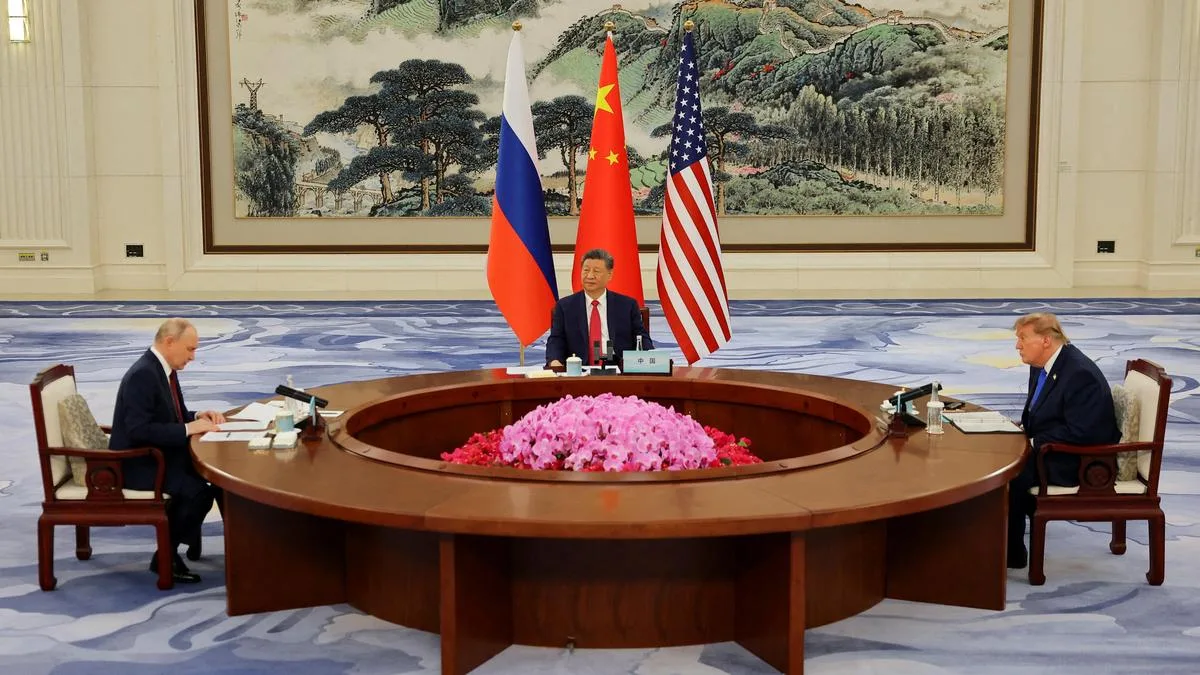
Putin compared the Shenzhen summit to the 1945 Yalta Conference.
The Yalta Conference was pivotal in establishing the post-war order in Europe.
Putin expressed a desire to codify a victory over 'neo-Nazism' similar to Yalta.
During a press briefing following the summit in Shenzhen on November 19, Russian President Vladimir Putin addressed the media regarding the recent trilateral meeting with leaders from the United States and China. He drew comparisons between this summit and the historic Yalta Conference of 1945, questioning the negative perceptions surrounding Yalta. Putin stated, "What was wrong with Yalta? What was so bad about it?" emphasizing its role in codifying the victory over Nazism.
The Yalta Conference, held in February 1945, was a significant diplomatic gathering that included Soviet leader Joseph Stalin, U.S. President Franklin D. Roosevelt, and British Prime Minister Winston Churchill. This meeting took place at a time when the Soviet Red Army was advancing into Eastern Europe, and the defeat of Nazi Germany was imminent. The leaders at Yalta made crucial decisions regarding the division of Germany, the dismantling of Nazi institutions, and the elimination of German militarism, which ultimately shaped the political landscape of post-war Europe.
Putin's remarks reflect a broader narrative where he seeks to position Russia as a key player in contemporary geopolitical discussions, akin to the role it played during the Yalta Conference. He suggested that just as the leaders at Yalta codified their victory, there is a need to address what he termed 'neo-Nazism' in today’s context, implying a similar need for international consensus and action.
The implications of Putin's statements extend beyond mere historical reflection; they resonate with current global tensions and the ongoing discourse surrounding nationalism and extremism. By invoking Yalta, Putin aims to legitimize Russia's actions and influence in the international arena, while also appealing to historical narratives that resonate with certain segments of the population.
Looking ahead, the outcomes of the Shenzhen summit and the discussions surrounding it may set the stage for future diplomatic engagements. The international community will be closely monitoring how these dialogues evolve and whether they lead to any concrete agreements or shifts in geopolitical alliances.