Supreme Court Threatens CBI Inquiry Over Illegal Mining in Rajasthan
The Supreme Court has warned Rajasthan of a potential CBI investigation into illegal mining activities along the Jojari-Luni-Bandi river system.
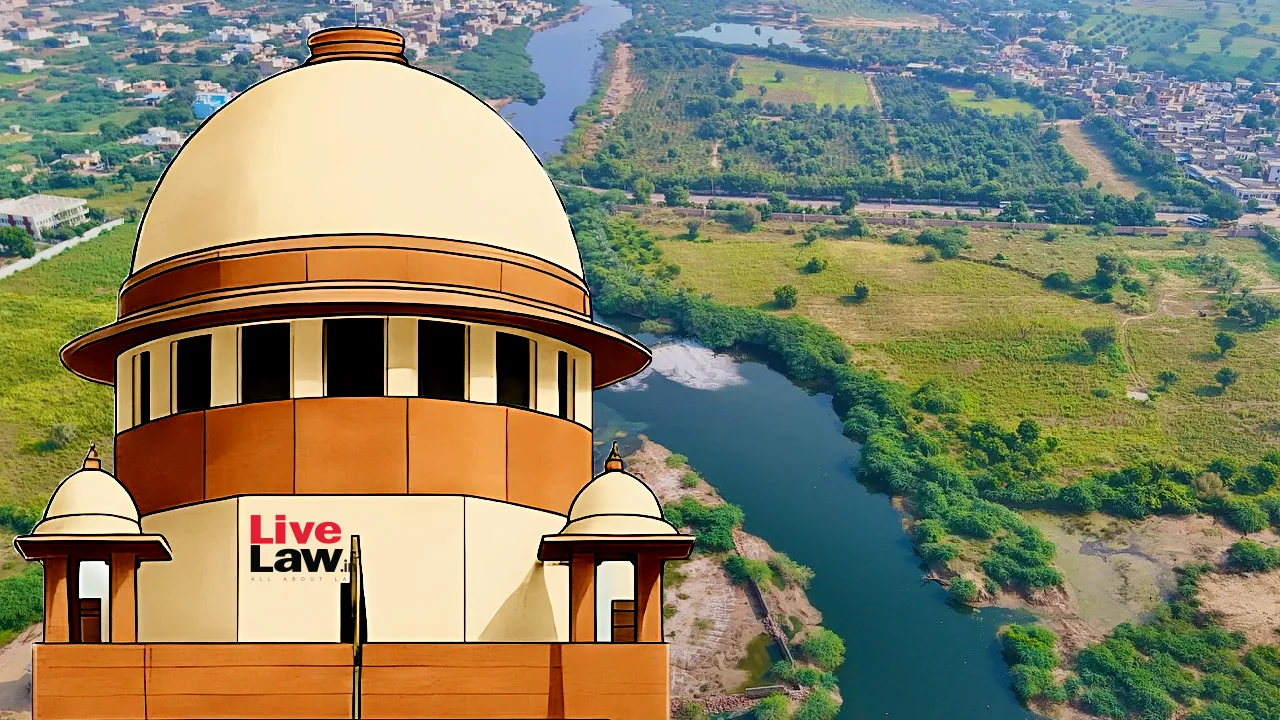
The Supreme Court criticized Rajasthan for regularizing illegal mining leases.
Justice Mehta emphasized the need for state accountability in environmental protection.
The next hearing is scheduled for November 27, where the state must present a financial proposal for pollution control.
On October 26, 2026, the Supreme Court of India issued a stern warning to the Rajasthan government regarding the possibility of a Central Bureau of Investigation (CBI) probe into the alleged illegal mining activities along the Jojari-Luni-Bandi river system. The court raised concerns about the state authorities granting mining leases in areas identified for illegal mining and the subsequent regularization of these leases, which could have serious implications for the officials involved.
The bench, comprising Justice Vikram Nath and Justice Sandeep Mehta, expressed frustration over the state's failure to protect the river ecosystem, which affects the lives of approximately 20 lakh residents. The court highlighted that despite previous judicial directives aimed at safeguarding the rivers, the state had not taken adequate measures to address the ongoing illegal mining activities. Justice Mehta pointedly questioned the rationale behind regularizing leases in areas where illegal mining had already been identified.
During the proceedings, the court scrutinized the state's claims of having registered numerous cases related to illegal mining. Justice Mehta remarked that merely registering cases did not resolve the issue of previously illegal mining areas being regularized. He challenged the state's compliance affidavit, which documented the allotment of mining leases, questioning how the natural flow of the rivers could be maintained if contiguous stretches were leased for mining activities.
The court also criticized Rajasthan officials for misrepresenting its earlier directives regarding river boundary demarcation, which could further exacerbate industrial pollution. Justice Mehta emphasized that the determination of the High Flood Line must consider the river's flood conditions rather than just its dry-season flow. He demanded accountability from the state, suggesting that the officials involved in misrepresenting court orders should face disciplinary action.
Looking ahead, the Supreme Court has instructed the Rajasthan government to return with a concrete financial proposal aimed at establishing common effluent treatment plants equipped with zero-liquid-discharge technology. The court underscored the shared responsibility of the state and industries in addressing pollution issues, warning that failure to present an acceptable proposal could lead to further investigations into the Sanganer industrial area, where many industries operate without necessary approvals. The next hearing is set for November 27, where the court expects to see a proactive approach from the state regarding environmental restoration efforts.