Supreme Court Justice Satish Chandra Sharma Retires Amid Bias Concerns
Justice Satish Chandra Sharma's retirement raises questions about propriety after his son's ties to the Election Commission come to light.
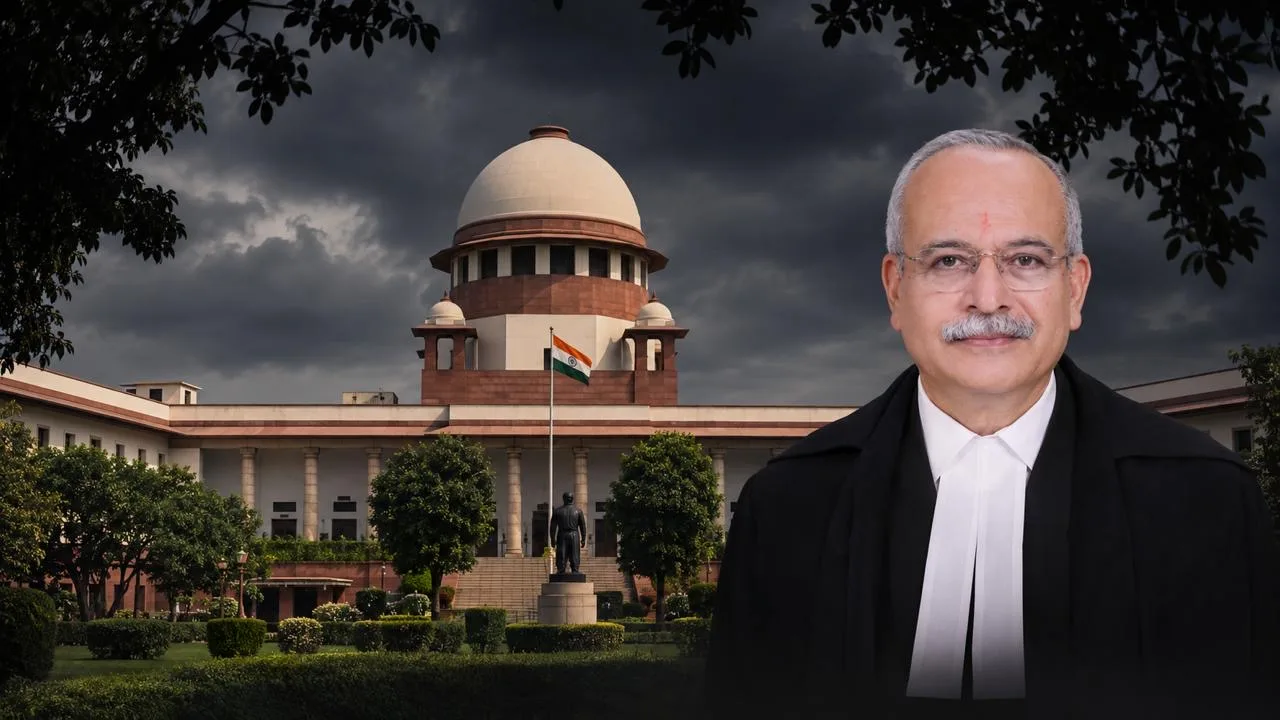
Justice Sharma's retirement leaves unresolved concerns about perceived bias in his rulings.
His son served as a counsel for the Election Commission, which was not disclosed during critical hearings.
The Supreme Court's recent judgment emphasizes the importance of impartiality and the perception of bias.
Justice Satish Chandra Sharma of the Supreme Court has retired, leaving behind significant concerns regarding propriety and perceived bias in his judicial conduct. His retirement comes after revelations that his son was a standing counsel for the Election Commission of India, which has sparked debates about the integrity of his decisions, particularly in cases involving the Commission. The legal community and the public are questioning the implications of this undisclosed relationship on his rulings.
The controversy intensified following Justice Sharma's involvement in a pivotal case regarding the appointment of the Chief Election Commissioner and Election Commissioners. His decision to refer the matter to a larger bench contradicted the views of Justice Dipankar Datta, who believed the case did not warrant such action. The Union and the Election Commission had requested this referral, raising eyebrows about the motivations behind Justice Sharma's ruling, especially given his son's professional ties to the Commission.
During the hearings, Justice Sharma did not disclose his son's role, which is considered a breach of judicial propriety. Legal norms dictate that judges should reveal any potential conflicts of interest, particularly when family members are involved with parties in a case. This lack of transparency has led to petitions seeking the recall of his judgment, arguing that it was tainted by a reasonable perception of bias. In a recent ruling, the Supreme Court clarified that the test for bias is not merely whether actual bias exists but whether there is a reasonable likelihood of bias perceived by a reasonable person.
The implications of Justice Sharma's retirement extend beyond his individual cases, raising broader questions about judicial accountability and the integrity of the legal system in India. The public's trust in the judiciary is paramount, and any perception of bias can undermine confidence in legal proceedings. The situation has prompted discussions about the need for stricter adherence to disclosure norms among judges to maintain the sanctity of the judicial process.
As Justice Sharma steps down, the legal community will be closely watching how these issues unfold. The Supreme Court's emphasis on impartiality in its recent judgments suggests that the judiciary is aware of the potential damage caused by perceived bias. Future developments may include calls for reforms in judicial conduct and greater scrutiny of judges' associations with parties involved in litigation, ensuring that the principles of justice are upheld without compromise.