Rahul Gandhi Critiques Delimitation Bill as 'Murder of Democracy'
In a heated debate, Rahul Gandhi condemns the proposed Delimitation Bill, claiming it undermines democratic integrity.
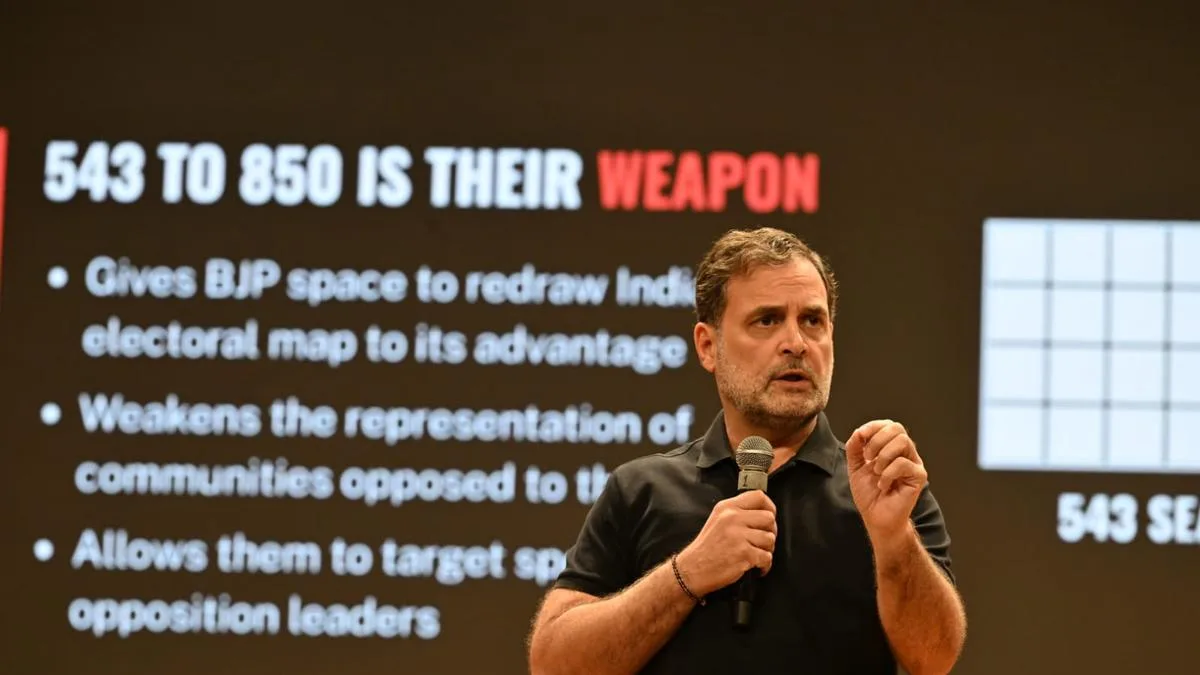
The Centre proposes a 25-year freeze on Lok Sabha seat distribution until 2051.
Rahul Gandhi labels the number of seats as a threat to democracy, asserting it favors the ruling party.
Opposition parties express concern over the implications of the bill for fair representation.
In a significant parliamentary session, Rahul Gandhi voiced strong opposition to the proposed Delimitation Bill, describing it as a 'murder of democracy.' The bill, which aims to increase the number of Lok Sabha seats to 850 and implement a 25-year freeze on seat distribution until 2051, has sparked intense debate among political leaders. Gandhi's remarks came as the bill was introduced in the Lok Sabha, with the government assuring a proportional increase in each state's representation.
The historical context of the delimitation process reveals ongoing tensions regarding electoral representation in India. The proposed changes are seen as a strategic move by the ruling party to consolidate power, potentially diminishing the Rajya Sabha's role as a check on the Lok Sabha. Critics argue that the limited number of sitting days in the Lok Sabha would further restrict MPs' ability to address pressing issues, raising concerns about the overall health of Indian democracy.
Key figures in the opposition have echoed Gandhi's sentiments, emphasizing that the bill could disproportionately benefit the ruling party. Gandhi stated, "The number 850 represents the murder of democracy," highlighting fears that the ruling party could manipulate constituency boundaries to its advantage. He also criticized the bill's linkage to women's reservation, suggesting that it obscures the real implications of the delimitation process.
The proposed bill has broader implications for the political landscape in India, particularly in states like Maharashtra and Tamil Nadu, where representation could be significantly altered. Leaders from various parties, including the Shiv Sena and the DMK, have expressed concerns that the bill could erase regional identities and skew representation in favor of larger states like Uttar Pradesh.
Looking ahead, the Lok Sabha is set to deliberate on the bill in the coming days, with opposition parties rallying to challenge its provisions. As the political discourse intensifies, the future of the Delimitation Bill remains uncertain, with potential ramifications for the upcoming elections and the overall democratic framework in India.