Supreme Court Halts Defamation Case Against Rahul Gandhi Over PM Modi Remarks
The Supreme Court has temporarily suspended the criminal defamation trial against Rahul Gandhi concerning his comments about PM Modi.
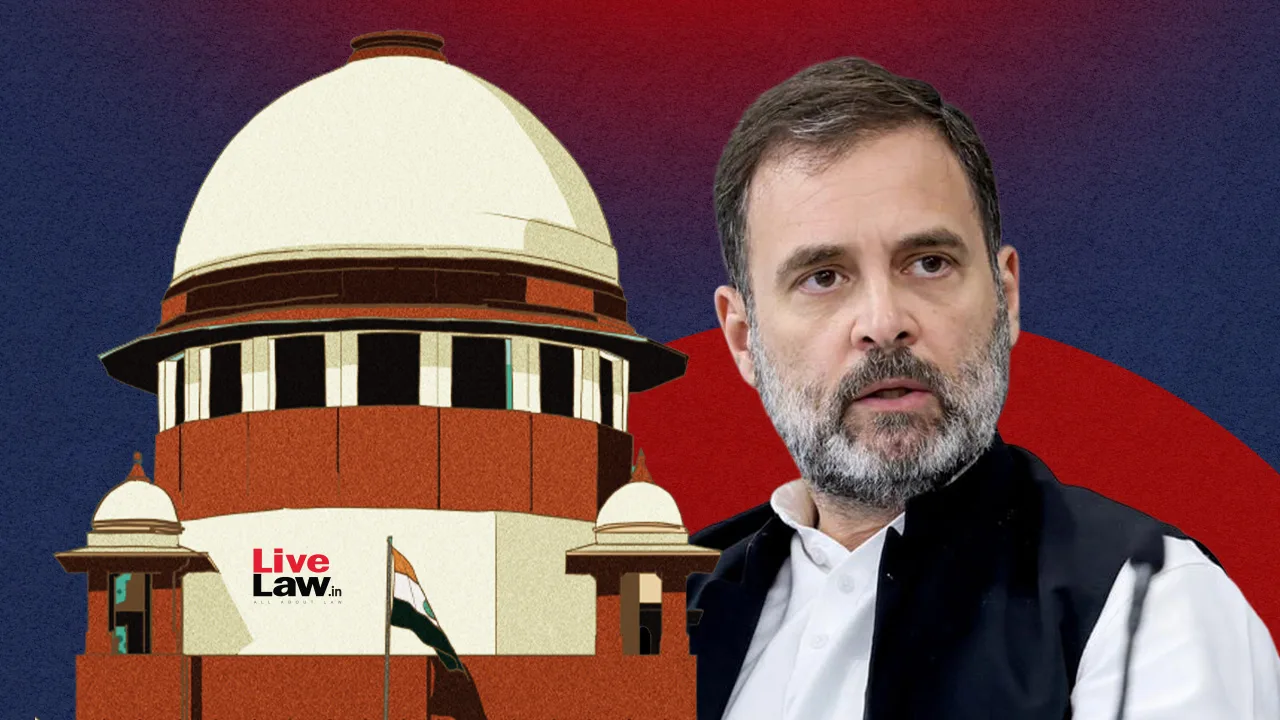
Supreme Court stays trial proceedings for Rahul Gandhi's defamation case.
Gandhi's remarks referred to PM Modi as 'Choro Ke Sardar'.
The case raises questions about the maintainability of defamation claims by political party members.
In a significant legal development, the Supreme Court of India has put a hold on the criminal defamation trial against Congress leader Rahul Gandhi. This decision comes in response to Gandhi's controversial remarks where he referred to Prime Minister Narendra Modi as 'Choro Ke Sardar' and 'Commander-in-Thief'. The bench, comprising Justice Vikram Nath and Justice Aparesh Kumar Singh, issued a notice that is returnable in four weeks, effectively pausing any further proceedings in the trial court.
The backdrop to this case involves Gandhi's earlier challenge to the summons issued by a Magistrate court, which arose from a complaint filed by a member of the Bharatiya Janata Party (BJP). Gandhi contended that the complaint was not maintainable, arguing that he did not specifically name the party and that the remarks did not target any identifiable group. He emphasized that without a clearly aggrieved party, the case should not proceed.
During the proceedings, Senior Advocate Abhishek Manu Singhvi represented Gandhi, arguing against the legitimacy of the complaint. The High Court had previously upheld the Magistrate's decision, stating that the comments made by Gandhi could be interpreted as affecting the reputation of the Prime Minister and, by extension, the BJP. The court noted that the implications of such remarks would need to be assessed during the trial.
The complaint, initiated by Mahesh Shrishrimal, a BJP worker, alleged that Gandhi's comments tarnished the reputation of the Prime Minister and the ruling party. The crux of the legal debate centers on whether Gandhi's statements constitute criminal defamation and if a political party worker can initiate a complaint without explicitly naming the party or its members.
Looking ahead, the Supreme Court's decision to stay the trial provides a temporary reprieve for Gandhi as the legal proceedings unfold. The next steps will involve the court's review of the arguments presented by both sides, with the notice returnable in four weeks, indicating that the matter will continue to be closely monitored in the political and legal arenas.