Supreme Court Addresses Protest Duration and Daily Wager Rights
The Supreme Court emphasizes the need for limited protest durations to protect the livelihoods of daily wage workers.

Supreme Court rules protests cannot occupy sites indefinitely.
CJI Kant highlights the impact of protests on daily wage earners and local businesses.
Solicitor General warns against unauthorized protests near Parliament.
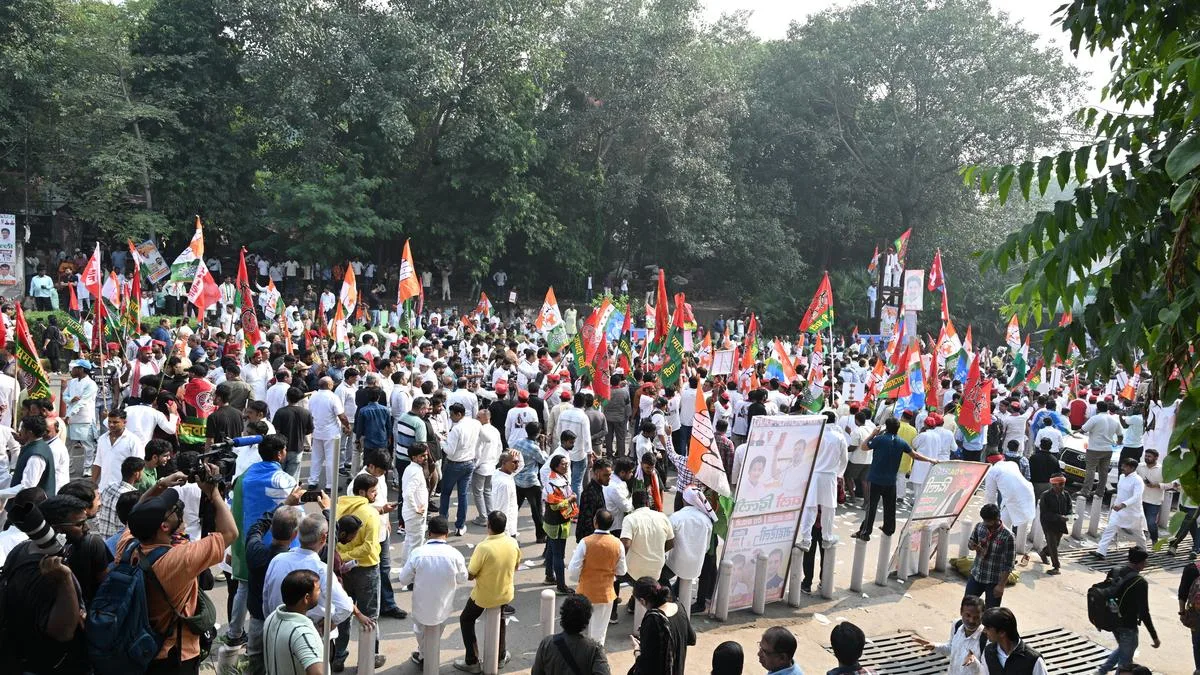
In a significant ruling on Tuesday, the Supreme Court of India stated that protest sites cannot be occupied indefinitely, emphasizing the necessity for designated time limits to accommodate other groups wishing to demonstrate. The bench, led by Chief Justice Surya Kant, addressed ongoing protests in Delhi against Chief Election Commissioner Gyanesh Kumar, asserting that the right to protest must be balanced with the rights of others to access public spaces.
The court's remarks were particularly pointed regarding the plight of daily wage workers, who suffer economically due to prolonged protests. CJI Kant articulated concerns over the conflicting rights of protesters and the need for a solution that considers the livelihoods of those affected. He questioned, "Where does that person go for their daily bread?" highlighting the essential nature of work for many individuals caught in the crossfire of political demonstrations.
During the proceedings, Solicitor General Tushar Mehta noted that previous protests, such as the Cockroach Janta Party's demonstration, exceeded their permitted duration, raising issues of legality and public order. He underscored the importance of obtaining official permission for protests, especially near significant governmental sites like Parliament, which symbolize national sovereignty.
The economic ramifications of the protests were also brought to light by Senior Advocate Mukul Rohatgi, who claimed that traders incurred losses of approximately ₹2,000 crore due to disruptions. He pointed out that the designated protest area at Ramlila Maidan is in close proximity to bustling markets and residential areas, affecting millions. Rohatgi urged the government to devise a strategy to mitigate such losses, particularly during crucial festive seasons when sales are vital for local economies.
As the court deliberated, Justice Bagchi raised questions about attributing business losses solely to protests, suggesting that state-imposed restrictions could also play a role. The discussion highlighted the complex interplay between the right to protest and the economic realities faced by local communities. Looking ahead, the court's ruling may prompt a reevaluation of protest regulations in urban areas, balancing the right to protest with the need for public order and economic stability.