Prashant Kishor Attributes Ganga Bridge Project to Nitish Kumar
In a recent statement, Prashant Kishor emphasized Nitish Kumar's role in the Ganga bridge project, challenging rival political claims.
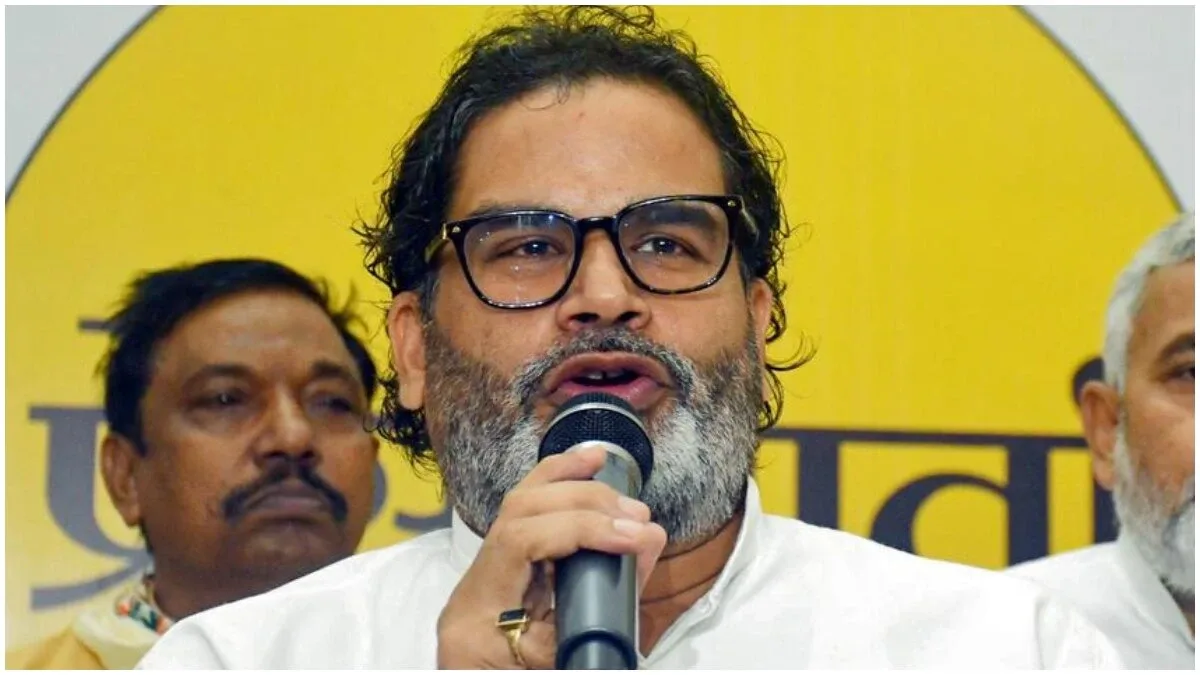
Prashant Kishor credits Nitish Kumar for the Raghopur-Bidupur bridge project.
Kishor criticizes the BJP and RJD for competing to claim credit for the bridge.
He questions the Centre's neglect of Bihar's development despite a decade in power.
Prashant Kishor, the founder of Jan Suraaj, has publicly acknowledged former Bihar Chief Minister Nitish Kumar's pivotal role in the conception of the Raghopur-Bidupur bridge over the Ganga. His remarks come just before Prime Minister Narendra Modi's planned inauguration of the bridge, which has been named Nitish Setu in Kumar's honor. Kishor accused the BJP and RJD of attempting to unjustly claim credit for the project, asserting that Kumar's vision was integral to its realization.
Kishor's comments were made during a press conference in Patna, where he highlighted that the bridge project was conceived during a critical political period between the 2014 Lok Sabha elections and the 2015 Bihar Assembly elections, when Kumar was leading a minority government. He expressed that the RJD's opposition to naming the bridge after Kumar was a reflection of their political tactics, stating, "If trains can be named after Modi, I don't see any problem with naming a bridge after Nitish Kumar."
In addition to discussing the bridge, Kishor criticized the central government for its perceived neglect of Bihar, pointing out that the state continues to lag in crucial areas such as per capita income, education, and employment. He challenged Prime Minister Modi to explain why, after 12 years in power, Bihar remains behind other states in these key metrics. Kishor's remarks underscore his concerns about ongoing issues like migration and flooding in the state.
Kishor also addressed the political dynamics within the NDA, alleging that the BJP is overshadowing Kumar and the JD(U). He claimed that Amit Shah is effectively controlling the JD(U) and prioritizing BJP interests over those of Kumar's party. This shift, according to Kishor, has rendered Kumar and the JD(U) increasingly irrelevant in the current political landscape, as evidenced by the lack of visibility for Kumar in recent government promotions, including during the Chhath festival.
Looking ahead, Kishor's statements may influence public perception as the inauguration of the bridge approaches. His emphasis on Kumar's contributions and the challenges faced by Bihar could resonate with voters, particularly as the political landscape evolves in the lead-up to future elections. Kishor's critique of both the BJP and RJD may also set the stage for a more significant political discourse regarding Bihar's development and governance.