COP31 Negotiations Face Setback Over Fossil Fuel Language
As COP31 discussions continue, a new draft agreement fails to address fossil fuel transition, risking a collapse of the climate talks.
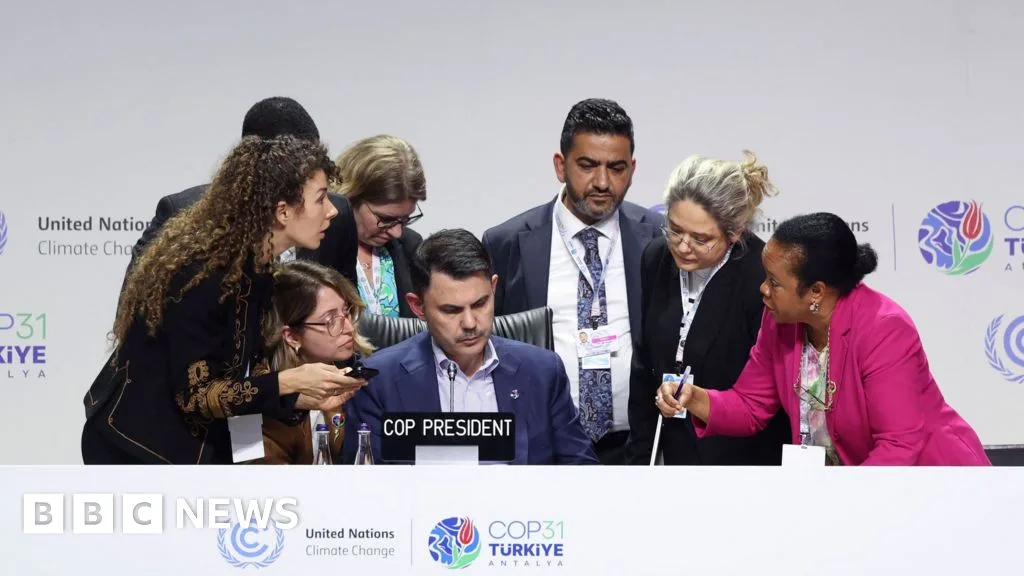
A new draft at COP31 lacks specific fossil fuel transition language, raising concerns among nations.
The EU and Pacific states are pushing for stronger commitments, while the Africa Group is disappointed by funding omissions.
Negotiations are at risk of suspension if consensus is not reached by the deadline.
The COP31 climate summit in Antalya is entering a critical phase as countries reconvene to negotiate a new global climate agreement. The latest draft, released early Sunday, aims to bridge divisions among nations but notably lacks explicit references to transitioning away from fossil fuels, a contentious issue that has previously led to threats of walkouts. This omission has sparked concerns about the viability of the negotiations, which are now in overtime as delegates strive to reach a consensus.
Historically, the COP meetings have served as a platform for nations to address climate change collaboratively. However, the current discussions have been marked by significant disagreements, particularly regarding fossil fuel commitments. The new draft acknowledges a prior commitment made three years ago but does not include specific targets for phasing out fossil fuels, which has disappointed many countries, especially those from the African Group who were hoping for financial commitments for climate adaptation.
Key figures in the negotiations, including EU Commissioner for Climate Wopke Hoekstra, have expressed frustration over the lack of concrete climate action in the draft. Meanwhile, the UK's chief negotiator, Miatta Fahnbulleh, remains optimistic about reaching an agreement. The previous draft had called for a quicker phase-out of fossil fuels, but subsequent revisions have removed all mentions of coal, oil, and gas, leading to further tensions among negotiating parties.
The implications of these negotiations extend beyond the summit itself, as the failure to reach a consensus could delay critical climate action and funding for vulnerable nations. The acknowledgment that the world is on track to exceed the 1.5°C temperature goal set by the Paris Agreement adds urgency to the discussions, with scientists warning of severe consequences if this threshold is crossed.
Looking ahead, the COP31 talks are scheduled to continue, with a critical deadline looming. If a consensus is not achieved, the negotiations may be suspended until next year, a scenario that has only occurred once since the inception of COP meetings in 1995. The outcome of these discussions will significantly impact global climate policy and the future of international cooperation on climate change.