Pakistan Minister Highlights Historical Ties at SCO Forum in Delhi
During the SCO civilisational dialogue, Pakistan's Musadik Masood Malik emphasized the historical significance of Purana Qila.
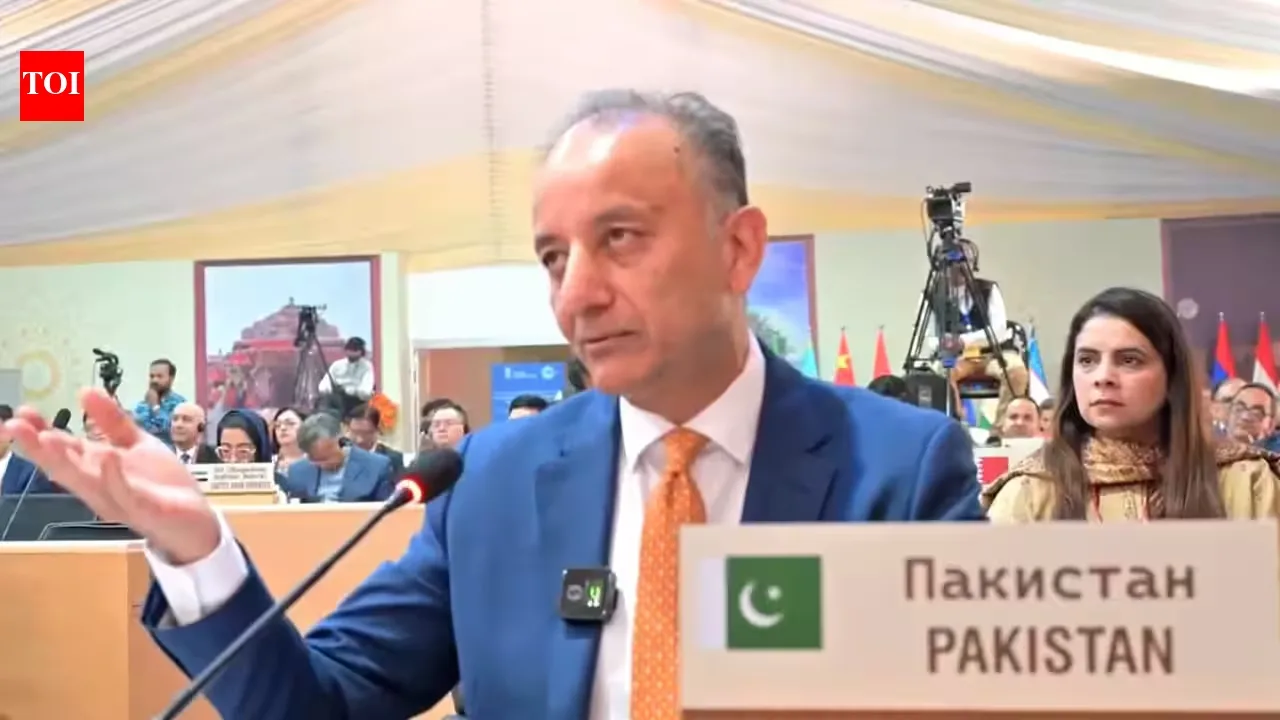
Malik's visit marks his first trip to India amid tense relations.
He highlighted the contributions of Humayun and Sher Shah Suri to Purana Qila's history.
India showcased the fort's layered history, linking it to the ancient city of Indraprastha.
In a significant diplomatic engagement, Pakistan's Climate Change and Environmental Coordination Minister Musadik Masood Malik visited India for the first time to participate in the Shanghai Cooperation Organisation (SCO) civilisational dialogue held at Purana Qila in New Delhi. This event comes at a time of strained relations between India and Pakistan, particularly following the 2025 Pahalgam terror attack.
Purana Qila, a historic fort, served as the backdrop for discussions on civilisational continuity. Malik emphasized the fort's historical roots, attributing its foundation to Mughal Emperor Humayun, who hailed from Central Asia, and its subsequent construction to Sher Shah Suri, an Afghan ruler. He noted that the fort embodies the cultural diversity of the subcontinent, stating, "Within a single wall, one could find the art of two different rulers, two cultural layers, and traces of two traditions."
India, on the other hand, presented Purana Qila as a symbol of its rich historical narrative, linking it to the ancient city of Indraprastha from the epic Mahabharata. The Indian delegation highlighted nine layers of historical continuity at the site, including the ramparts built by Sher Shah Suri after remodeling the city founded by Humayun. Prime Minister Narendra Modi also reflected on this extensive history during his inaugural address, reinforcing India's civilizational journey.
Malik remarked on the archaeological findings at Purana Qila, asserting that Delhi's strength has been enhanced by the influx of various civilizations rather than diminished. He appreciated the event's theme, 'Tehzeeb Ki Guftagu' or 'Dialogue of Civilisations,' which underscores the importance of cultural exchange.
As the SCO Forum progresses, the focus remains on fostering dialogue and understanding among participating nations. Malik's statements and the historical context provided by both sides highlight the potential for cultural diplomacy, even amid political tensions. The ongoing discussions may pave the way for future collaborations and a deeper understanding of shared histories.