Mass Protests in New Delhi Demand Resignation of Election Chief
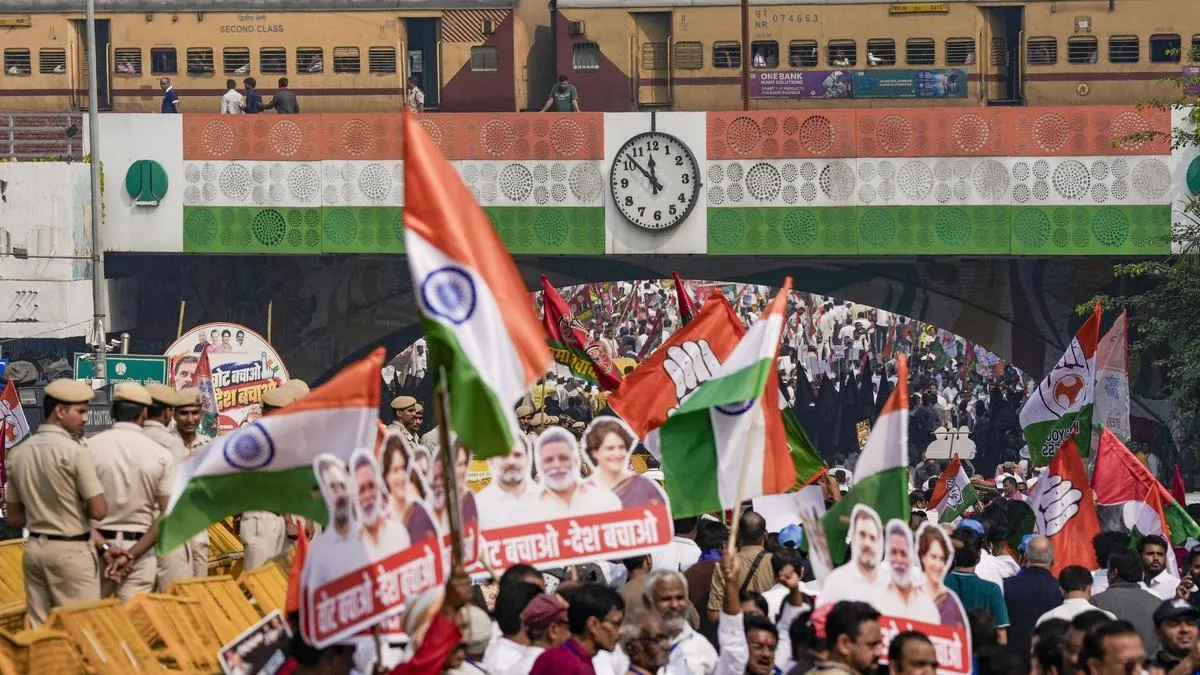
Thousands gathered in New Delhi on November 1, 2026, to call for the resignation of the Chief Election Commissioner amid allegations of biased voter list revisions.
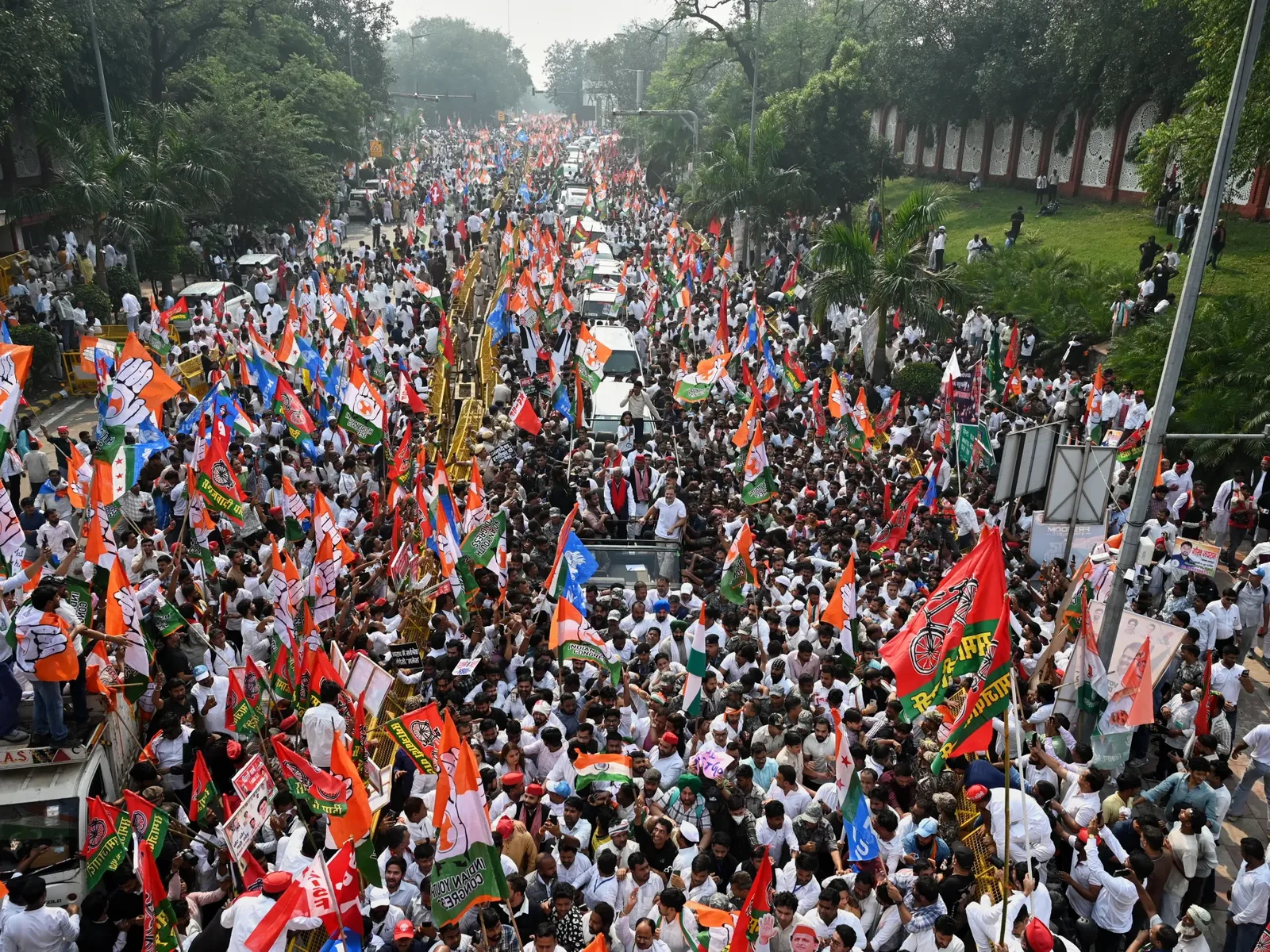
Protests led by Rahul Gandhi highlight concerns over electoral roll changes.
Over 130 million names were removed from voter lists, affecting minorities.
Security was heightened with police presence as demonstrators marched towards Ramlila Maidan.
On November 1, 2026, a significant demonstration took place in New Delhi, where thousands of protesters rallied to demand the resignation of Chief Election Commissioner Gyanesh Kumar. The protests were sparked by allegations from opposition parties that recent changes to the electoral rolls disproportionately favored Prime Minister Narendra Modi's ruling Bharatiya Janata Party (BJP). The Indian National Congress, led by Rahul Gandhi, organized the event, marking a continuation of protests that have persisted for over a month.
The backdrop to these protests involves substantial revisions to the voter lists, which reportedly removed over 130 million names. Opposition leaders argue that this action primarily impacted Muslims and other minority groups who are less likely to support the BJP. In response, the Election Commission has denied any bias, asserting that individuals whose names were incorrectly removed have the opportunity to re-register.
As the demonstration unfolded, security measures were significantly increased, with hundreds of police officers deployed, some equipped with batons and shields. Traffic diversions were implemented to manage the flow of demonstrators as they marched from central New Delhi to the historic Ramlila Maidan. Protesters displayed Indian flags and party banners while opposition leaders rode in an open-top jeep, emphasizing their demands.
Health Minister Jagat Prakash Nadda characterized the protest as a “carefully orchestrated drama,” suggesting that it undermined democratic principles. He accused the opposition of attempting to create chaos under the guise of democratic expression. The protests have been ongoing since late September, fueled by concerns raised by Kumar's deputies regarding the electoral roll revisions and registration processes.
Political analysts have noted that these demonstrations represent one of Prime Minister Modi's most significant political challenges since he assumed office in 2014. With the next general election scheduled for 2029, the opposition's growing support and the public's response to these issues could have lasting implications for India's political landscape.