Indian Diplomat Anmol Bedi Challenges Pakistan at UN Assembly
Anmol Sher Singh Bedi addresses Pakistan's remarks at the UN, emphasizing the dangers of nuclear rhetoric.
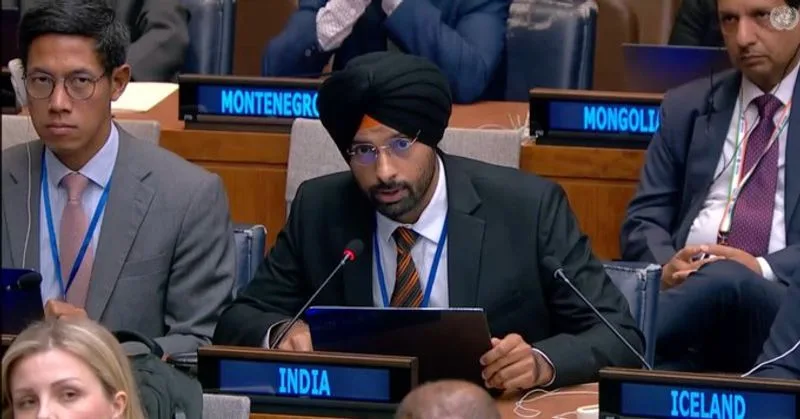
Anmol Bedi warns against nuclear threats during UN discussions.
Bedi advocates for reform in global institutions, especially the UN Security Council.
He highlights the need for trust in multilateral systems.
Anmol Sher Singh Bedi, an Indian diplomat hailing from Amritsar, delivered a pointed response to Pakistan during a session of the United Nations General Assembly. His remarks came as a direct rebuttal to comments made by Pakistani representatives regarding cross-border issues, where Bedi cautioned that invoking nuclear capabilities only heightens the risk of conflict escalation rather than promoting restraint.
During the 81st First Committee session, Bedi exercised India’s right of reply, emphasizing that concerns over escalation should be assessed based on actions rather than mere words. He stated, "A posture that relies on a nuclear overhang to promote sub-conventional adventurism only raises the risk of escalation, not the prospect of restraint." This statement underscores India's stance on the importance of responsible conduct in international relations.
Currently serving as Senior Adviser (Disarmament) at India’s Permanent Mission to the Conference on Disarmament in Geneva, Bedi has a significant role in addressing multilateral disarmament and international security issues. His previous experience includes serving as a Friend of the Chair in the Working Group of the Biological Weapons Convention, where he contributed to strengthening international norms against biological threats.
Bedi has also been vocal about the necessity for reform within global institutions, particularly the United Nations Security Council. He argues that the current structure fails to reflect modern geopolitical dynamics and does not adequately represent developing nations. He previously stated, "Trust is the core currency of the multilateral system. Restoring that trust must begin where reform is most needed: the UN Security Council."
Looking ahead, Bedi's remarks at the UN may influence ongoing discussions about nuclear policy and international security. As India continues to advocate for reforms in the UN, the implications of Bedi's statements could resonate in future diplomatic engagements, particularly concerning nuclear non-proliferation and global security frameworks.