India's Air Chief Dismisses F-35 Sale Amid U.S. Restrictions
India's Air Force Chief reveals no formal offer for F-35 jets from the U.S., highlighting access issues during a recent exercise.
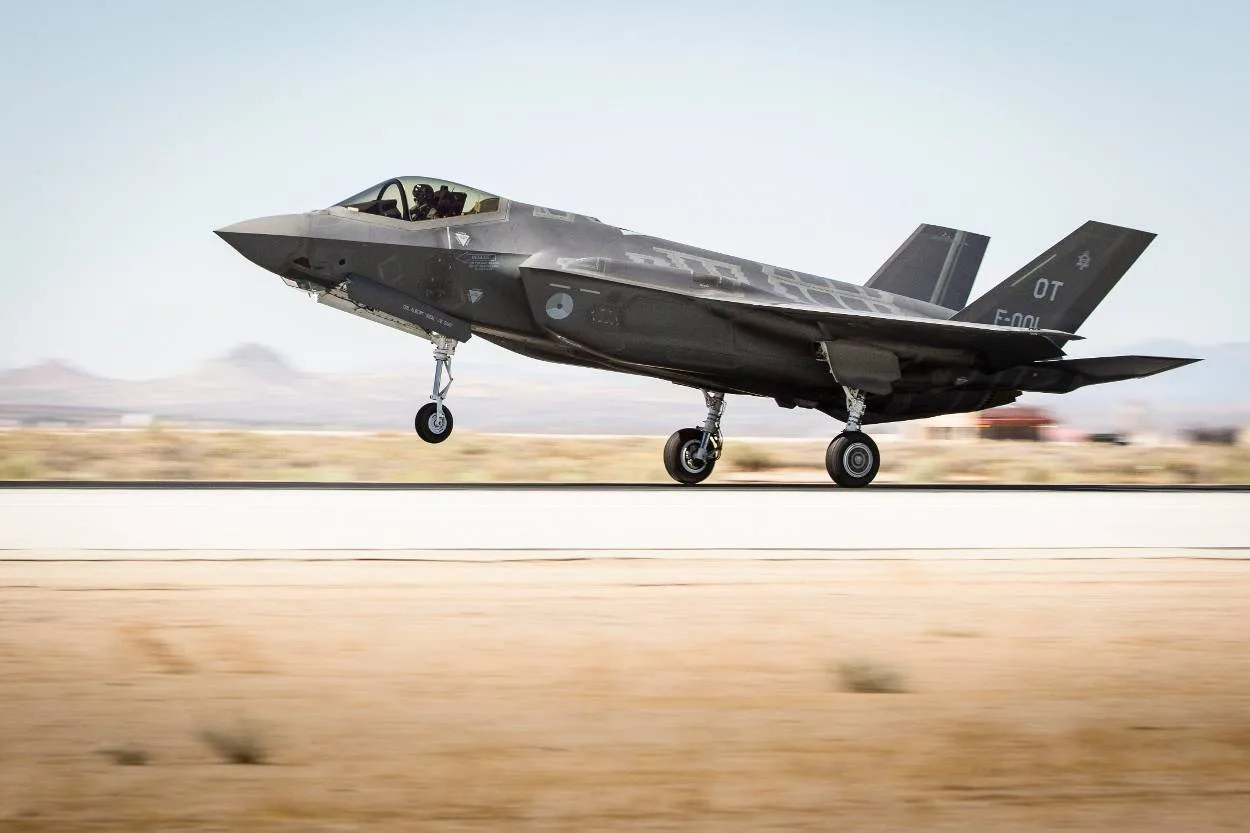
No official offer for F-35 jets made to India by the U.S.
Indian officers were not allowed near the F-35s during Exercise Tarang Shakti.
Concerns over technology transfer and geopolitical implications complicate potential deals.
During a press briefing on Saturday, Air Chief Marshal Amar Preet Singh of India’s Air Force stated that the United States has not formally proposed the sale of F-35 stealth fighters to India. His remarks came at the conclusion of the multinational Exercise Tarang Shakti-2026 held in Jodhpur, where he noted that U.S. personnel did not permit Indian officers to approach the aircraft. Singh's comments underscore the existing barriers in U.S.-India defense relations regarding advanced military technology.
The context of Singh's statements reflects a history of fluctuating defense ties between India and the United States. While there have been discussions about the potential sale of F-35s, including remarks from former President Donald Trump and Vice President J.D. Vance, these have not materialized into formal offers. The participation of six U.S. Air Force F-35As in the recent exercise marked a significant moment, being the first time these aircraft engaged in drills on Indian soil, yet it highlighted the limitations imposed by U.S. access protocols.
Singh also mentioned that the Indian government has yet to decide on evaluating Russia's offer for the Su-57 fighter jet. The decision-making process regarding military procurement is critical, as it reflects India's strategic priorities and its balancing act between various international partnerships. The complexities of acquiring advanced military technology, especially from the U.S., are compounded by stringent export controls and the necessity for congressional approval, which can delay or complicate any potential deal.
The implications of these developments are significant for India, as they navigate their defense strategy in a rapidly changing geopolitical landscape. The U.S. has expressed concerns about sharing sensitive technology, particularly with nations that have ties to adversaries like China and Russia. India's operational reliance on Russian military systems, such as the S-400 air defense system, further complicates its relationship with the U.S., which fears that these systems could compromise the F-35's classified data.
Looking ahead, the road to acquiring advanced military aircraft remains fraught with challenges for India. As the nation continues to develop its indigenous AMCA fighter program, the potential acquisition of foreign jets like the F-35 or Su-57 will require careful consideration of costs, technology transfer, and strategic alignment. The ongoing dialogue between India and the U.S. will be crucial in determining the future of their defense partnership, particularly in light of the complexities surrounding military procurement and technology sharing.