India-New Zealand Free Trade Agreement Launches on October 20
The India-New Zealand Free Trade Agreement, effective from October 20, eliminates import duties on Indian goods, enhancing market access.
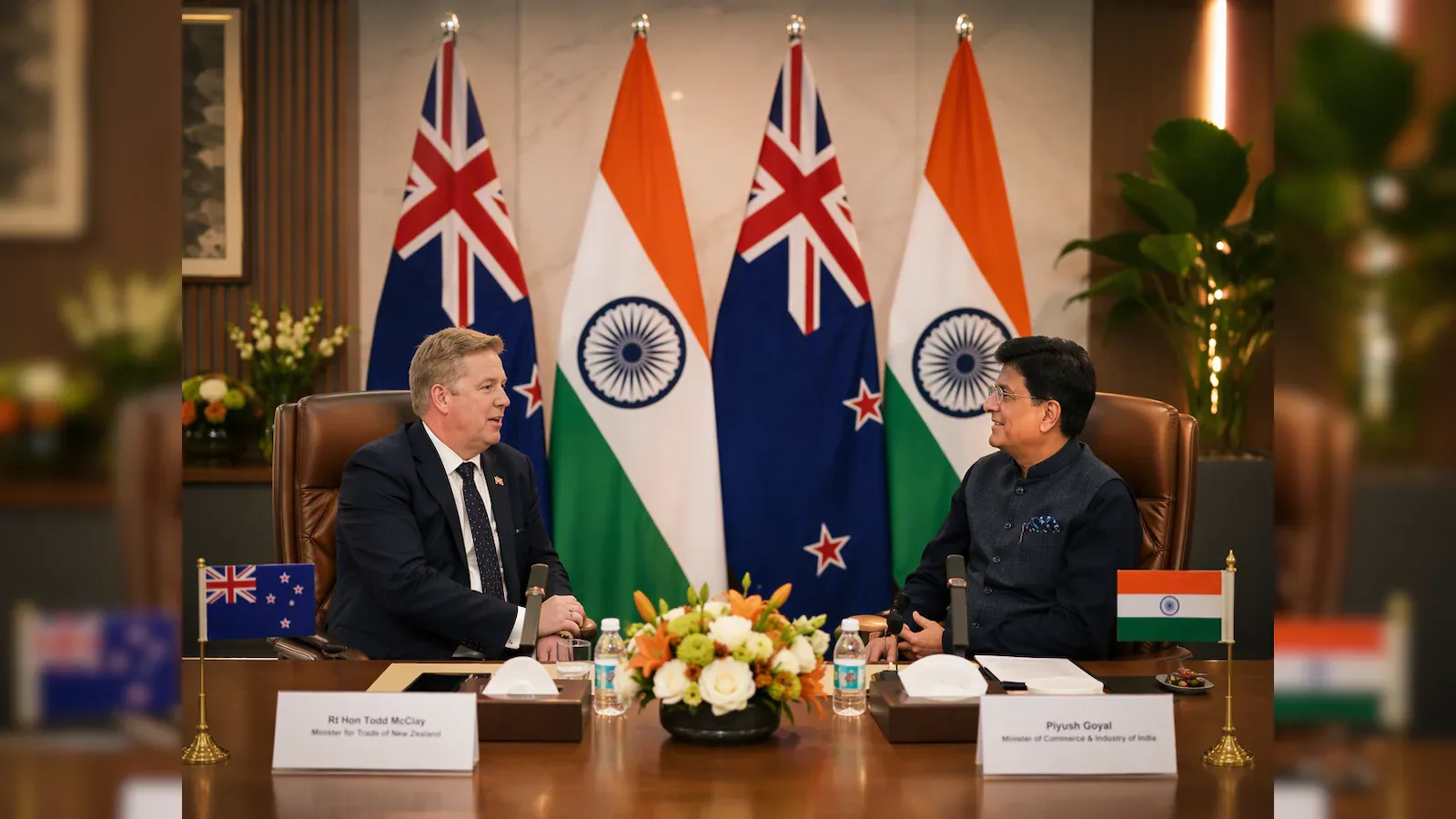
The FTA allows 100% duty-free access for Indian exports to New Zealand from day one.
Sectors like engineering, textiles, and pharmaceuticals stand to benefit significantly.
Both countries aim to double bilateral trade to $7 billion by 2030.
The India-New Zealand Free Trade Agreement (FTA) officially took effect on October 20, 2026, allowing Indian goods to enter the New Zealand market without facing import duties. This landmark agreement is expected to enhance the competitiveness of Indian products, opening new avenues for exporters across various sectors, including engineering, textiles, leather, footwear, and pharmaceuticals.
Historically, Indian exporters faced tariffs of up to 10% on several products in New Zealand. With the implementation of this FTA, these barriers have been removed, providing Indian manufacturers with a significant advantage in pricing. The agreement comes at a crucial time as Indian businesses are actively seeking to diversify their export markets in response to shifting global trade dynamics.
Chandragupt Prakash Mangal, Managing Director of Mangalam Worldwide Limited, emphasized the potential benefits for Indian engineering and stainless steel manufacturers. He stated that the elimination of duties on iron and steel products could enhance price competitiveness, allowing Indian exports to penetrate the New Zealand market more effectively. This is particularly vital for manufacturers aiming to establish a foothold in new trade corridors amidst evolving global trade conditions.
The FTA encompasses a wide range of sectors, including engineering goods, textiles, apparel, leather, footwear, gems and jewellery, and processed foods. The removal of import duties is expected to facilitate better pricing strategies and attract new customers. However, businesses will still need to adhere to product standards and establish robust distribution networks to maximize the benefits of this agreement.
Looking ahead, both India and New Zealand have set an ambitious target of doubling their bilateral trade to $7 billion by 2030. The agreement not only focuses on trade in goods but also includes provisions for investment and mobility, further strengthening the economic ties between the two nations. This FTA represents a strategic move for India to broaden its export horizons and reduce reliance on a limited number of markets.