Gaza's Transformation: Three Years of War's Impact
A stark visual comparison reveals the extensive damage to Gaza's infrastructure and cultural landmarks after three years of conflict.
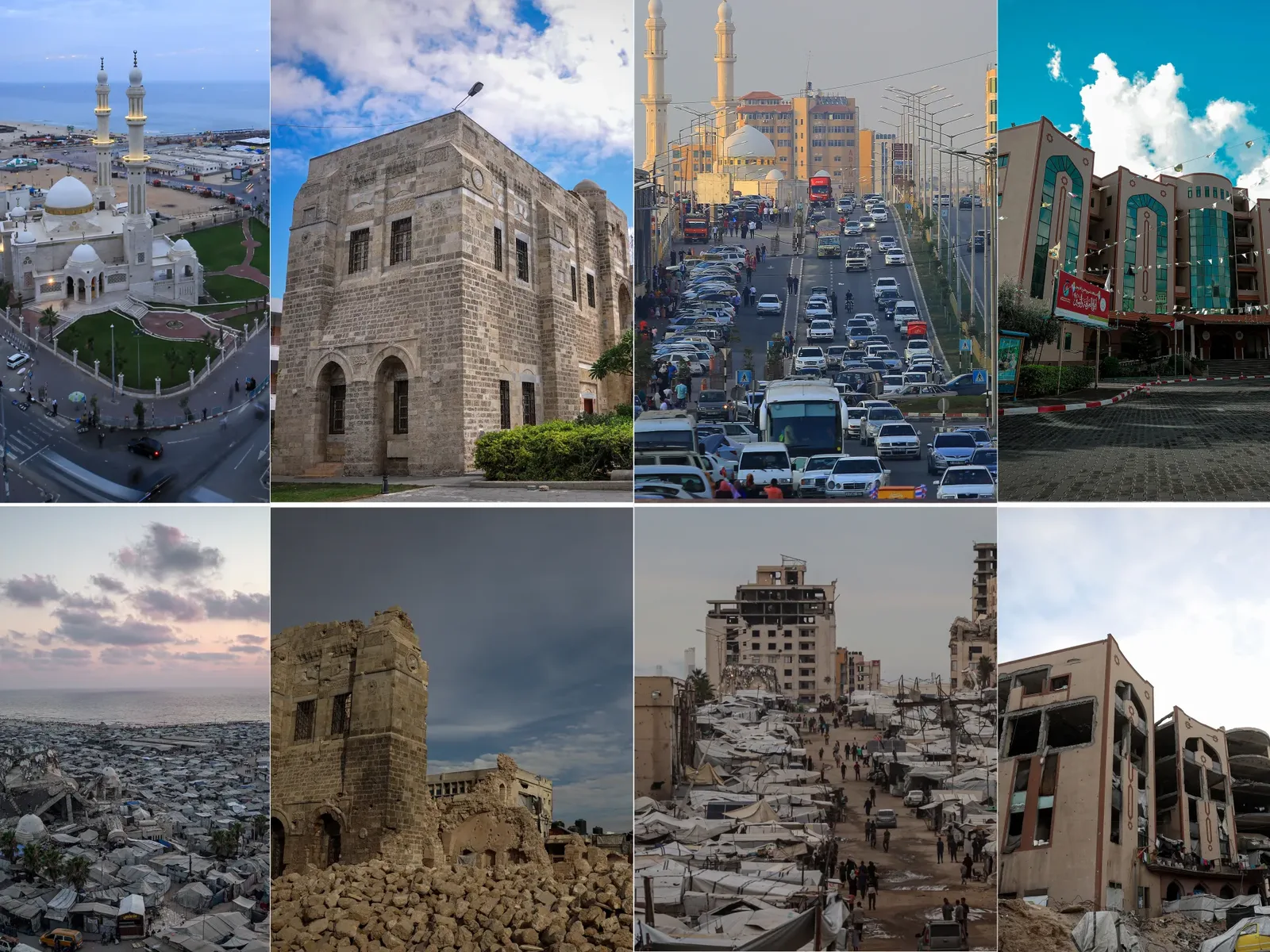
Over 80% of buildings in Gaza have been damaged or destroyed since October 2023.
UNESCO has confirmed damage to 164 cultural sites, including historic mosques and museums.
Many iconic locations have been transformed into ruins, affecting the daily lives of residents.
Gaza City has undergone a dramatic transformation over the past three years due to ongoing conflict, with more than 80% of its buildings reported damaged or destroyed since Israel's military operations began in October 2023. This extensive destruction has turned entire neighborhoods into rubble, severely impacting the region's infrastructure and the lives of its residents.
Historically, Gaza has been a vibrant hub, with its streets, markets, schools, and public spaces serving as essential parts of daily life for generations. These areas were not only places of commerce and education but also sites of cultural significance, reflecting Gaza's rich history as a crossroads of various civilizations. However, the recent war has obliterated many of these familiar landmarks, altering the city's landscape forever.
According to the Palestinian Central Bureau of Statistics, the destruction includes 164 cultural sites verified by UNESCO, comprising 128 historically significant buildings, 14 religious sites, and several museums and archaeological locations. Notable landmarks such as the Great Omari Mosque, Qasr al-Basha, and the Rashad Al-Shawwa Cultural Centre have suffered extensive damage, with some reduced to ruins. The loss of these sites not only erases historical memory but also complicates navigation for residents who relied on these landmarks.
The implications of this devastation extend beyond the physical landscape; they affect the social fabric of Gaza. The destruction of schools, hospitals, and community centers has left many families displaced and without access to essential services. The port, once a bustling center for fishermen and local gatherings, now serves as a makeshift shelter for thousands of displaced individuals, highlighting the humanitarian crisis unfolding in the region.
Looking ahead, the situation remains dire as reconstruction efforts are hindered by ongoing conflict and limited resources. The international community is urged to respond to the humanitarian needs of the population while addressing the cultural losses that have occurred. As Gaza grapples with the aftermath of war, the path to recovery will be long and challenging, requiring both immediate relief and long-term rebuilding strategies.