Delhi Prepares for Major Protest Amid Security Surge
As the 'cockroach' movement gears up for a significant protest, Delhi sees a massive deployment of security forces.
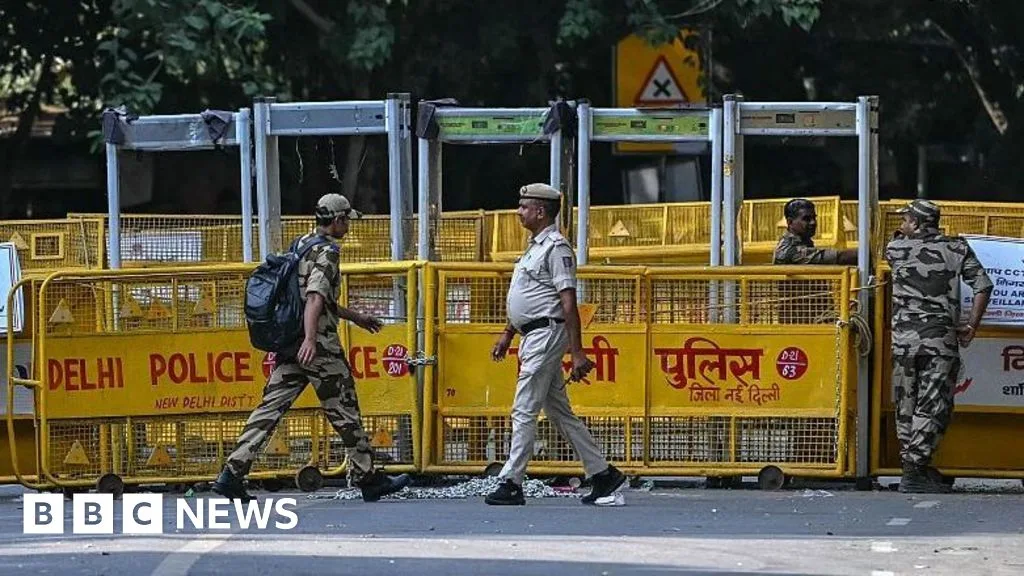
Over 30,000 security personnel are stationed in Delhi ahead of the protest.
Protesters demand electoral reforms and the resignation of Chief Election Commissioner Gyanesh Kumar.
Authorities have denied permission for the protest, citing short notice and public safety concerns.
In anticipation of a large-scale protest organized by the 'cockroach' movement, Delhi has seen the deployment of over 30,000 security personnel. The protest, scheduled for Saturday, aims to address demands for electoral reforms and the resignation of Chief Election Commissioner Gyanesh Kumar, who is accused of manipulating voters' lists. The movement, led by the Cockroach Janata Party (CJP), has gained traction among younger generations, particularly Gen Z.
The backdrop to this protest is a controversial revision of the electoral rolls known as the Special Intensive Revision (SIR), which has resulted in the removal of approximately 130 million names from the voters' list. While the Election Commission claims this is to eliminate duplicates and ineligible entries, opposition parties argue that many eligible voters have been unjustly removed, alleging that the process is being manipulated to benefit the ruling Bharatiya Janata Party (BJP).
Despite the police denying permission for the protest at Jantar Mantar, citing a lack of prior notice and concerns over public safety, CJP founder Abhijeet Dipke has vowed to proceed with the march. He expressed readiness to face arrest or worse, directly addressing Prime Minister Narendra Modi in a social media post. The CJP's previous protests, including a successful campaign for education reforms, have positioned them as a significant challenge to the Modi administration.
In the lead-up to the protest, authorities have closed roads leading to the protest site and canceled several train services to Delhi. Additionally, numerous metro stations have been shut down to prevent protesters from gathering. Police spokesperson Nupur Prasad emphasized that the CJP's failure to comply with legal procedures in the past contributed to the denial of protest permission, asserting that the group must submit applications at least ten days in advance.
The implications of this protest extend beyond Delhi, as it has garnered support from various opposition parties, student organizations, and farmer groups. The situation reflects growing tensions between the government and dissenting voices, with recent days witnessing clashes between police and opposition leaders, including Rahul Gandhi. As the protest approaches, the potential for further escalation remains high, with many eyes on how the authorities will respond to the demonstrators' demands.