COP31 Extends Beyond 44 Hours, EU Rejects Fossil Fuel Pact
The COP31 climate summit in Turkey has set a record for duration, with the EU opposing any agreement that overlooks fossil fuels.
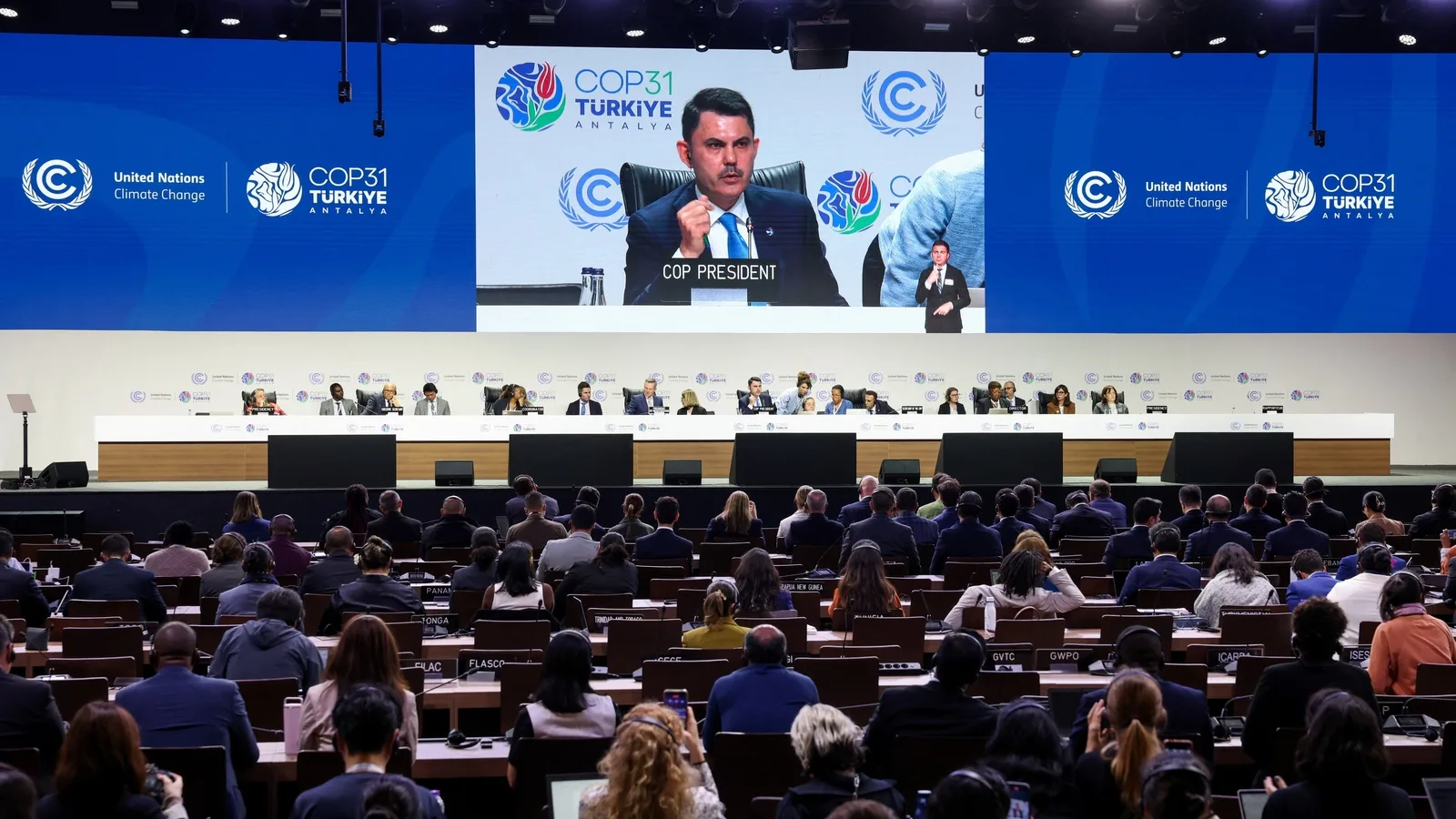
COP31 has surpassed previous records, running 44 hours late.
The EU has refused to support any agreement that does not explicitly mention fossil fuels.
Negotiations face significant challenges, with a lack of consensus on key issues.
The COP31 climate conference in Turkey has officially become the longest United Nations climate summit, extending 44 hours beyond its scheduled conclusion as negotiations remain stalled. Delegates are struggling to finalize an agreement amid disagreements over fossil fuel references and climate action commitments.
This unprecedented extension of COP31, which was originally set to conclude on Friday, has surpassed the previous record held by COP25 in Madrid in 2019. The ongoing discussions reflect deep divisions among nearly 200 participating nations, particularly concerning the transition from fossil fuels and the support for developing countries in addressing climate change.
The European Union has taken a firm stance against a proposed 'cover decision' that fails to mention fossil fuels, which they deem essential to any meaningful climate agreement. EU representatives, including Ireland's Minister Darragh O'Brien, have stated that they will not endorse any agreement that does not address fossil fuels directly, emphasizing the urgency of the climate crisis and the need for ambitious action.
The draft agreement, co-hosted by Turkey and Australia, has faced backlash for its omission of explicit fossil fuel references, leading to resistance from smaller island nations and EU member states. Critics argue that the language of the draft does not adequately reflect the climate emergency, with Belgium’s climate minister calling it unacceptable. The ongoing negotiations have seen significant pushback from oil-producing nations, complicating efforts to reach a consensus.
As COP31 continues, the presidency is urging nations to find common ground and adopt the proposed text. President Murat Kurum expressed hope that a consensus could still be achieved, despite the challenges. Meanwhile, Turkey and Australia are promoting electrification as a pathway to reduce emissions, aiming to increase electricity's share of total energy consumption by 2035. However, the draft lacks specific requirements for renewable energy sources, leaving critical questions about the future of global climate commitments unresolved.