COP31 Climate Talks End Without Consensus on Fossil Fuels
The COP31 climate negotiations in Antalya, Turkey, concluded without an agreement due to disagreements over fossil fuel phase-out language.
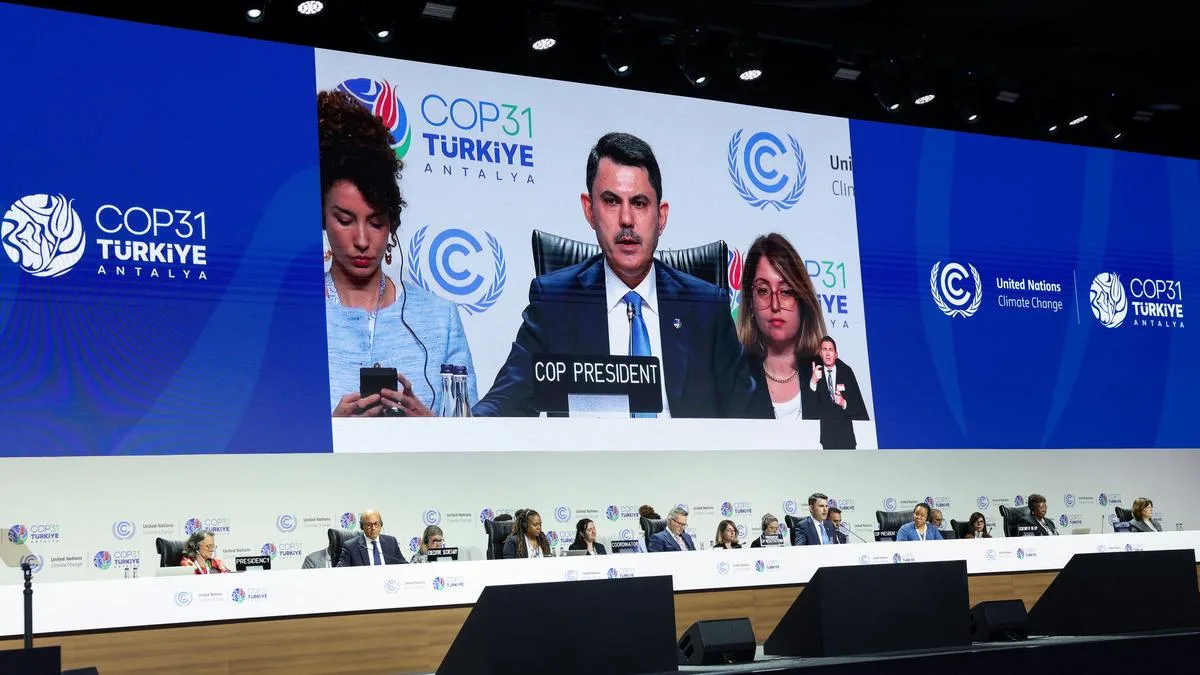
EU and 130 countries reject COP31 cover text lacking fossil fuel phase-out.
India and other nations support continued fossil fuel use for economic growth.
The failure to reach consensus highlights challenges in global climate negotiations.
The COP31 climate talks in Antalya, Turkey, wrapped up on November 22, 2026, without achieving any consensus on future climate actions, primarily due to a standoff regarding the phase-out of fossil fuels. Despite extending the conference for a record 48 hours, delegates could not agree on a cover text that would guide future negotiations.
The European Union spearheaded the objections against the proposed consensus text presented by COP31 President Murat Kurum, which did not explicitly address the need to transition away from fossil fuels. This position was supported by approximately 130 countries, reflecting a significant majority that demands clear commitments to reduce reliance on fossil fuels.
In contrast, India and several other nations advocated for the proposed text, emphasizing their ongoing need for fossil fuels to support economic development. Indian Environment Minister Bhupendra Yadav highlighted the importance of aligning climate ambitions with practical implementation strategies, arguing that energy transitions must be equitable and nationally determined.
The implications of this impasse are profound, as it underscores the growing divide among nations regarding climate action. Ireland's Climate Minister Darragh O'Brien expressed disappointment, stating that the draft decision failed to meet scientific demands and could deepen the gap between global commitments and necessary actions to limit temperature rise to 1.5 degrees Celsius. Countries like Panama also criticized the text for not addressing the urgent need for firm commitments on fossil fuel phase-out.
Looking ahead, the failure to reach a consensus at COP31 raises questions about the future of international climate negotiations. As nations grapple with the realities of climate change, the need for a unified approach that balances economic growth with environmental responsibility becomes increasingly urgent. Future discussions will likely focus on finding common ground to address the critical challenge of transitioning away from fossil fuels while ensuring equitable energy access for developing nations.