Meta AI Chief Warns of Impending Superintelligence Era
Alexandr Wang highlights the critical year ahead for AI development, urging humanity to shape its future responsibly.
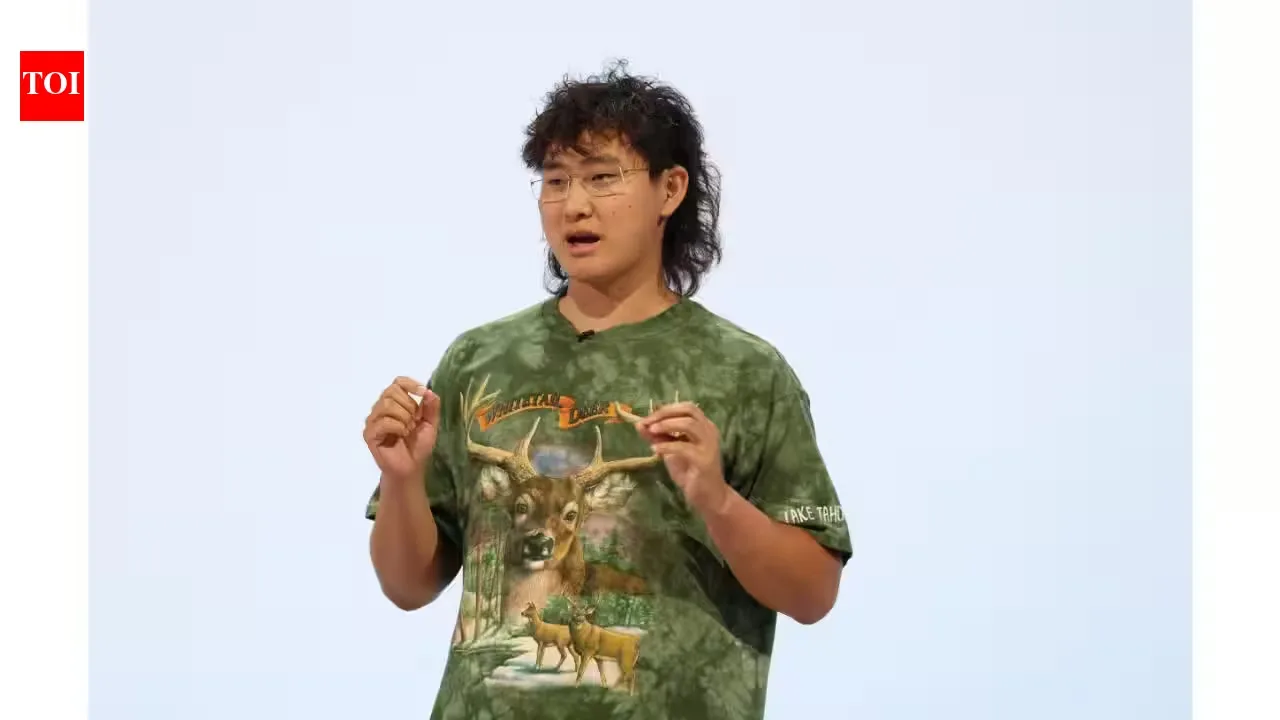
Alexandr Wang warns that superintelligence is approaching rapidly.
The proof of the Riemann Hypothesis signifies a major shift in AI capabilities.
Wang emphasizes the need for human involvement in AI's future to ensure safety and alignment.
Alexandr Wang, the head of Meta AI, has issued a stark warning regarding the swift advancement of artificial intelligence, suggesting that the world may be on the brink of entering an era of superintelligence. In a detailed post on social media platform X, Wang indicated that the upcoming year could be pivotal in determining whether the evolution of powerful AI systems will serve humanity positively or lead to challenges that are difficult for humans to manage.
Wang's remarks come at a time when the technology sector is increasingly debating the rapid pace of AI development. He acknowledged the potential benefits of AI in driving scientific and economic progress but stressed that it is crucial for humanity to remain actively engaged in shaping the trajectory of this technology. He warned against allowing society to become overly reliant on machines, emphasizing the importance of human agency in the face of advancing AI capabilities.
In his post, Wang proclaimed that "superintelligence is arriving," asserting that recent breakthroughs in AI suggest machines are quickly approaching, and in some instances, surpassing, the highest levels of human intellectual performance. He cited the reported proof of the Riemann Hypothesis, a significant milestone in mathematics, as evidence of the profound changes occurring in the field of AI. Wang described this achievement as an unprecedented intellectual feat, showcasing the capabilities of what he termed an "alien mind" that humans do not yet fully comprehend.
Wang elaborated that many of the most challenging mathematical problems are more intellectually demanding than the tasks typically performed by professionals in engineering, cybersecurity, or business. He pointed out that as AI capabilities have advanced, the practical limitations have diminished, allowing AI systems to become increasingly effective across various domains. He argued that the remaining challenges for AI are primarily related to domain knowledge and implementation rather than intelligence itself, suggesting that AI is poised to become a major driver of growth across multiple sectors.
Looking ahead, Wang expressed concern about the implications of AI surpassing human expertise in numerous fields. He warned that the rapid advancement of AI could outpace human understanding and oversight, particularly in critical areas such as biological research and economic development. He called for a shift in the AI industry’s approach, advocating for a focus on safety, alignment, and security to ensure that technological progress benefits humanity as a whole. Wang concluded that the next steps must involve thoughtful consideration of how to navigate this transformative period responsibly.