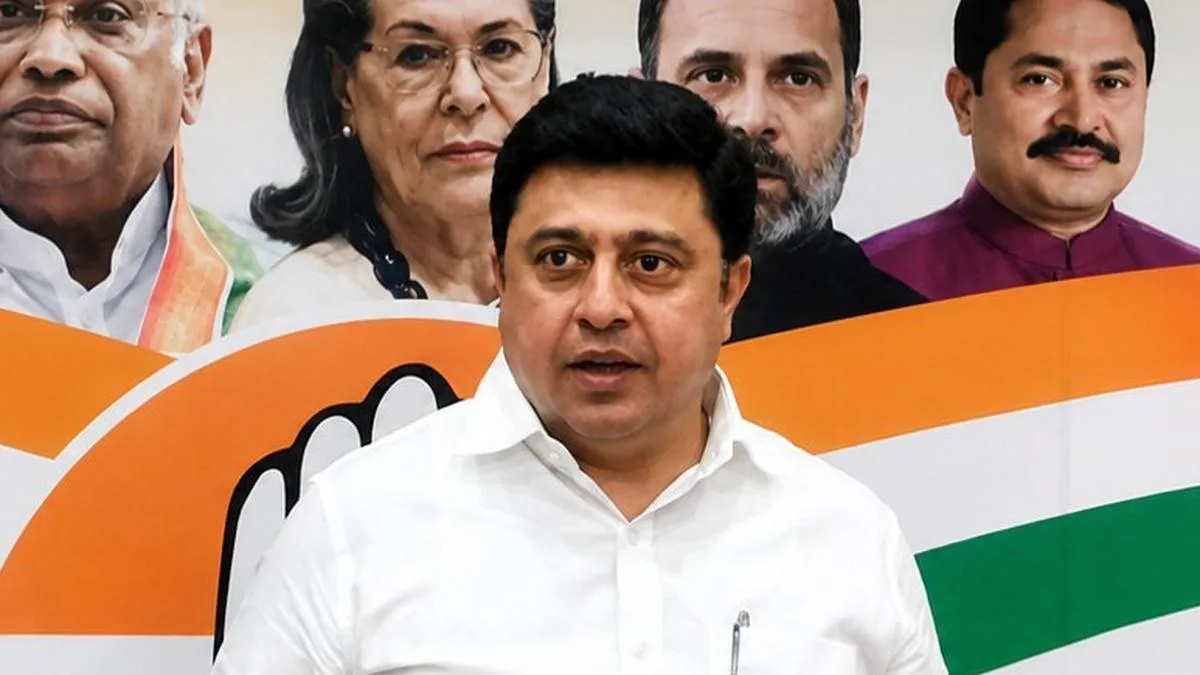
Ashwini Vaishnaw Defends Digital Data Protection Act's Impact on Press Freedom
Union Minister Ashwini Vaishnaw asserts that the Digital Personal Data Protection Act does not compromise journalistic independence.

The DPDP Act is claimed to uphold press freedom as guaranteed by the Constitution.
Concerns from publishers about the law's impact on investigative journalism are acknowledged.
The government is open to amending the law to better protect journalistic activities.
On October 28, 2026, Union Minister for Information Technology Ashwini Vaishnaw addressed concerns regarding the Digital Personal Data Protection (DPDP) Act, asserting that it does not infringe upon press freedom. Speaking to the media, Vaishnaw emphasized that the Constitution guarantees journalistic independence, stating, "The journalistic freedom is guaranteed by the Constitution. That freedom is absolutely available. There is not even an intention to affect the journalistic freedom." He encouraged media professionals to engage in dialogue with the government to discuss any concerns related to the law.
The Minister's remarks come in light of apprehensions expressed by news publishers, who fear that the DPDP Act could hinder investigative reporting. They have pointed out that the lack of a specific exemption for journalism might complicate reporting on public interest issues, particularly those involving personal data collected without consent. Publishers are also worried about the retention of information necessary for investigations and the protection of confidential sources.
Vaishnaw reiterated that the privacy law is designed to protect personal data while fully maintaining journalistic freedom. He stated, "It was clearly explained that provisions of the DPDP Act nowhere infringe upon freedom of the press, journalism and freedom of media." The Minister highlighted that the law was introduced following a Supreme Court ruling that recognized the right to privacy as a fundamental right, and it was developed after extensive consultations with stakeholders from various sectors, including media and technology.
In response to the concerns raised, the government has indicated a willingness to amend the law to explicitly safeguard journalistic activities if necessary. A source within the government mentioned, "If hardcoding is required, we can hardcode it; it only requires an amendment... There is no problem in that because our intent is clear." This openness to amendments suggests that the government is keen to address any confusion regarding the law's implications for journalism.
As discussions continue, the implications of the DPDP Act for the media landscape in India remain a critical topic. The government’s commitment to protecting both personal data and press freedom will be closely monitored by stakeholders in the media industry. Future amendments could play a significant role in clarifying the law's impact on journalistic practices and ensuring that investigative reporting can proceed without undue restrictions.