180,000 Join Protests Across Germany Amid Rising Living Costs
Massive demonstrations in Berlin and 30 cities reflect Gen Z's frustration over military spending and education cuts.
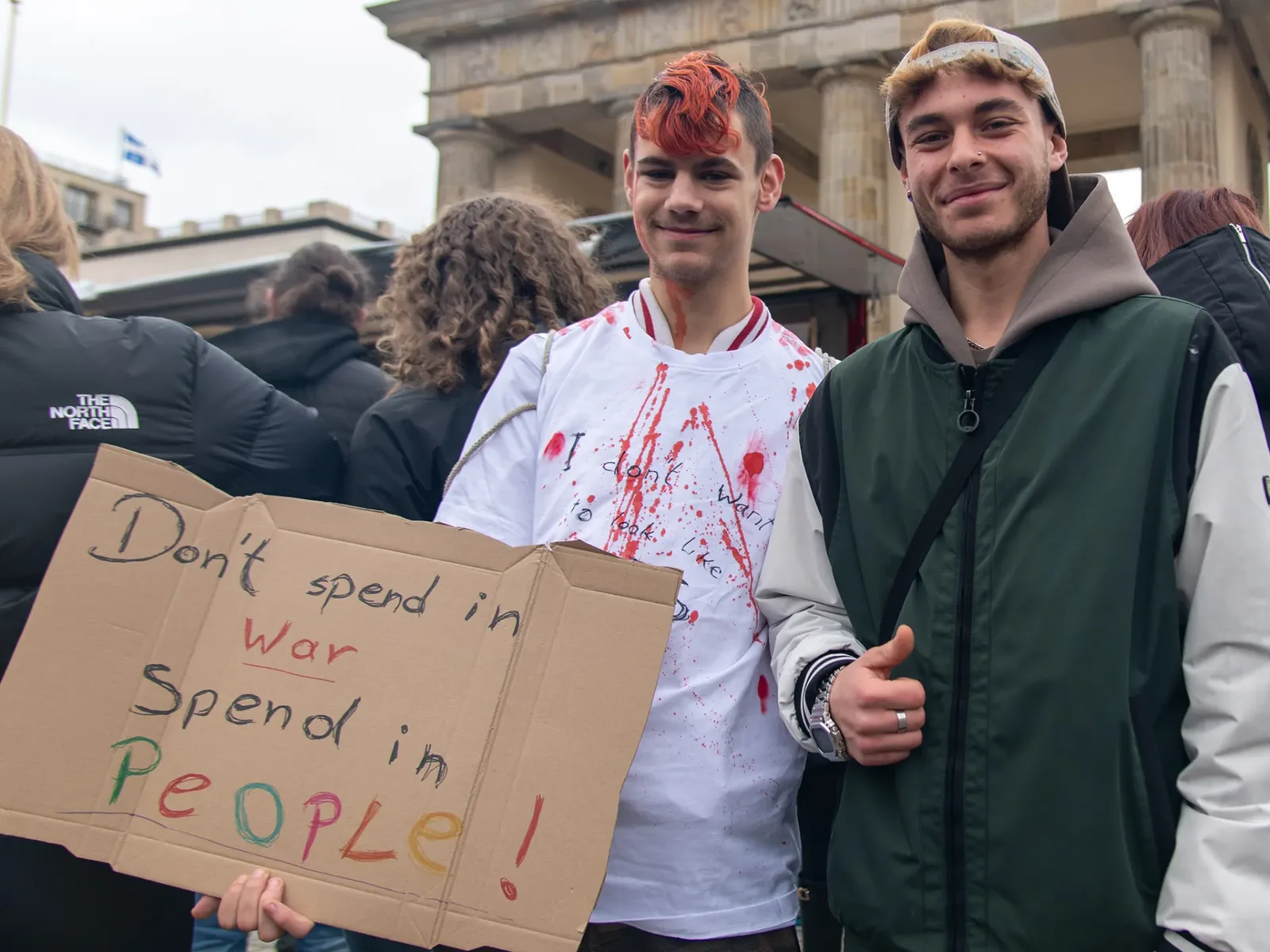
Over 180,000 participants rallied in 34 cities, including Berlin, against rising living costs.
Protesters demand increased funding for education and social services while opposing military expenditures.
The demonstrations are part of a broader wave of youth activism across Europe.
In a significant display of youth activism, approximately 180,000 individuals gathered in Berlin and over 30 other German cities on Saturday to protest against the escalating cost of living and cuts to education funding. The rally took place at the Platz des 18 Maerz, near the iconic Brandenburg Gate, where a diverse crowd united in support of the younger generation's grievances.
The protests were organized by a coalition known as Gen Z Regelt, which aims to address critical issues affecting young people. As of Saturday morning, nearly 12,000 people had registered to participate in Berlin alone, with additional large turnouts in cities like Frankfurt, Cologne, and Munich. While the atmosphere in Berlin remained peaceful, tensions flared in Cologne, where clashes occurred between protesters and police.
Demonstrators voiced their frustrations regarding government priorities, particularly the significant military spending juxtaposed with cuts to education and social services. Veronika Dinter, a political science student, expressed her discontent, stating that the financial burden of education has forced her to take on part-time work. She criticized the government for prioritizing military funding over essential public services, labeling it a political failure.
The protests reflect a growing sentiment among young Germans who feel disillusioned by the government's handling of economic challenges. Emma Heymann, another student, echoed these sentiments, highlighting the anger felt by her generation towards the government's decisions that adversely affect their quality of life. The protests are part of a larger movement seen across Europe, where youth are increasingly vocal about their demands for change.
Looking ahead, the Berlin demonstration was scheduled to last for two hours, with another rally planned later in the day. While concerns about potential violence have been raised, participants emphasized their commitment to peaceful protest and urged authorities to respect their right to demonstrate. The ongoing activism signals a crucial moment for young people in Germany as they seek to influence policy and advocate for their future.