Tiger Cub from Umred-Karhandla Spotted in Pench Reserve
A tiger cub's sighting in Pench Tiger Reserve suggests potential wildlife corridor connectivity from Umred-Karhandla.
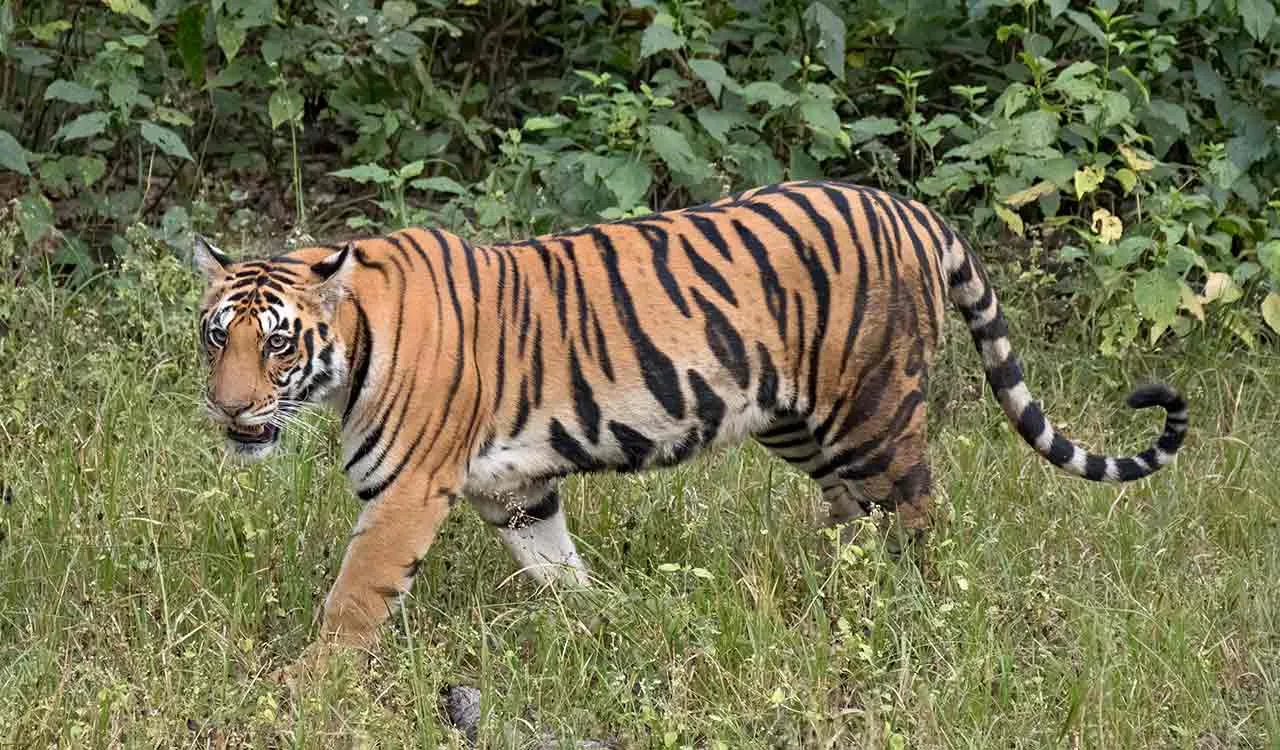
A tiger cub from Umred-Karhandla was seen in Pench on October 29.
Officials emphasize the need for scientific validation of the movement route.
Conservation efforts in the region are crucial for stabilizing the tiger population.
A tiger cub, born to a tigress from the Umred-Karhandla Wildlife Sanctuary, has been sighted in the Pench Tiger Reserve located in Maharashtra's Nagpur district. This sighting, which occurred on October 29 near the Chorbahuli Gate, indicates a potential natural dispersal of tigers and suggests the existence of a wildlife corridor connecting these two regions.
The cub, identified as the last offspring of Tigress F2 from Gothangaon, has sparked excitement among forest officials and conservationists. Akshay Gajbhiye, the Deputy Director of Pench Tiger Reserve, described the sighting as a significant milestone for both the local area and tiger conservation efforts. He noted that while the movement route is tentatively identified through Kuhi-Bhandara-Ramtek Paoni-Paoni Buffer-NH-44-Chorbahuli, it requires further scientific validation to confirm its viability.
Gajbhiye stated that the young tiger may be exploring the landscape in search of a suitable territory. However, he cautioned that it is too early to determine whether the cub will establish residency in Pench or is merely passing through. The focus remains on ensuring the habitat is secure and conducive for the young tiger to thrive and for the overall stabilization of the tiger population in the reserve.
This sighting underscores the critical importance of habitat conservation and landscape connectivity in safeguarding the future of tigers in the region. The ongoing efforts by the forest department in the Chorbahuli wildlife range, including effective patrolling, habitat improvement, and community engagement, have been instrumental in enhancing the forest's suitability for wildlife.
Looking ahead, officials plan to continue monitoring the cub's movements closely. The outcomes of this observation could have significant implications for wildlife management strategies in Maharashtra, particularly concerning the establishment of effective corridors that facilitate tiger dispersal and genetic diversity among populations.