Maharashtra Plans Four State-Operated Ports in Konkan Region
The Maharashtra government aims to establish four state-run ports in the Konkan area, projecting a revenue generation of Rs. 50 billion.
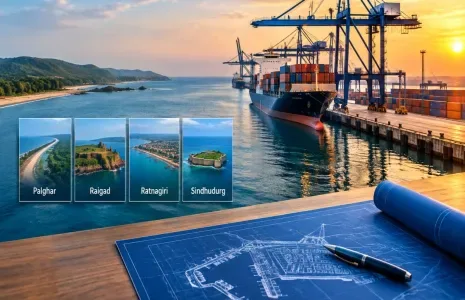
Four ports to be developed in Palghar, Raigad, Ratnagiri, and Sindhudurg.
The initiative is part of the Viksit Maharashtra 2047 program.
Projected revenue from the ports could reach Rs. 50 billion.
The Maharashtra government has announced plans to develop four state-operated ports along the Konkan coastline, specifically in the districts of Palghar, Raigad, Ratnagiri, and Sindhudurg. State Ports Minister Nitesh Rane confirmed that the Maharashtra Maritime Board (MMB) is currently drafting the project blueprint. This initiative is a key component of the Viksit Maharashtra 2047 program, which aims to enhance the state's infrastructure and economic growth.
Historically, Maharashtra's port development model has involved leasing coastal land to private entities, which manage the facilities and logistics while paying royalties to the government. Currently, the ports department generates approximately Rs. 2.5 billion annually from royalties across 48 non-major ports and jetties. The new public-sector model is designed to increase the state's direct involvement in port operations, thereby improving revenue generation and reducing reliance on private operators.
According to preliminary estimates provided by Minister Rane, the four proposed ports could potentially generate close to Rs. 50 billion in revenue for the state. This projection positions the ports department as a significant source of non-tax income for Maharashtra. However, specific details regarding project timelines and implementation have yet to be disclosed, leaving some aspects of the initiative uncertain.
The planned ports will be distinct from the Vadhvan Port project, which is currently under development near Dahanu in Palghar district. Maharashtra holds a 26% stake in Vadhvan Port, which has an estimated total cost of Rs. 760 billion. Construction began in August 2024, with completion expected by 2030. This port is also anticipated to become a vital source of non-tax revenue for the state.
The establishment of these four ports will expand the government's role beyond mere regulatory oversight and royalty collection. The development process will necessitate decisions regarding land use, financing, cargo handling, connectivity, and operational arrangements. While the MMB is expected to outline these elements in its blueprint, further announcements regarding the specifics of the projects are awaited.