Maharashtra Unveils Rs 1.2 Crore Drug Quality Machines
The Maharashtra government introduces advanced drug quality detectors to enhance public healthcare standards.
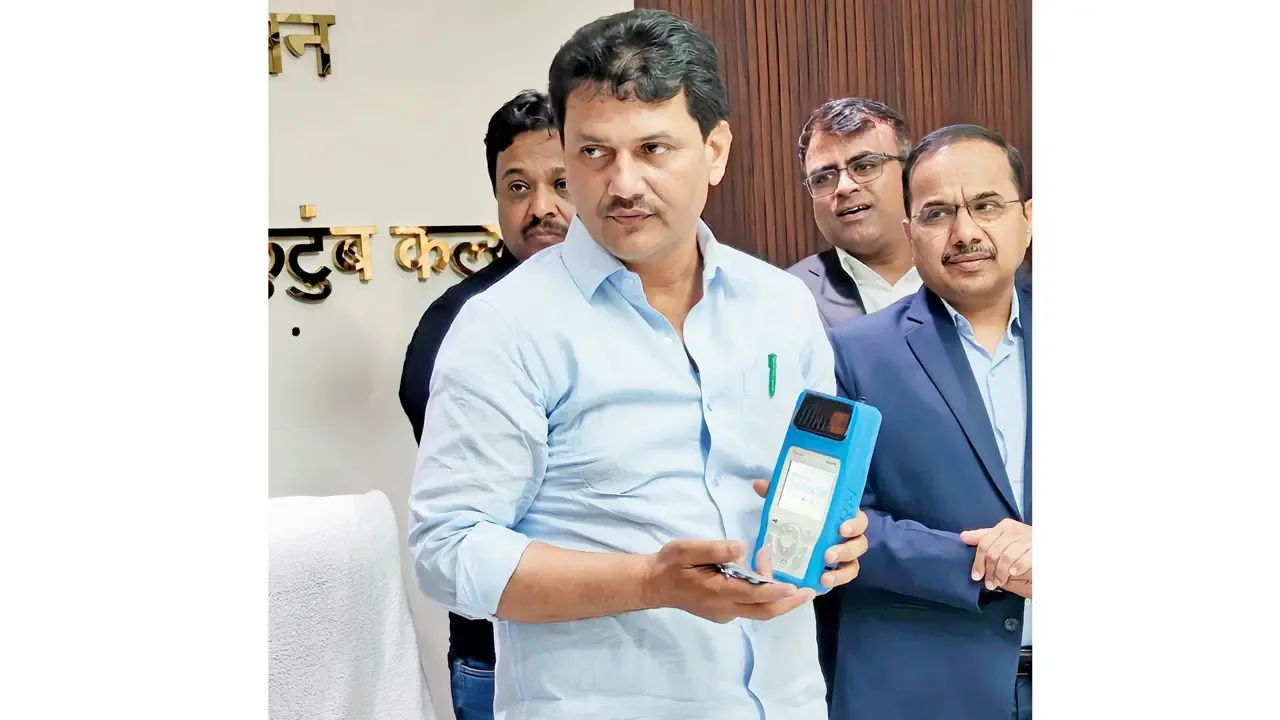
Maharashtra becomes the first Indian state to implement Raman drug quality machines.
Eight machines, costing Rs 1.2 crore each, will improve medicine monitoring across regions.
1400 doctors and 12,000 daycare centers to be established to bolster healthcare services.
In a significant advancement for public health, the Maharashtra government has introduced eight drug quality detector machines, each valued at Rs 1.2 crore. This initiative, announced by State Health Minister Prakashrao Abitkar, positions Maharashtra as the first state in India to adopt this cutting-edge technology, which is already operational in approximately 50 countries worldwide.
The deployment of these machines aims to enhance the monitoring of medicines supplied to government healthcare facilities. Each region in Maharashtra will receive one machine, and a dedicated flying squad comprising two officials will be tasked with conducting tests. Any samples found to be adulterated will be sent to the National Accreditation Board for Testing and Calibration Laboratories (NABL) for further analysis. Medicines that meet the required standards will be marked as 'passed,' while those that do not will receive a 'failed' designation, prompting appropriate actions against manufacturers and sellers.
Minister Abitkar also announced plans to appoint 1,400 doctors, including 600 specialists, across the state on November 4. Additionally, the government will establish 12,000 daycare centers, particularly in rural areas, to improve access to healthcare services. These efforts are part of a broader strategy to enhance the public healthcare system in Maharashtra, which has faced significant challenges in recent years.
The Raman machines, named after the renowned scientist C.V. Raman, are designed to assess the quality of various medicinal forms, including tablets, syrups, and injectable solutions. This technology is expected to significantly strengthen the state's drug quality surveillance capabilities, enabling the identification of potentially substandard medicines that could jeopardize patient safety.
Looking ahead, the Maharashtra government is committed to further improving healthcare infrastructure and services. The introduction of these machines marks a critical step towards ensuring that the medicines provided to the public meet stringent quality standards. The upcoming appointments of doctors and the establishment of daycare centers are expected to complement this initiative, ultimately enhancing the overall healthcare experience for residents across the state.