Nagpur's Gujarati Communities Celebrate Navratri with Tradition
In Nagpur, Gujarati communities embrace Navratri through unique traditions, rituals, and community gatherings.
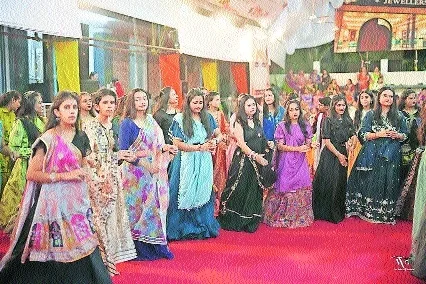
The Shree Dasha Sorathiya Vanik Samaj hosts independent Navratri celebrations for the first time in 70 years.
Evening gatherings include aarti, traditional meals, and Garba dance, attracting around 300 participants nightly.
Families maintain their own rituals at home, showcasing diverse practices across various Gujarati communities.
In Nagpur, the celebration of Navratri unites Gujarati communities through a blend of communal festivities and personal traditions. While Garba is the festival's most prominent feature, the observance of prayers, traditional meals, and rituals plays a significant role in how families commemorate the nine-day event. Each community showcases its unique approach to the celebrations.
The Shree Dasha Sorathiya Vanik Samaj has been a cornerstone of community celebrations for over seven decades. This year marks a significant change as they host the festivities independently for the first time, having previously celebrated alongside the Soni Samaj. Ritesh Selarka, president of the Samaj’s Yuva Mandal, shared that they see about 300 attendees each evening, starting with aarti and followed by a traditional dinner prepared without onion and garlic, with a rotating menu to encourage participation without the burden of cooking at home.
The Samaj performs aarti three times daily, with evening Garba commencing at 9 PM and lasting until 2 AM. Selarka noted that the celebrations are supported by voluntary donations from members, reflecting their commitment to the community spirit. Similarly, the Kutchi Patidar Samaj in Lakadganj emphasizes tradition, gathering twice daily for aarti followed by Raas Garba. Kirti Patel, a member of the Samaj, highlighted the importance of decorum, with men and women performing Garba separately and married women covering their heads.
Families also engage in personal observances at home, with some worshipping a 'ghat'—a small painted pot with a diya—while others host kanya bhojan, inviting nine young girls for traditional meals and gifts. Fasting practices vary, with some members adhering to 'ek taana', which involves eating only once a day during the festival. Across Nagpur, other Gujarati communities partake in their own aartis and Garba celebrations, preserving old prayer books and devotional songs such as 'Jay Adhyashakti' and 'Vishwambhari Suti'.
While Garba may be the most recognizable aspect of Navratri, the celebrations among Gujarati communities extend far beyond dance. In community halls and family homes, the festival thrives through shared meals, cherished prayers, and customs that are passed down through generations, enriching the cultural fabric of Nagpur during this festive season.