Spaceflight Study Uncovers Genetic Variations in Alzheimer's Progression
A groundbreaking study reveals how spaceflight affects Alzheimer's-related brain changes differently based on genetic factors.
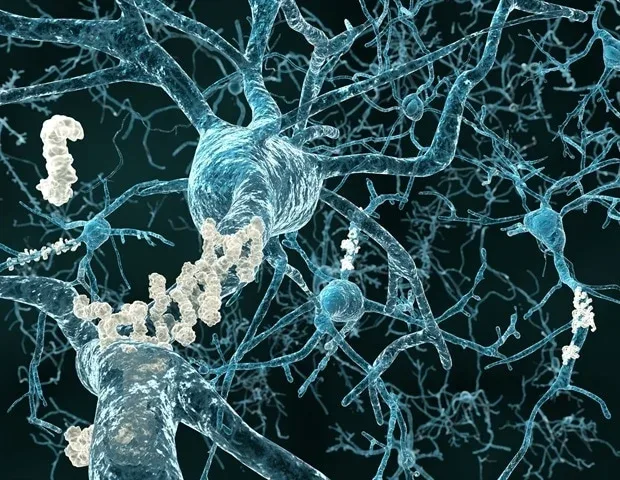
Research indicates spaceflight alters Alzheimer's disease processes based on genetic background.
Organoids with specific mutations showed varied responses to space conditions.
CIRBP protein emerged as a potential stress marker across all tested organoids.
Researchers from the University of California San Diego have published a significant study in Science Advances on November 25, 2026, revealing that spaceflight impacts biological processes related to Alzheimer's disease in ways that vary according to genetic backgrounds. This research suggests that the unique conditions of space may unveil changes in brain cells that are challenging to observe on Earth.
Alzheimer's disease currently affects over 55 million individuals globally, with estimates predicting this figure could rise to 139 million by 2050. The disease is characterized by synapse loss, amyloid-beta plaque accumulation, and alterations in tau protein, all of which do not manifest uniformly across individuals. The early stages of Alzheimer's are particularly difficult to study in living human brains, prompting researchers to explore alternative methods.
To investigate these variations, scientists created brain organoids—three-dimensional models derived from stem cells that mimic certain aspects of human brain tissue. Some organoids were engineered to carry mutations in genes linked to rare inherited forms of Alzheimer's, while others served as controls. In March 2024, these organoids were sent to the International Space Station for 40 days, with matching samples remaining on Earth under similar laboratory conditions. This marked the first instance of human brain organoids modeling Alzheimer's being sent to space.
The unique environment of space, characterized by microgravity, radiation, and disrupted magnetic fields, allowed researchers to analyze gene activity, protein presence, and cellular energy usage. The results revealed significant differences: organoids with APP mutations exhibited increased amyloid-beta 42 levels, while those with PSEN2 mutations showed elevated levels of a modified tau protein. Notably, organoids with PSEN1 mutations displayed extensive changes in gene activity, with 7,404 genes differing between space and ground samples, compared to just 643 in the PSEN2 models. These findings indicate that spaceflight can highlight distinct Alzheimer's-related features based on genetic mutations.
Additionally, the study identified changes in genes responsible for nerve cell communication and energy production, with pronounced responses in organoids carrying Alzheimer's-related mutations. A key protein, CIRBP, which aids cells in responding to stress, was consistently elevated across all organoid groups post-spaceflight. This suggests CIRBP could serve as a shared marker for stress responses in brain cells. The implications of these findings extend beyond Alzheimer's, as CIRBP is also associated with DNA repair and longevity in certain species.
The researchers stress that their findings are preliminary and emphasize the need for further investigation to determine if the changes observed in space can be replicated on Earth. They aim to explore the role of proteins like CIRBP in Alzheimer's development. Future research will be supported by new funding from NASA, with a $12 million grant awarded to DOXA Space, which will facilitate the development of tools and platforms for studying neurodegeneration and glioblastoma treatment.