Innovative Medical Adhesive Patch Reduces Skin Damage Risk
A new adhesive patch developed by POSTECH researchers minimizes skin irritation during removal, enhancing patient care.
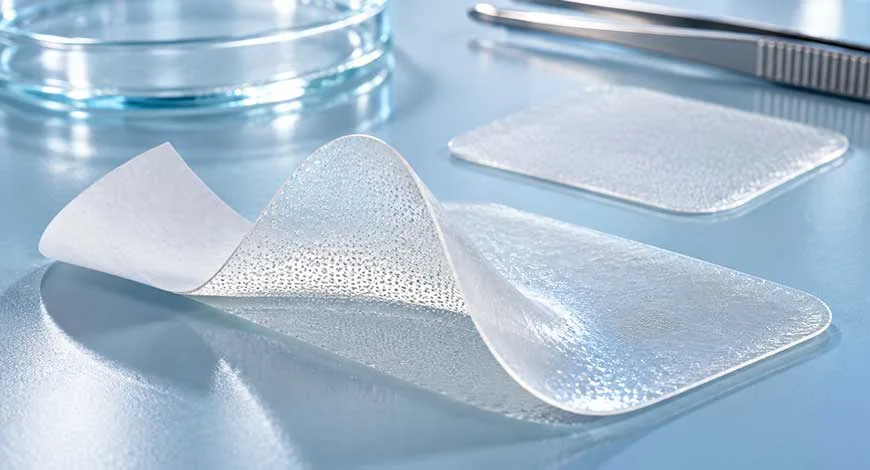
The adhesive patch uses shape memory polymer technology for easy removal.
It reduces adhesion force by up to 99% while maintaining secure attachment.
The innovation is particularly beneficial for vulnerable populations like neonates and the elderly.
A research team from POSTECH has unveiled a groundbreaking medical adhesive patch designed to minimize skin irritation during removal. Led by Professors Jin-Tae Kim and Seok Kim, the team developed this patch to securely adhere to the skin while allowing for gentle detachment, particularly beneficial for patients with sensitive skin, such as neonates and the elderly. The findings were published in Nature Communications and highlight the potential for improved patient comfort in clinical settings.
Historically, medical adhesives have prioritized strong adhesion to ensure that monitoring devices remain in place for accurate physiological readings. However, this strong adhesion often results in significant discomfort and skin damage upon removal, especially for individuals with fragile skin. The new patch addresses this issue by employing a shape memory polymer (SMP), which can revert to a predetermined shape when exposed to heat, thereby reducing the forces required for removal.
The innovative patch features a unique design with pyramidal structures that flatten during application, maximizing contact with the skin. When heated, these structures revert to their original shape, decreasing the adhesive's contact area and facilitating easier removal. Experimental results indicate that this method can lower adhesion energy by nearly 99%, significantly reducing the risk of skin injuries associated with traditional adhesives.
The implications of this technology are substantial, particularly in environments like neonatal intensive care units and geriatric wards, where repeated attachment and detachment of sensors are common. By minimizing mechanical stress during removal, the patch could significantly reduce skin irritation and enhance the overall safety of medical devices. This advancement not only promises better patient outcomes but also maintains the reliability of biosignal acquisition.
Looking ahead, the research team plans to further refine the adhesive's design and explore its applications across various medical technologies. The approach of actively controlling adhesive properties presents a promising avenue for developing safer biomedical devices, potentially transforming patient care in sensitive medical environments.