High-Dose Flu Vaccines Linked to Reduced Alzheimer's Risk in Seniors
A recent study reveals that older adults receiving high-dose flu shots may experience a significantly lower risk of developing Alzheimer's disease.
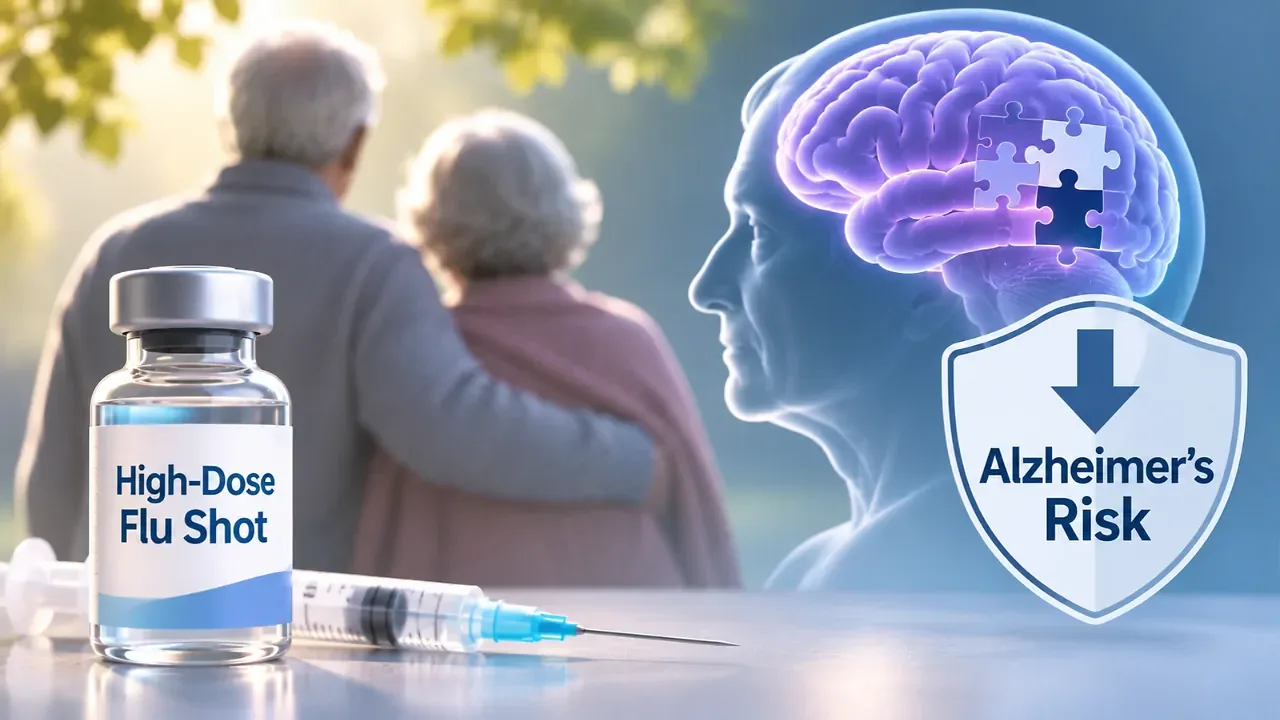
Adults aged 65 and older who received high-dose flu vaccines showed a 55% lower risk of Alzheimer's.
The study tracked 120,775 participants over three years, revealing sustained effects for up to 25 months.
High-dose vaccines may enhance immune response, potentially reducing inflammation linked to Alzheimer's.
A groundbreaking study published in the journal Neurology indicates that older adults, specifically those aged 65 and above, who receive high-dose influenza vaccines may have a significantly lower risk of developing Alzheimer's disease. Conducted by researchers at the University of Texas Health Science Center at Houston, the study found that individuals who received the high-dose vaccine had a nearly 55% reduced risk of Alzheimer's compared to those who opted for the standard dose. This protective effect was observed for up to 25 months following vaccination.
The research analyzed healthcare claims data from adults aged 65 and older who received either a high-dose or standard-dose flu vaccine between 2014 and 2019. A total of 120,775 individuals received high-dose vaccines, while 44,022 received standard doses. Participants were monitored for up to three years to assess the development of Alzheimer's disease. The findings revealed that the high-dose vaccine recipients had a significantly lower likelihood of developing Alzheimer's compared to their counterparts who received the standard dose, with the effect lasting longer in women than in men.
The study builds on previous research from the same team, which indicated that older adults who received any influenza vaccine had a 40% lower risk of developing Alzheimer's compared to those who did not get vaccinated. The current study aimed to determine if a higher vaccine dosage could further reduce this risk. High-dose flu vaccines are formulated to elicit a stronger immune response, containing four times the amount of influenza antigen compared to standard doses, which is particularly beneficial for older adults whose immune systems may weaken with age.
Experts suggest that the enhanced protection from high-dose vaccines could lead to fewer severe infections and the associated inflammation that may contribute to Alzheimer's disease. Paul Schulz, a professor of neurology and senior author of the study, expressed surprise at the lack of awareness regarding the availability of higher-dose vaccines among physicians. He noted that the idea for the research arose from discussions with public health officials who were interested in exploring the potential differences in vaccine dosages.
While the study provides promising insights, it is important to note that it was retrospective and observational, relying on existing healthcare records rather than randomized trials. Although statistical adjustments were made for group differences, other variables may still have influenced the results. Additionally, Alzheimer's disease develops over many years, and the study's follow-up period may not be sufficient to determine whether vaccination can prevent the disease or merely delay the onset of symptoms.