Bangladesh's Mental Health Crisis Linked to Social Media Use
Experts warn of rising mental health issues among youth due to excessive social media engagement.
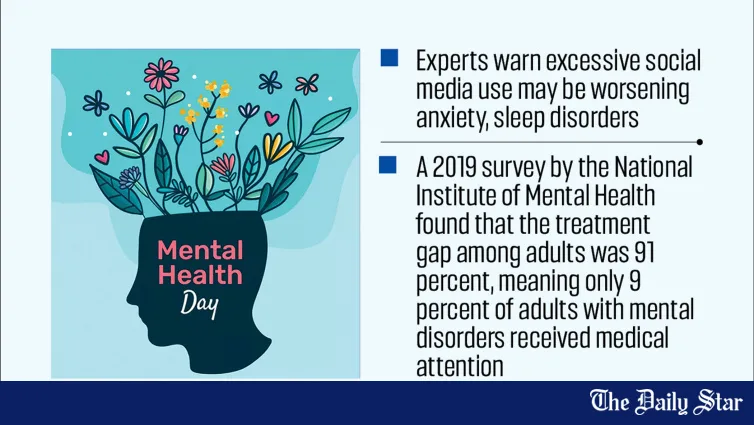
18.7% of adults and 12.6% of children in Bangladesh suffer from mental disorders.
91% of adults with mental health issues do not receive treatment.
Excessive social media use is linked to increased depression and anxiety among young adults.
As social media continues to permeate daily life in Bangladesh, mental health professionals are increasingly concerned about its effects on the well-being of children and young adults. Experts emphasize the urgent need for comprehensive interventions across various levels, from policymaking to family support, to mitigate the rising mental health crisis. Despite the growing awareness, discussions on this issue remain limited within national mental health policies.
The most recent national mental health survey conducted in 2019 revealed that 18.7% of adults aged 18 and older, along with 12.6% of children between 7 and 17, were diagnosed with mental disorders. Although there is no updated data available, experts caution that the surge in social media use could exacerbate these existing mental health challenges. The treatment landscape for mental health in Bangladesh remains bleak, with a staggering 91% of adults with mental disorders lacking access to medical care, according to the same survey.
On World Mental Health Day, the theme “Lived Experiences Heard: Real Voices, Real Change” resonates strongly as individuals like Niaz Ahmed share their struggles with social media addiction. Spending around six hours daily on platforms like Facebook and YouTube, Ahmed reports experiencing sleep deprivation and irritability, which are common symptoms linked to excessive screen time. A recent study involving 440 young adults found a significant correlation between social media usage exceeding four hours per day and heightened risks of depression and anxiety.
Mental health experts assert that the ramifications of excessive social media use extend beyond individual experiences, affecting families and communities. Prof. MMA Shalahuddin Qusar highlights the role of social media in spreading misinformation and fostering addiction, which can lead to various mental health issues. He urges recognition of the clear impacts of social media on mental health, advocating for a more integrated approach to tackle these challenges.
Looking ahead, experts stress the importance of raising awareness about the mental health implications of social media use. They call for parents to set boundaries on device usage, encourage physical activities, and engage in open conversations with children about their online experiences. Schools are also urged to promote healthier social media habits. As the discourse around mental health and social media evolves globally, Bangladesh must prioritize this issue in policy discussions and research to prevent further deterioration of mental health among its youth.