Turkish Film 'Rahma' Receives Gandhi Medal Amid Controversy
The 57th IFFI closing ceremony was marred by controversy as Turkish filmmaker Faysal Soysal's dedication to Palestine drew backlash.
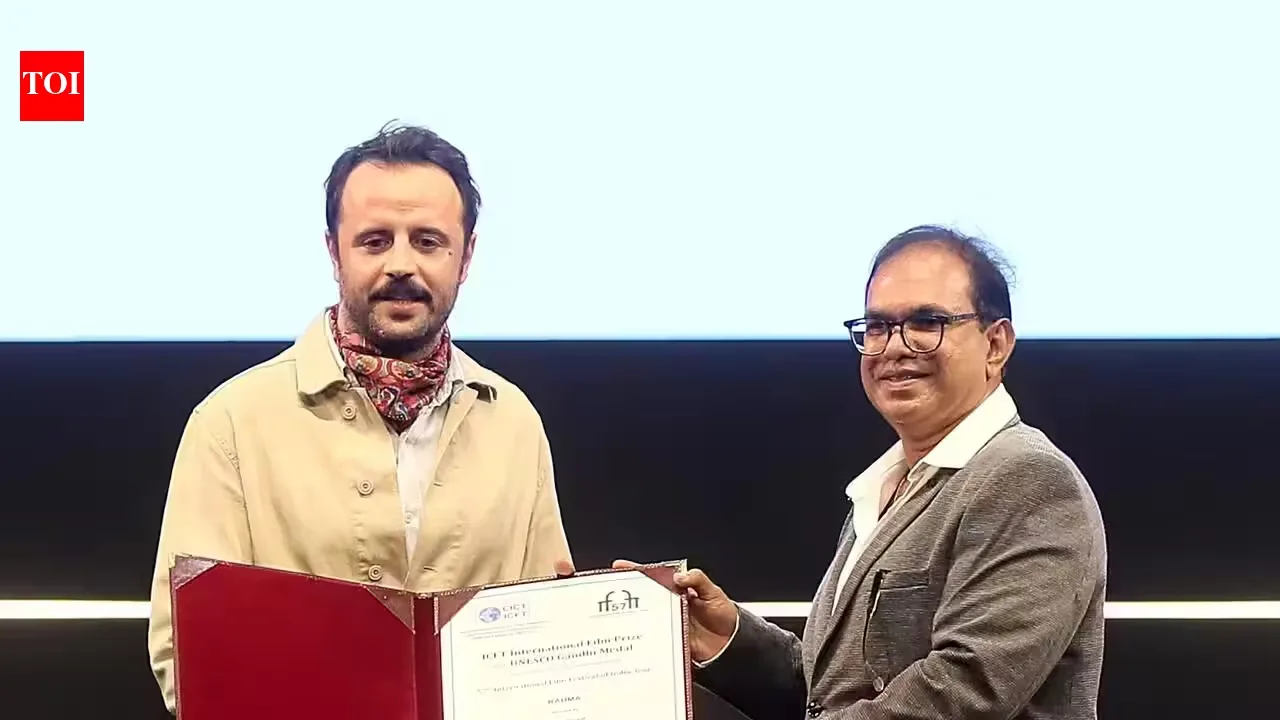
Faysal Soysal's film 'Rahma' won the ICFT-UNESCO Gandhi Medal.
Soysal's remarks on Gaza during the ceremony led to heckling and criticism from Israeli officials.
The Israeli consul general condemned the dedication as an attempt to politicize the award.
The 57th International Film Festival of India (IFFI) concluded with a significant controversy on Saturday, as Turkish filmmaker Faysal Soysal's film 'Rahma' was awarded the ICFT-UNESCO Gandhi Medal. The ceremony took a contentious turn when Soysal's friend, Emre Pekçakır, read a message on his behalf, dedicating the award to Palestine and condemning the humanitarian crisis in Gaza. This prompted heckling from the audience, leading IFFI representatives to intervene backstage.
In his message, Soysal expressed deep concern over the suffering of children in Gaza and the destruction of hospitals, urging global leaders to draw inspiration from Mahatma Gandhi's principles of justice and peace. He criticized the political silence surrounding the ongoing conflict, stating that the world has felt helpless in the face of what he termed a genocide. The emotional weight of his words resonated with many, though it also sparked significant backlash during the event.
The Israeli consul general to Mid-West India, Yaniv Revach, responded strongly to the dedication, labeling it an “attempt to hijack” the award ceremony. He accused the filmmakers of using the prestigious platform for political activism rather than artistic expression. Revach emphasized that both India and Israel have suffered from terrorism and criticized Turkey's relations with groups he described as linked to terrorism, asserting that such actions would not damage India-Israel relations but rather strengthen them.
The implications of this incident extend beyond the film festival, highlighting the intersection of art and politics in international relations. The backlash against Soysal's remarks reflects broader tensions surrounding the Israeli-Palestinian conflict and raises questions about the role of filmmakers and artists in addressing such issues. Many in the Indian film community may now feel compelled to respond to the politicization of cultural events, as the incident has sparked a debate on the responsibilities of artists in times of crisis.
Looking ahead, the fallout from this controversy may influence future interactions between filmmakers and political themes at international festivals. The IFFI organizers may need to establish clearer guidelines on political statements during award ceremonies to prevent similar incidents. As discussions about the role of cinema in social and political discourse continue, the impact of Soysal's dedication may resonate within the industry for some time to come.