Trump, Putin, and Xi Sign Peace Declaration in Shenzhen
Leaders of the US, Russia, and China agree on nuclear risk reduction during historic talks.
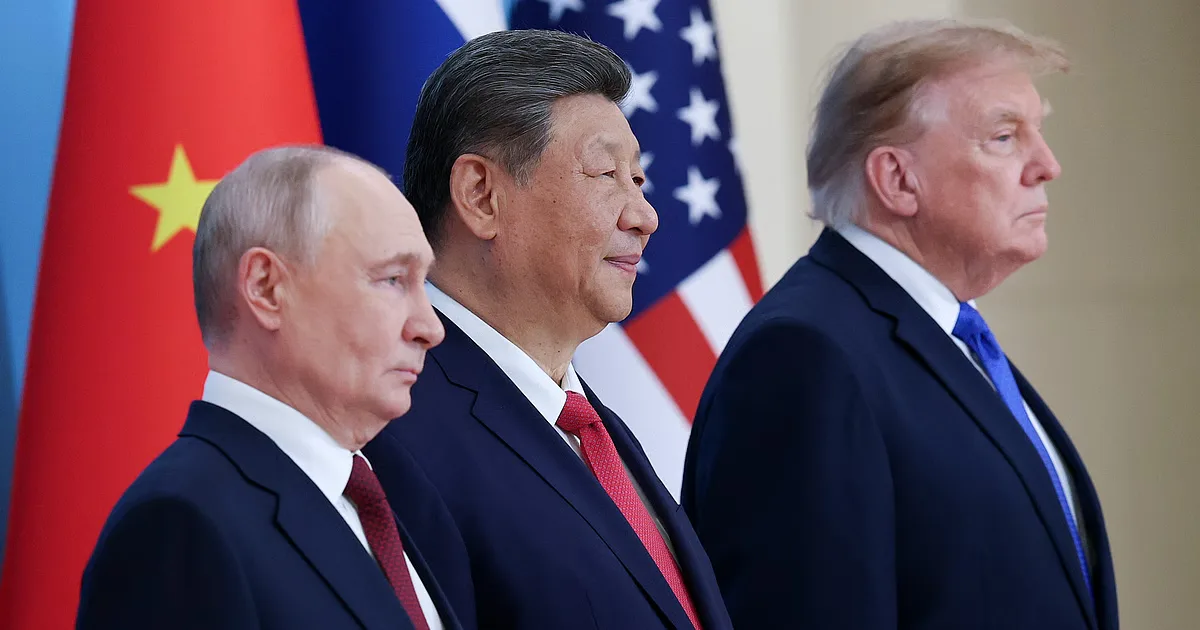
The joint declaration emphasizes that nuclear war cannot be won and must never be fought.
The leaders committed to reforms at the UN and enhancing energy cooperation.
No specific mention was made of ongoing conflicts in Ukraine and Iran.
In a landmark meeting held on November 19, 2026, in Shenzhen, China, US President Donald Trump, Russian President Vladimir Putin, and Chinese President Xi Jinping adopted a joint Declaration on Peace. This trilateral summit, which took place on the sidelines of the Asia-Pacific Economic Cooperation (APEC) summit, focused on reducing nuclear risks and maintaining global strategic stability. The leaders collectively asserted that a nuclear war 'cannot be won and must never be fought.'
The discussions lasted approximately 90 minutes, during which the leaders agreed to engage in ongoing dialogue aimed at preventing the proliferation of nuclear weapons. The joint statement, released by both the Kremlin and Chinese state media, also highlighted the importance of reforms within the United Nations to enhance its effectiveness in addressing global challenges. Additionally, they pledged to increase the production and supply of refined petroleum products, stressing the necessity of stable energy flows.
A notable aspect of the declaration was the stance taken regarding the International Criminal Court (ICC). The three leaders emphasized the need for state consent and immunity for officials, indicating that the ICC should not misuse its jurisdiction. This provision holds particular significance for President Putin, who faces allegations of war crimes in Ukraine. Despite discussions on various topics, the declaration notably did not address the ongoing conflicts in Ukraine and Iran, although Trump mentioned raising these issues during the talks.
Following the meeting, President Putin characterized the discussions as 'open and candid,' expressing satisfaction with the outcomes. He acknowledged shared perspectives with Trump on several issues and commended the US President's commitment to resolving international conflicts. Xi Jinping described the meeting as positive and constructive, advocating for regular high-level exchanges to bolster strategic stability among the three nations. He also called for improved crisis communication mechanisms to avert potential miscalculations.
This unprecedented summit marked a significant diplomatic engagement among the leaders of the world's three major nuclear powers, occurring amid rising geopolitical tensions. Analysts had previously warned that expectations for a major breakthrough should be tempered, suggesting the meeting would be more symbolic than substantive. However, the adoption of the joint declaration provided a formal conclusion to this historic gathering, despite skepticism regarding the potential for meaningful agreements on pressing international issues.