Supreme Court to Revisit Split Verdict on CEC Selection Law
The Supreme Court will hear a plea challenging its split verdict regarding the exclusion of the Chief Justice from the CEC selection panel.
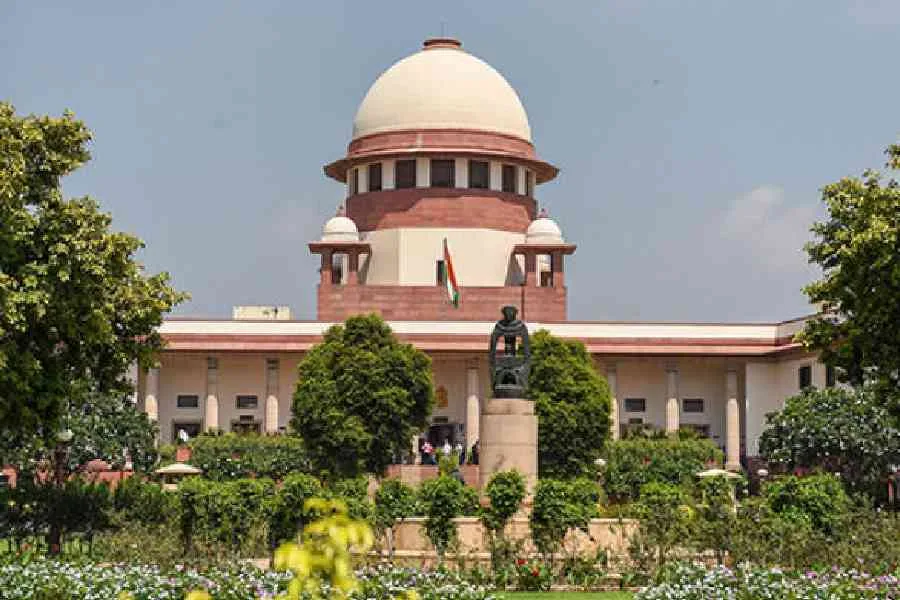
The Supreme Court agreed to hear a plea regarding a split verdict on the CEC selection law.
The 2023 law replaced the Chief Justice with a Union Minister on the selection panel.
Petitioners argue that the new law undermines the neutrality of the Election Commission.
On Wednesday, the Supreme Court of India announced it would review a plea challenging its recent split verdict concerning the Chief Election Commissioner (CEC) selection process. The case revolves around the 2023 law that replaced the Chief Justice of India (CJI) with a Union Cabinet Minister on the three-member panel responsible for appointing the CEC and Election Commissioners (ECs).
The law has faced criticism from petitioners who argue that it undermines the impartiality of the Election Commission. A two-judge bench, comprising Justices Datta and Sharma, delivered conflicting opinions on September 23 regarding whether the matter should be escalated to a larger Constitution bench. The Centre contended that the petitions raised significant constitutional questions warranting such a referral.
Justice Datta opposed the Centre's request for a reference to a larger bench, while Justice Sharma supported it. This disagreement led to the case being forwarded to Chief Justice Surya Kant for administrative action to form an appropriately constituted bench for a definitive ruling.
During the proceedings on Wednesday, senior advocate Gopal Sankaranarayanan presented the recall application to the bench, which included the Chief Justice and Justices Joymalya Bagchi and V Mohana. The CJI indicated that the court would consider the application. Sankaranarayanan clarified that the recall application was distinct from a curative petition that had also been filed, emphasizing the need for a separate review of the split verdict.
The 2023 law was enacted following a Supreme Court directive in the Anoop Baranwal case, which mandated that appointments to the Election Commission should initially be made by a committee including the Prime Minister, the CJI, and the Leader of the Opposition until a law was passed. The government subsequently altered this composition, leading to the current legal challenges. The Supreme Court had previously declined to stay the appointments of election commissioners under the new law.