Supreme Court Seeks Government Response on MLA Resignations
The Supreme Court has requested the Union government to respond to a plea challenging MLAs' resignations and party shifts at public expense.
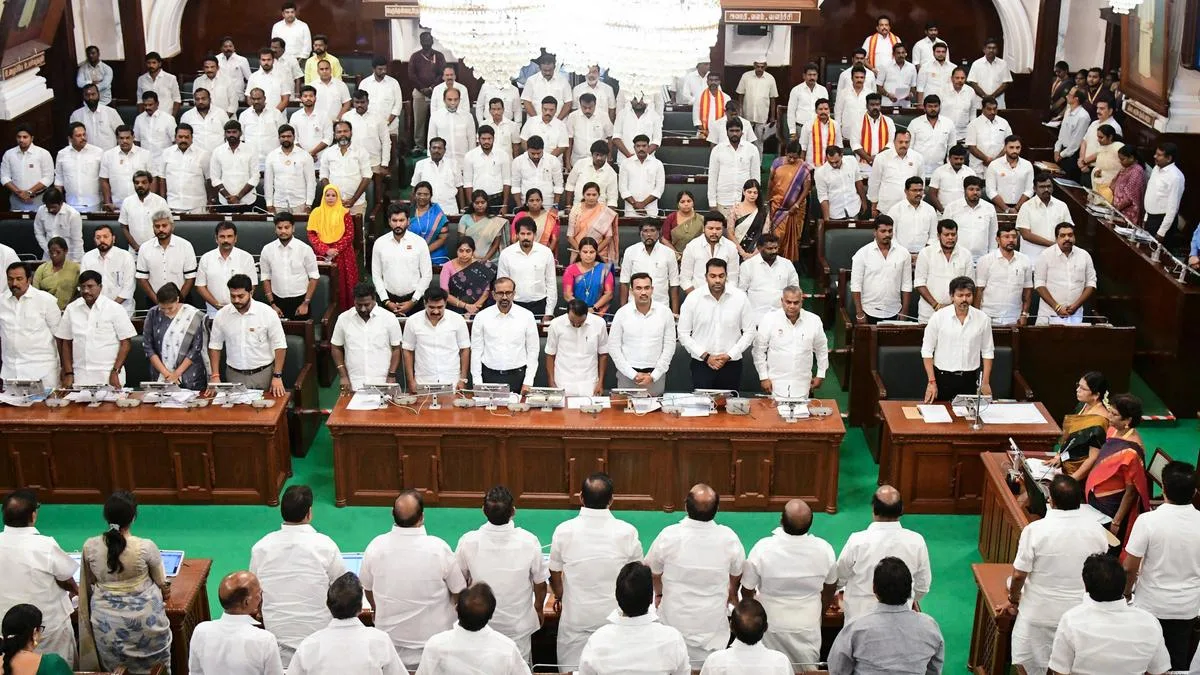
The Supreme Court issued a notice regarding MLAs abandoning their seats.
The plea argues that such actions undermine public trust in democracy.
The case stems from a previous Madras High Court ruling dismissing similar claims.
On October 26, 2026, the Supreme Court of India called for a response from the Union government concerning a plea that argues MLAs should not be allowed to abandon their constituencies, resign, switch political parties, and subsequently contest by-elections at the public's expense. This notice was issued by a bench led by Chief Justice Surya Kant in response to an appeal filed by advocate K. Suthan, represented by Merlyn Rachel J.
The appeal challenges a September 24 ruling from the Madras High Court, which dismissed Suthan's petition regarding the resignations and party shifts of several AIADMK MLAs, including S. Jayakumar, who moved to the ruling Tamilaga Vettri Kazhagam (TVK). The Supreme Court's notice also extends to the Election Commission of India, the Chief Electoral Officer of Tamil Nadu, and six former AIADMK MLAs, indicating a broad scope of inquiry into the matter.
In his petition, Suthan emphasized that legislative seats are not personal property but belong to the electorate. He argued that when an elected representative resigns shortly after being elected, it not only breaks the trust of the voters but also undermines the principles of representative democracy. The petition questions whether the Constitution allows legislators to sever public trust at will, leaving taxpayers to bear the financial burden of by-elections.
The implications of this case extend beyond the immediate resignations of the six MLAs. The petition highlights that during the Budget session, the voices of constituents from the affected areas were silenced due to the resignations. This situation raises concerns about the integrity of representation in a hung Assembly, where no party holds a clear majority. The potential for MLAs to resign and return through by-elections could render the anti-defection law ineffective, fundamentally altering the political landscape in Tamil Nadu.
Looking ahead, the Supreme Court's decision on this matter could set a significant precedent regarding the accountability of elected officials and the protection of public trust in the electoral process. Future hearings will likely focus on the broader implications of such resignations and the enforcement of the anti-defection law as the political climate in Tamil Nadu continues to evolve.