Supreme Court Petition Seeks Lighting of Deepathoon Lamp in Thiruparankundram
A devotee petitions the Supreme Court to light a ceremonial lamp using flame from a nearby temple, following state authorities' refusal.
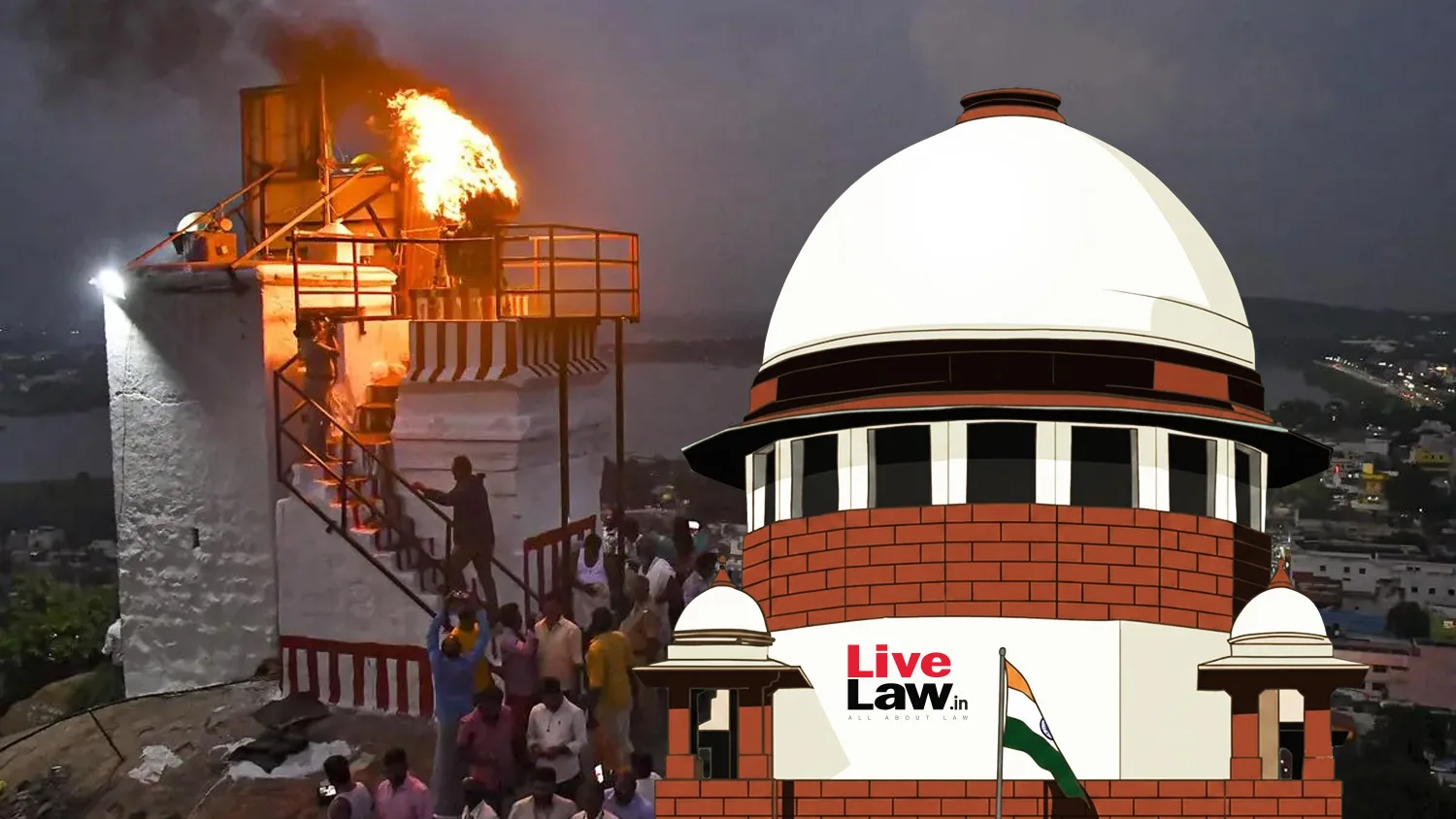
A devotee has filed a petition in the Supreme Court after state authorities denied lighting a ceremonial lamp at Thiruparankundram.
The petition argues that the lamp at Uchipillaiyar Temple is still burning and should be used to light the Deepathoon lamp.
Four priests have denied approving the temple board's resolution that led to the refusal of lighting the lamp.
In a significant legal development, a devotee has approached the Supreme Court seeking permission to light the Deepathoon lamp at Thiruparankundram using the flame from a lamp currently burning at the Uchipillaiyar Temple. This petition comes after Tamil Nadu authorities declined to follow a previous court order allowing the lighting of the lamp, citing a resolution from the temple's Board of Trustees as justification for their inaction.
The petition, presented by Senior Advocate Guru Krishnakumar, highlights that the lamp at the Deepa Mandapam near Uchipillaiyar Temple has been lit and is expected to remain active for at least 48 hours. The applicant emphasizes that it is customary for lamps lit for Karthigai Deepam to stay lit for 11 days, thus requesting the court to allow the lighting of the Deepathoon lamp from this ongoing flame.
Despite a Supreme Court order dated November 20, which permitted the lighting of the lamp at the stone pillar on November 24, the state authorities have allegedly ignored this directive. The applicant claims that the Madurai Collector has relied on a resolution from the temple authorities to justify the refusal, yet four priests have publicly stated they were not consulted regarding this resolution and did not approve it.
The situation raises concerns about adherence to court orders and the role of temple authorities in this matter. The applicant contends that the Board of Trustees has not formally presented any stance in previous court proceedings, and thus, the refusal to comply with the Supreme Court's order is unfounded. The petition seeks to hold the state authorities accountable for their actions and requests that they implement the court's directives.
Looking ahead, the Supreme Court is expected to review the petition, with the possibility of a hearing scheduled for the next couple of days. The outcome of this case could have significant implications for the management of temple rituals and adherence to judicial orders in Tamil Nadu.