Supreme Court Hears ECI's Defense on SIR Decisions and Form 6
The Election Commission asserts that all decisions regarding the Special Intensive Revision were unanimous, countering claims of unilateral actions by the Chief Election Commissioner.
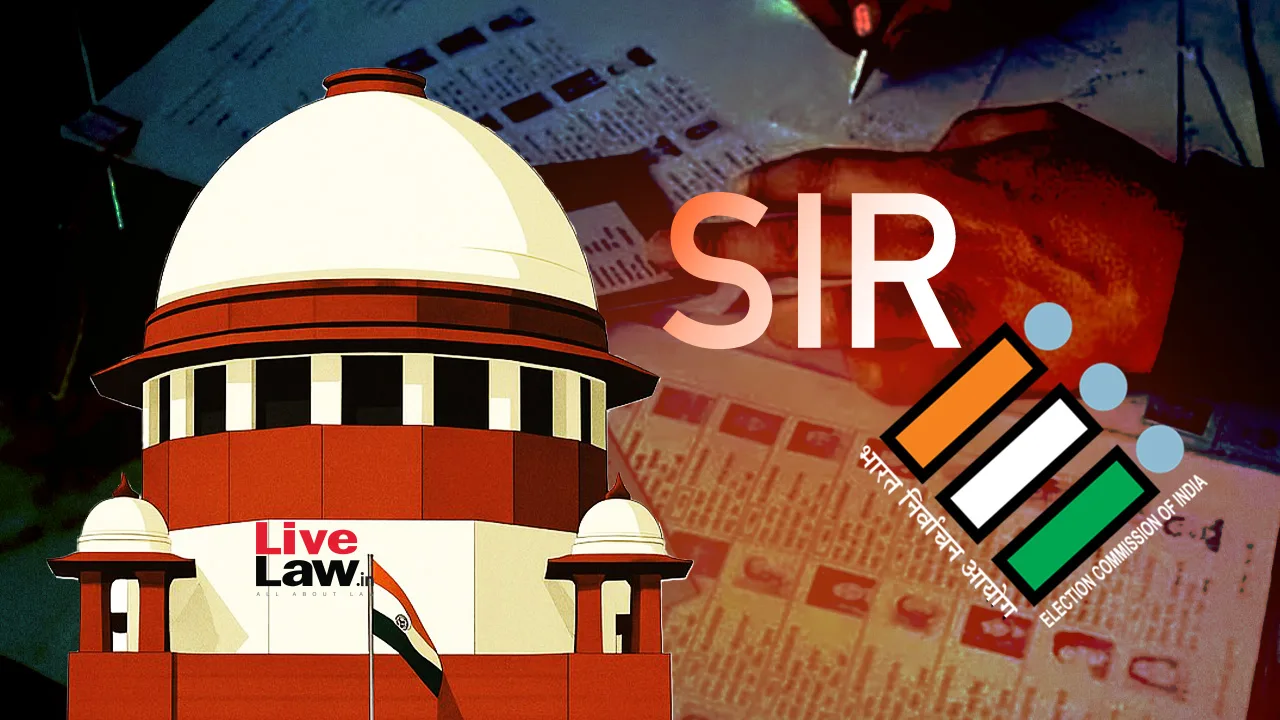
ECI confirms unanimous decisions on Special Intensive Revision of electoral rolls.
Claims of Form 6 amendments are denied; only the Central Government can amend it.
Voters unable to map their names with previous rolls won't need to attend hearings in person.
The Election Commission of India (ECI) has presented its case to the Supreme Court, asserting that all decisions related to the Special Intensive Revision (SIR) of electoral rolls were made unanimously. This statement comes in response to a writ petition that challenges the actions of Chief Election Commissioner Gyanesh Kumar and questions the legality of certain decisions made by the ECI. The petition, filed by Rakesh Kumar Singh, prompted the Supreme Court to issue notices to the ECI and its officials regarding the allegations of unilateral decision-making.
In its counter-affidavit, the ECI refuted claims that the Chief Election Commissioner acted independently, stating that all three orders concerning the SIR, issued on June 24, 2025, October 27, 2025, and May 14, 2026, were unanimously approved by the Commission. The affidavit, submitted by Deputy Election Commissioner Bhanu Prakash Yeturu, emphasized that these decisions adhered to the statutory requirements outlined in the Chief Election Commissioner and Other Election Commissioners (Appointment, Conditions of Service and Term of Office) Act, 2023, which mandates that decisions should ideally be unanimous.
The ECI further clarified that it did not amend Form 6 through its SIR orders, asserting that only the Central Government holds the authority to make such amendments. The Commission explained that the declaration required during the SIR process is a separate document and does not alter Form 6. This clarification comes after reports suggested that two Election Commissioners had raised concerns about changes requiring applicants to link themselves to previous electoral rolls.
To enhance the SIR process, the ECI announced that voters whose names could not be matched with past electoral rolls would not typically need to appear for hearings. Instead, Booth Level Officers would collect necessary documentation from these voters' homes and upload it to the ECINet platform for review by the Electoral Registration Officer (ERO). Hearings would only be necessary in exceptional cases, preferably conducted online.
As the Supreme Court continues to examine the case, the ECI has indicated that it will file a detailed response following the Dussehra holidays. The Court, previously hesitant to suspend Chief Election Commissioner Gyanesh Kumar, has stated that it will assess the decisions made by the ECI and take appropriate action if they are found inconsistent with legal statutes.