Supreme Court Hears Allegations of Mass Detentions Amid Protests
Senior Advocate Menaka Guruswamy raises concerns over potential violations of fundamental rights during ongoing protests.
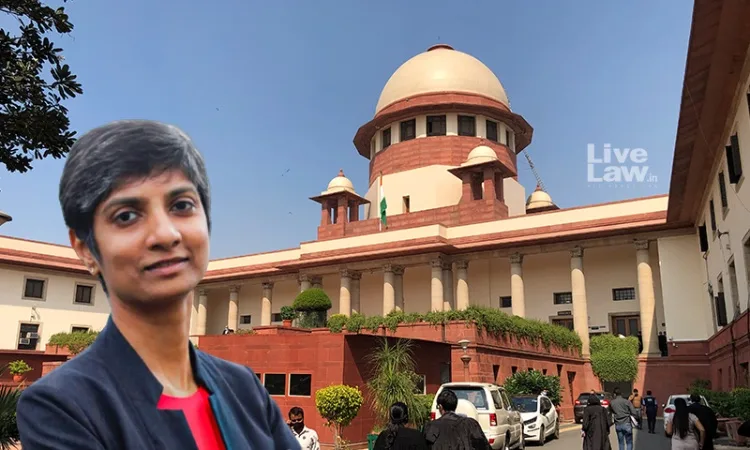
Menaka Guruswamy questions the existence of an undeclared Emergency in India.
The Supreme Court is reminded of the historic ADM Jabalpur ruling regarding fundamental rights during emergencies.
Approximately 7,000 individuals have reportedly been detained in connection with recent protests.
In a significant legal development, Senior Advocate Menaka Guruswamy brought forth allegations of mass detentions during ongoing protests against the Chief Election Commissioner before the Supreme Court on October 11, 2026. Guruswamy contended that these actions by police authorities may indicate an undeclared Emergency, infringing upon citizens' fundamental rights, particularly the right to protest peacefully.
During her arguments, Guruswamy referenced the landmark ADM Jabalpur case, which allowed for the suspension of habeas corpus during the 1975 Emergency under Prime Minister Indira Gandhi. She emphasized that Article 19 of the Constitution, which guarantees freedoms such as speech and assembly, can only be restricted during a declared Emergency. "Is the State suggesting that an undeclared Emergency has been imposed?" she questioned, highlighting the gravity of the situation and the historical context of the court's previous rulings.
The senior counsel pointed out that the police's actions included disrupting metro services, suspending internet access, and detaining around 7,000 individuals without official acknowledgment. Reports indicated that 45 detention centers were established across Delhi ahead of the protests, with several political leaders, including former Chief Ministers, reportedly detained. Guruswamy argued that such measures were unjust and detrimental to the democratic process, as young citizens sought to express their dissent regarding the electoral system.
The implications of these detentions extend beyond the immediate protests, raising concerns about the erosion of civil liberties in India. The Supreme Court's acknowledgment of the habeas corpus petition signals a potential judicial intervention to safeguard the rights of all individuals, not just prominent figures. This case could set a precedent for how future protests and governmental responses are handled in the context of civil rights.
As the situation unfolds, the Supreme Court has issued a notice regarding the habeas corpus petition, indicating that it will examine the legality of the detentions and the broader implications for citizens' rights. The court's decision could have lasting effects on the balance between state authority and individual freedoms in India, particularly in the context of political dissent and public protests.