Supreme Court Denies Interim Bail to Umar Khalid and Sharjeel Imam
The Supreme Court has postponed the decision on interim bail for Umar Khalid and Sharjeel Imam in a significant case linked to the 2020 Delhi riots.
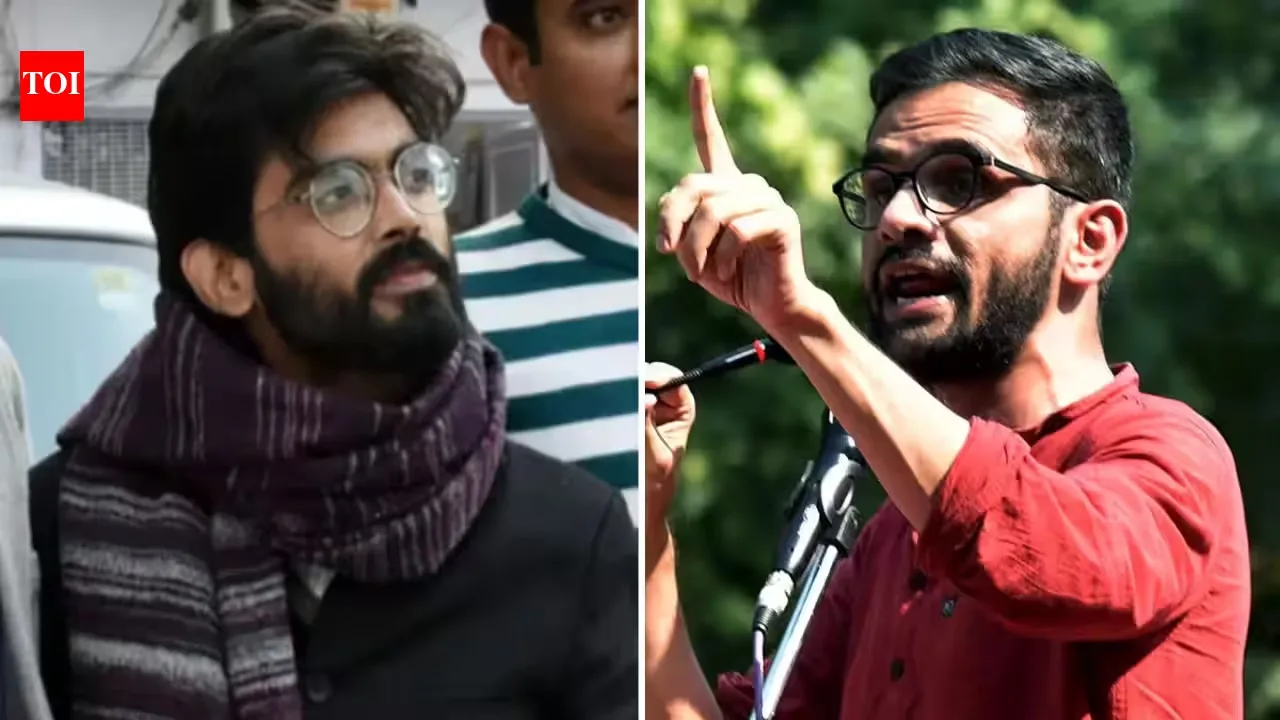
The Supreme Court has issued a notice to Delhi Police regarding the bail pleas of Khalid and Imam.
Both activists are implicated in the alleged conspiracy behind the February 2020 northeast Delhi riots.
The court emphasized that it would hear the Delhi Police's response before making a decision on the interim bail.
In a significant development, the Supreme Court of India on Wednesday declined to grant interim bail to activists Umar Khalid and Sharjeel Imam, who are implicated in the larger conspiracy case related to the 2020 northeast Delhi riots. The court's decision comes after the duo challenged a prior ruling from the Delhi High Court that denied their bail requests. A bench consisting of Chief Justice Surya Kant and Justices Joymalya Bagchi and V Mohana has now issued a notice to the Delhi Police, requiring them to respond to the pleas put forth by Khalid and Imam.
During the hearing, senior advocate Kapil Sibal, representing Khalid, requested interim bail while the case is still pending. Similarly, senior advocate Siddharth Dave, who is advocating for Imam, also sought immediate relief, highlighting Imam's extended period of incarceration. However, the bench firmly stated, "Not today," indicating that they would first consider the Delhi Police's response before making any decisions regarding the interim bail applications.
The Supreme Court has also instructed that the case be referred to the Chief Justice for the establishment of a three-judge bench to further examine the matter. Khalid and Imam's petitions argue that the prosecution has yet to interrogate protected witnesses, and they point out that the one-year restriction imposed by the Supreme Court is approaching its expiration.
This case is rooted in the alleged conspiracy behind the riots that erupted in February 2020 during protests against the Citizenship (Amendment) Act (CAA) and the proposed National Register of Citizens (NRC). Imam was taken into custody on August 25, 2020, while Khalid was arrested shortly thereafter on September 13, 2020. The ongoing legal proceedings have drawn significant attention due to their implications for civil rights and political dissent in India.
Looking ahead, the Supreme Court's decision to hear the Delhi Police's response will be crucial in determining the next steps for Khalid and Imam. The establishment of a three-judge bench may also indicate a deeper examination of the legal issues surrounding the case, which continues to resonate within the broader context of India's political landscape.